
The Dust on Our Feet (2017)
★★★ — The Dust on Our Feet (2017)

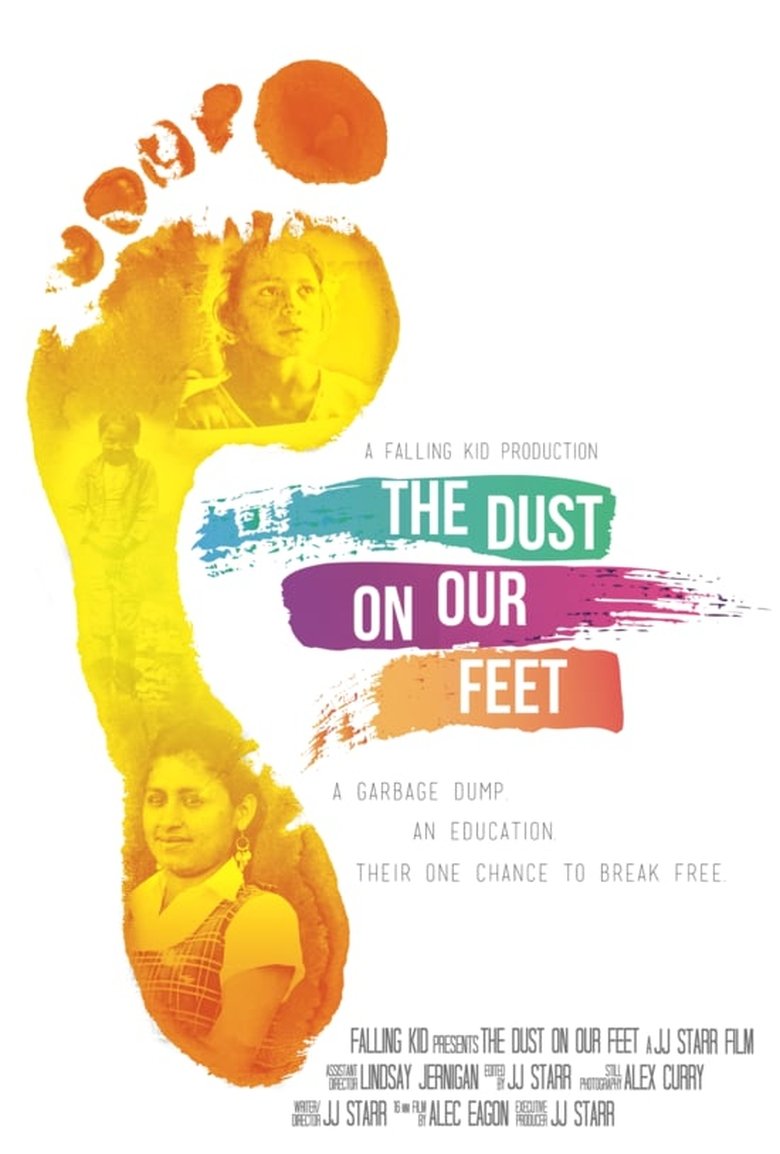
There's a moment in The Dust on Our Feet where a young girl, standing in the middle of a Honduran landfill, says she wants to be a lawyer so she can fight for people like herself. I audibly whispered "fuck yeah" at my screen. That one sentence, delivered with the kind of quiet conviction most adults couldn't muster, is worth the price of admission alone. It's also the moment that crystallises exactly what this documentary is doing and why it matters.
This is my A-Z World Movie Tour entry for Honduras, and it's a film that slapped me awake. Watching these kids sift through mountains of rotting waste, dodging bulldozers, scavenging bottle caps just to scrape together something resembling a living, put my own low-income upbringing in the UK into sharp, almost embarrassing perspective. Growing up skint in Britain suddenly felt like an all-expenses cruise. Poverty is relative, and this film grabs you by the collar and makes sure you understand that.
It's raw and unflinching in the way the best social documentaries are. The filmmakers don't dress anything up. This is poverty with its teeth bared: crumbling hills of garbage baking under a sun that feels less like warmth and more like a spotlight exposing everything the world would rather look away from. Every frame is soaked in grime and, somehow, resilience. The kids at the centre of this aren't presented as victims. They're heroes, and the film is smart enough to let them be exactly that.
The speeches near the end, where the children talk about their dreams and their futures, are delivered with such unfiltered, aching hope that I genuinely had to sit with it for a minute afterwards. It broke me a little, in the best possible way. It reminded me of the emotional gut-punch I felt watching Lost Boy in Juba, another documentary that forces you to reckon with a world of hardship most of us will only ever glimpse through a screen.
But here's where I've got to be honest, because the film isn't without its problems. At around fifty minutes, it still manages to outstay its welcome, which is no small achievement. By the thirty-minute mark, you've essentially seen the full picture: the scavenging, the arguments over scraps, the flies, the heat, the hopelessness punctuated by flickers of joy. And then it just keeps going. Scenes begin to blur and repeat. I found myself mentally editing the thing: cut here, trim that confrontation, ease off the close-ups of decomposing fruit. The pacing stretches like a rubber band, and a tighter cut of maybe thirty-five minutes would have made this genuinely exceptional rather than very good with a saggy middle.
There's also a question of what more we might have learned with a little more structural ambition. Lessons of Darkness showed me how images of devastation can be arranged with almost poetic intention. The Dust on Our Feet opts instead for a more straightforward observational approach, which serves the subject well in theory, but occasionally tips into repetition when a bolder editorial hand might have kept the emotional charge burning throughout.
Still, none of that dulls the film's real power, which is its insistence that the children you're watching aren't statistics or symbols. They're individuals with names, personalities, ambitions and a bone-deep dignity that the circumstances of their birth haven't managed to grind out of them. That's the thing this film does genuinely well: it never lets you forget their humanity, even when the environment around them looks designed to strip it away.
Would I sit down and watch it again? Probably not back-to-back. But it lingers, and honestly, that's the whole point. A film like this isn't asking to be rewatched. It's asking to be remembered.
Three and a half stars.
Rating: ★★★ | Year: 2017 | Watched: 2025-06-27
Where to watch
Watch in the UK
Physical: Amazon UK · Zavvi
Watch in the US
Physical: Amazon US
Affiliate disclosure: Movies With Macca may earn a small commission on purchases or subscriptions started via these links. It costs you nothing extra.
Related on Movies With Macca
More from the 2010s: Wonder (2017) · Beautiful Boy (2018) · The Witch (2015) · What We Do in the Shadows (2014)
More documentary: Letter from Siberia (1957) · Lessons of Darkness (1992) · Style Wars (1983) · Here and Elsewhere (1976)



