
Suspiria (1977)
★★★ — Suspiria (1977)

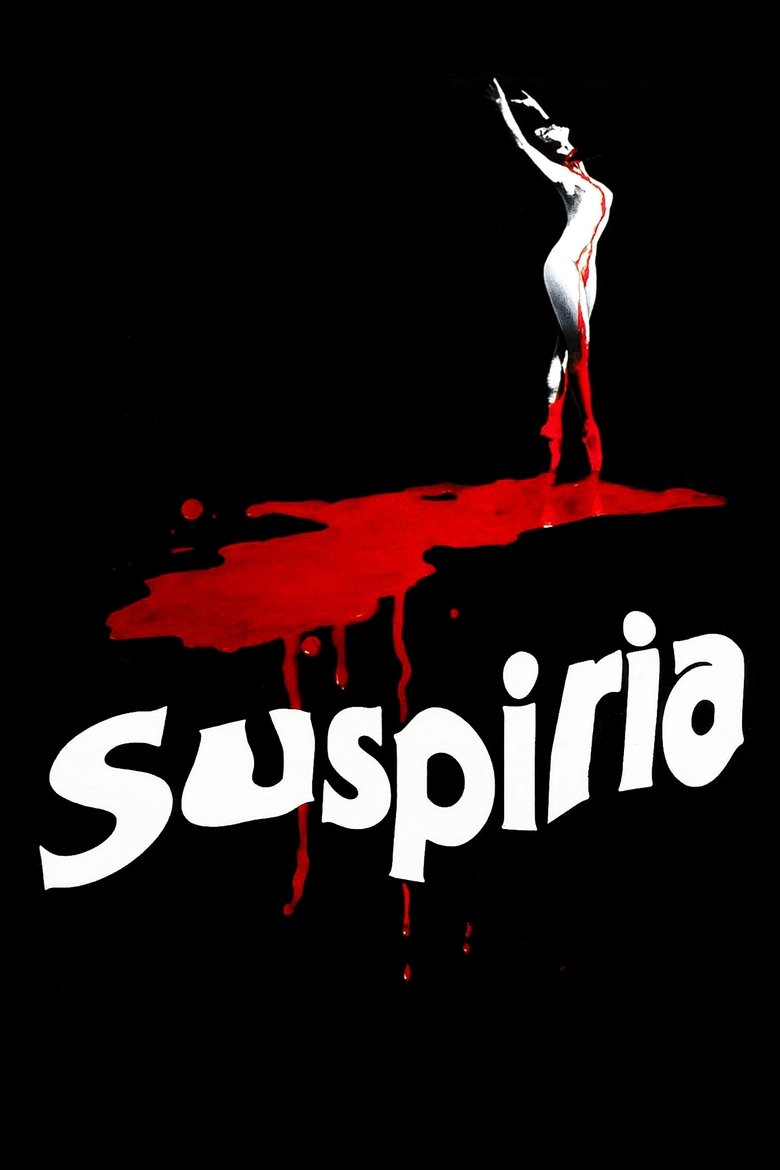
Forget coherent plotting, forget naturalistic acting, forget logic of any kind. Dario Argento's Suspiria is operating on a completely different frequency to almost every horror film you've ever seen, and the question of whether that makes it a masterpiece or a glorious mess is one I've been turning over since the credits rolled. The short answer: it's both, and I ended up on the right side of it, just barely.
Let me start with the red. Because my God, the red. I don't think I have ever seen a film so completely soaked in a single colour. Blood-red lights bleed across every corridor, lurid crimson shadows pool in corners, hallways glow like the walls themselves are feverish. The production design is expressionistic to the point of surrealism, and the special effects are grotesque and impressively practical. Argento builds atmosphere the way other directors build plot, brick by brick, frame by frame, and purely on those terms, this film is extraordinary. There's a commitment here, a sheer visual audacity, that demands your attention even when everything else is working against you.
And plenty is working against you. The story, which follows an American ballet student who arrives at a prestigious dance academy and begins to uncover something deeply sinister lurking beneath it, is barely there. What plot exists is tangled, illogical, and often cheerfully nonsensical. Characters behave like mannequins. Motivations don't so much develop as evaporate mid-scene. And the dubbing, oh, the dubbing. It's so stiff and awkward it tips over into unintentional comedy on more than one occasion. Lines like "I feel an evil force all around me!" delivered with the emotional register of someone reading a shopping list. You laugh, because there's really nothing else to do.
Then there's the Goblins score. And here's where I'll risk a bit of unpopularity, because that soundtrack is rightly iconic, pulsing synths, eerie chanting, those shrieking highs, genuinely one of the great horror scores. But Argento uses it like a blunt instrument. Scene after scene, it blasts at full volume, drowning out dialogue, action, even the tension it's supposed to be building. In isolation it's brilliant. Wedged into the film at that volume and that frequency, it becomes overwhelming. It stops underscoring the horror and starts competing with it.
So when people call this a pinnacle of giallo horror, a cult masterpiece, one of the greatest horror films ever made, I get it, and I don't quite get it. Going in with those expectations, I felt the disappointment. It's not scary in any conventional sense, not coherent enough to be properly unsettling in the way the best horror is, and the performances give you nothing to hold onto. It reminded me a little of what I felt watching Nightmare City: a film so thoroughly committed to its own chaotic energy that conventional critical frameworks feel almost beside the point.
But here's the thing. I still liked it more than I disliked it. There's something genuinely hypnotic about its chaos, something almost admirable in its total refusal to prioritise sense over sensation. As a piece of sustained mood-making, it's unlike almost anything else. It's a fever dream of a film, strange and bold and absolutely bonkers, and those qualities do count for something. You don't forget it. You can't.
Three stars.
Just don't go in expecting logic. Don't go in expecting coherent characters or a story that holds together. Go in for the red. Go in for the visual delirium, the sheer committed strangeness of it all. On those terms, Suspiria delivers something you won't find anywhere else. It's flawed, it's messy, and it's essential viewing for anyone drawn to the strange and the stylish. Just pour yourself something strong first.
Rating: ★★★ | Year: 1977 | Watched: 2025-11-04
Where to watch
Watch in the UK
Stream: BFI Player · BFI Player Amazon Channel · BFI Player Apple TV Channel
Rent: Apple TV Store · Amazon Video
Buy: Apple TV Store · Amazon Video
Physical: Amazon UK · Zavvi
Watch in the US
Stream: Philo · Fandor Amazon Channel · Screambox Amazon Channel · Midnight Pulp Amazon Channel
Rent: Amazon Video
Buy: Amazon Video
Physical: Amazon US
Affiliate disclosure: Movies With Macca may earn a small commission on purchases or subscriptions started via these links. It costs you nothing extra.
Related on Movies With Macca
More from Italy: Nightmare City (1980) · Cemetery Man (1994) · One Way or Another (1975) · Chicken for Linda! (2023)
More from the 1970s: Fantastic Planet (1973) · Here and Elsewhere (1976) · Italianamerican (1974) · Punishment Park (1971)
More horror: Invasion of the Body Snatchers (1956) · Viy (1967) · Nightmare City (1980) · Angst (1983)



