Scorpio Rising (1963)
★ — Scorpio Rising (1963)

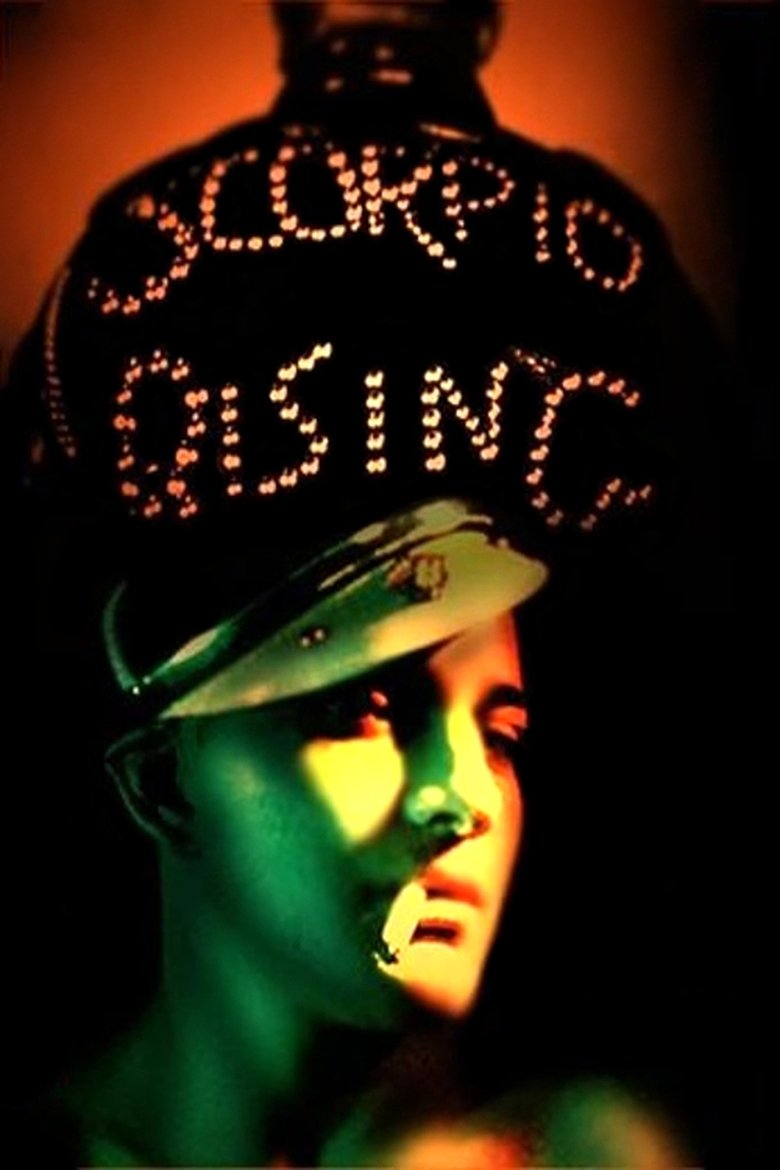
Influence doesn't equal entertainment. I want to get that out of the way first, because it's the thing I kept coming back to during Kenneth Anger's Scorpio Rising, and it's the thing I'll still be saying when someone inevitably tells me I've missed the point. Maybe I have. But I've sat through twenty-eight minutes of leather-clad bikers polishing boots, adjusting zippers and staring into mirrors, and I'm not convinced the point was worth the journey.
What Anger is doing here, broadly, is layering homoerotic subtext over rebel iconography, setting it all to a jukebox run of early 1960s pop hits, and letting the juxtapositions do the talking. The editing does occasionally wink at you with genuine irony. The soundtrack is, honestly, great. And yes, I understand that this thing more or less invented the music video format, that it was scandalous on release, that it influenced filmmakers and artists for decades afterwards. All of that is true and worth knowing.
But knowing it doesn't make watching it any less of a slog.
The problem is that there's no narrative, no tension, no evolution. What you get instead is repetitive tableau after repetitive tableau of narcissistic posturing, each one confirming what the last one already told you. The bikers preen. The camera lingers. A pop song plays. And then it happens again. And again. By the time the film reaches whatever it thinks its climax is, I'd long since stopped caring. The concept has an expiration date, and Scorpio Rising blows past it about eight minutes in.
There's a version of this kind of experimental filmmaking that genuinely holds you, where the absence of conventional story stops feeling like a gap and starts feeling like freedom. I'd point to Daisies (1966) as a film that pulls off something similar in spirit, anarchic, visually driven, provocative, but with enough energy and wit to keep you locked in. Scorpio Rising doesn't have that energy. It has attitude, which is a different thing. Attitude without momentum is just posing, and posing is, ironically, exactly what the film is about.
The fetishistic attention to leather and chrome and the male body was transgressive in 1963. I'll take that on faith. But watched now, stripped of its historical shock value, it reads more like a mood board that's convinced itself it's a manifesto. The subtext isn't particularly subtle, and once you've clocked it, the film offers nowhere else to go. It just keeps showing you the same thing, dressed up slightly differently, for the remainder of its runtime.
Those pop songs, though. I'll give it that. Hearing them dropped against these images creates something genuinely odd and occasionally funny, and it's easy to see why that technique felt electric when no one had done it before. The editing has a rhythm to it. The craft isn't the issue. The issue is that craft in service of a single, static idea can only carry you so far before you start checking how much time is left.
One star. A historically notable curio, and I mean that sincerely rather than as a backhanded compliment. Its place in film history is legitimate. But there's a difference between a film that deserves to be studied and a film that deserves to be watched, and Scorpio Rising belongs firmly in the first category. Some films are better encountered in an essay than in a darkened room. This is one of them.
Rating: ★ | Year: 1963 | Watched: 2026-03-13
Related on Movies With Macca
More from the 1960s: Viy (1967) · Persona (1966) · Carnival of Souls (1962) · Daisies (1966)
More music: Style Wars (1983) · 8 Mile (2002) · Chicken for Linda! (2023) · Tender Mercies (1983)