
Roundhay Garden Scene (1888)
★ — Roundhay Garden Scene (1888)

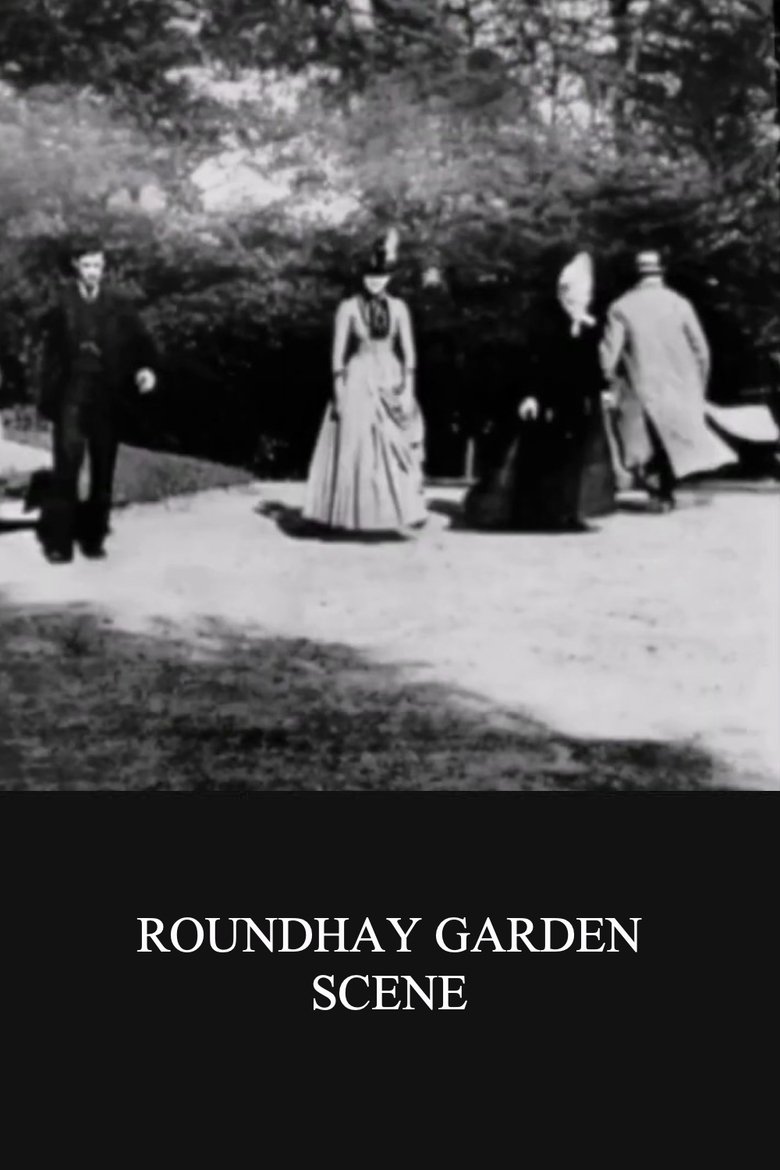
Two seconds. That's what you get. Two seconds of people walking around a garden in 1888, and then it's over before your brain has fully registered that it started.
I went in curious, genuinely curious, because I wanted to know: what was the first film ever made? Turns out the honest answer is that we don't really know, because the very earliest candidates didn't survive. They're gone. So what we're left with, as the oldest existing piece of moving image that can be called a film, is the Roundhay Garden Scene. Shot in Leeds. Two seconds long. A handful of people milling about on a lawn.
One star feels almost cruel, and I'll admit I wrestled with it. How do you rate something like this? It's not a film in any meaningful sense we'd recognise today. There's no story, no composition to speak of, no intent beyond proving that the technology worked. Rating it feels a bit like giving a mark to the Wright Brothers' first flight because it wasn't a smooth landing. But then, this is a film log, and I have to put something down, and honestly, as a viewing experience, it's precisely as thin as it sounds.
What gets me, though, is the context. When you sit back and actually think about what you're looking at, it becomes quietly extraordinary. Those people on screen have been dead for well over a century. The garden they're walking around almost certainly looks nothing like it did then. And yet here's this frozen sliver of an ordinary afternoon in Victorian England, preserved by accident of survival when so much else from that era wasn't. The films that came before this one, if they ever truly existed in a watchable form, are just gone. Dust. This survived, and because it survived, it matters.
Nearly 140 years separate this two-second garden stroll from something like RRR, the three-hour Telugu action spectacular. The distance between those two things is almost incomprehensible. From a shaky, flickering two-second clip of people walking, to multi-hour epics with choreographed set pieces, sweeping scores, and the kind of visual ambition that would make the Roundhay camera operator's head explode. That journey happened within roughly the span of a human lifetime from that first frame to the golden age of Hollywood alone.
There's something humbling in that progression. Cinema went from "look, we can capture movement" to becoming one of the defining art forms of the modern world at a speed that no other medium matched. Painting took centuries to evolve. Literature developed over millennia. Film went from a garden in Leeds to Kubrick in about eighty years.
So no, I can't sit here and tell you the Roundhay Garden Scene is worth watching as entertainment. It isn't. It's genuinely just two seconds of nothing much. But as an artefact, as a starting gun, as the earliest surviving proof that someone once pointed a machine at the world and said "what if we could keep this," it earns its place in history. I'm glad it exists. I'm glad someone thought to preserve it. And I'm glad I finally watched it, even if "watched" feels like a generous word for an experience that ends before you've finished reaching for your drink.
One star. But one very significant star.
Rating: ★ | Year: 1888 | Watched: 2025-07-03
Related on Movies With Macca
More from United Kingdom: Lessons of Darkness (1992) · Shinjuku Boys (1995) · The Curse of Frankenstein (1957) · Blue (1993)
More documentary: Letter from Siberia (1957) · Lessons of Darkness (1992) · Style Wars (1983) · Here and Elsewhere (1976)



