Pulgasari (1986)
★★ — Pulgasari (1986)

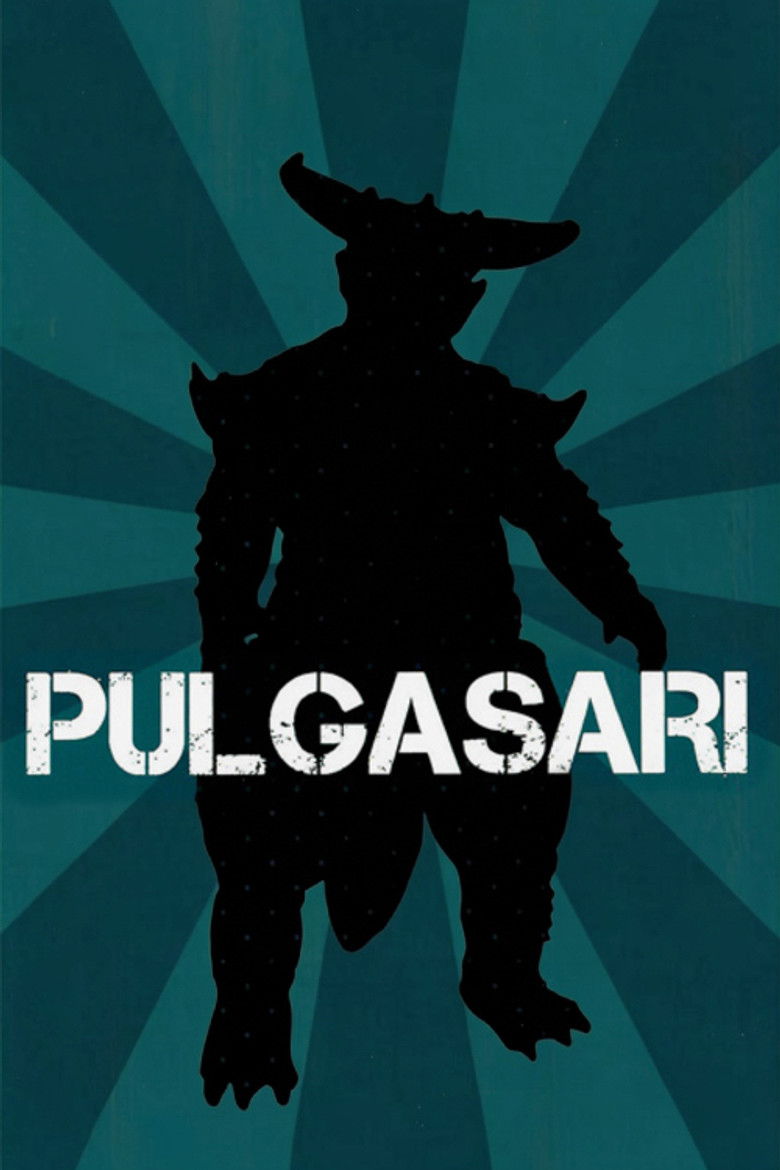
There are films that are fascinating because of what's on screen, and there are films that are fascinating because of how they came to exist at all. Pulgasari is firmly in the second camp. Knowing the story before you press play almost guarantees you'll spend as much time thinking about the politics and the paranoia behind the production as you will watching the actual film. And honestly, that's probably for the best, because the film itself is a mess.
The basics, for those who don't know: this is a North Korean kaiju picture from 1985, reportedly made with the involvement of a South Korean director who was kidnapped, along with his ex-wife, on the orders of Kim Jong-il, who wanted to build up the North Korean film industry. It was shot in Japanese. It stars a giant metal-eating monster meant to symbolise the power of the people rising up against feudal tyranny. It is, in theory, revolutionary cinema. In practice, it's closer to a very strange Saturday afternoon creature feature with a political pamphlet stapled to the front.
The story follows a tiny creature, born from the dying curse of an old blacksmith and brought to life by the blood of a young girl. It eats metal, grows enormous, and becomes the weapon of an oppressed peasant class fighting back against a brutal regime. There's a potentially interesting idea buried in there, the monster as collective will, the saviour who eventually becomes a burden, something that needs to be sacrificed once the revolution is won. But the film doesn't really earn that ending. It arrives after so many repetitive battle sequences and so much flat, over-declaimed dialogue that by the time the tragedy is supposed to land, I'd largely checked out.
What keeps it watchable, and I want to be fair here, is the creature itself. Pulgasari is a genuinely memorable design. Spiky, rat-like, with glowing eyes and a gaping maw, and the suitmation and stop-motion work that brings it to life has a rough charm that I didn't expect. Some of the destruction sequences have energy. When the monster is on screen, stomping through miniature villages and tossing soldiers around, there's a scrappy, earnest quality to it that I found myself warming to despite everything else.
But everything around it is painfully unconvincing. The sets are obviously cardboard. The lighting is flat and indoor-feeling even when the action is supposedly outside. The acting is relentlessly over-the-top, every line delivered like a speech at a rally, regardless of whether the scene calls for it. I kept thinking of Nightmare City (1980), another low-budget genre film from outside the mainstream where the sheer enthusiasm of the thing just about carries you through the rough patches. Pulgasari doesn't quite manage that. The ideology gets in the way. It wants to be taken seriously in a way that Nightmare City never did, and that seriousness makes the camp elements harder to enjoy.
There's a moment near the end where the film almost becomes something. The monster turns on the very people who created it, and there's a beat of genuine pathos in there, a recognition that even liberation has a cost, that power unchecked destroys what it was meant to protect. It's the most interesting idea in the film, and it lasts about ninety seconds before another battle sequence arrives to flatten it.
I was watching this as part of my A-Z World Movie Tour, ticking off North Korea, and I'd be lying if I said I wasn't at least partly motivated by curiosity about the production rather than the film. That's the honest truth of it. Pulgasari works best as a cultural artefact, a strange object from a closed world, a window into something deeply weird about how nations use cinema as ideology. As a film, though, it's poorly paced, poorly acted, and weighed down by its own self-importance. The monster is cool. Everything else is noise.
Worth seeing once, if only so you can say you've seen it. But once is enough.
Rating: ★★ | Year: 1986 | Watched: 2025-08-05
Where to watch
Watch in the UK
Physical: Amazon UK · Zavvi
Watch in the US
Physical: Amazon US
Affiliate disclosure: Movies With Macca may earn a small commission on purchases or subscriptions started via these links. It costs you nothing extra.
Related on Movies With Macca
More from Japan: Mononoke the Movie: The Phantom in the Rain (2024) · Mononoke the Movie: Chapter II - The Ashes of Rage (2025) · Blue (1993) · The Ghost of Yotsuya (1959)
More from the 1980s: Nightmare City (1980) · A Better Tomorrow (1986) · Style Wars (1983) · Garlic Is as Good as Ten Mothers (1980)
More horror: Invasion of the Body Snatchers (1956) · Viy (1967) · Nightmare City (1980) · Angst (1983)
More drama: Viy (1967) · Wonder (2017) · A Better Tomorrow (1986) · Beautiful Boy (2018)