Prelude: Dog Star Man (1962)
½ — Prelude: Dog Star Man (1962)

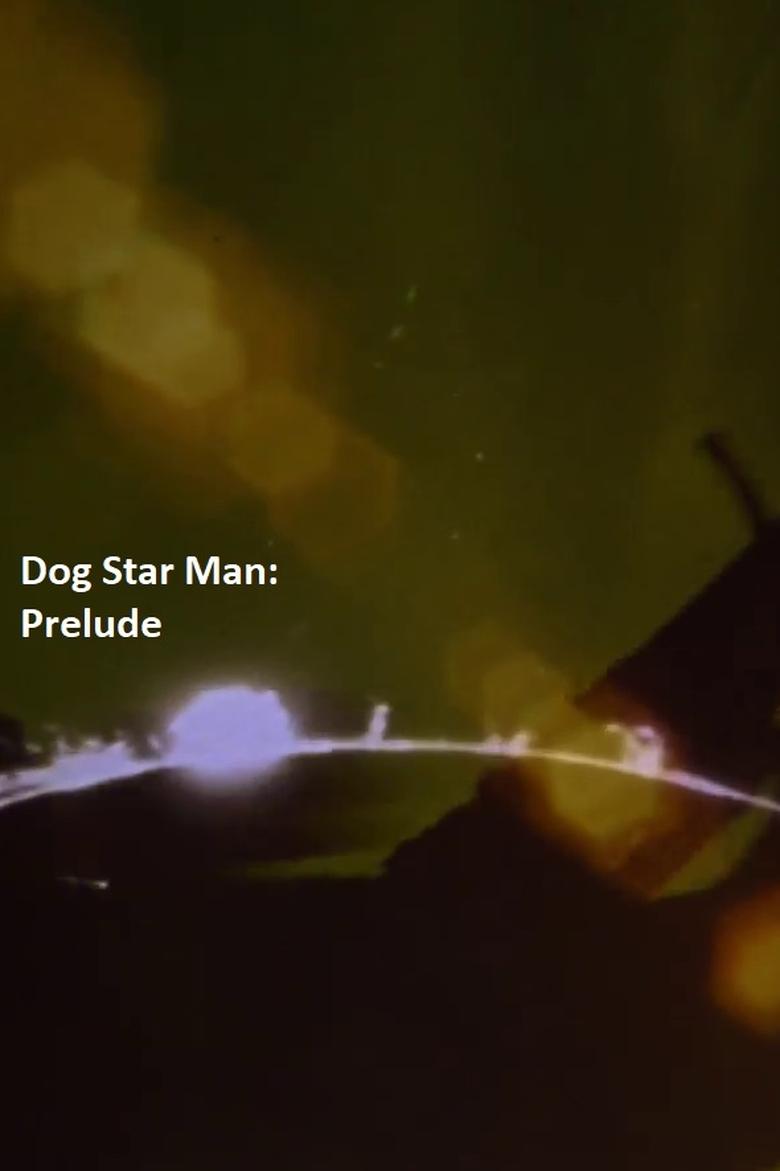
Do people actually enjoy this? That's not a rhetorical question I'm ashamed to ask. I sat through all twenty-six minutes of Stan Brakhage's Prelude: Dog Star Man waiting, genuinely waiting, for something to click. For some moment where the flickering and the scratching and the superimposed smears of colour resolved into an experience I could hold onto. That moment never came.
What you get here is exactly what the description promises and exactly what the defenders will tell you is the point: no narrative, no characters, no sound, no coherence. Scratched film stock, layered imagery, bursts of light and texture, occasional footage of what seems to be a man trudging uphill intercut with abstract cosmic shapes. Brakhage strips cinema down to its most primitive visual elements and asks you to receive it as art. Fair enough in principle. In practice it feels less like a visionary stripping away the unnecessary and more like watching someone develop film in a darkroom with ant-filled underwear.
I want to be fair to experimental cinema, I really do. I've sat with difficult, oblique work and found my way into it. I reviewed Daisies (1966) not long ago, a film that gleefully dismantles the rules of conventional filmmaking, and I came away charmed and genuinely provoked. The difference is that Daisies has wit. It has a pulse. It communicates something, even when it's deliberately refusing to communicate in the usual way. Prelude: Dog Star Man just fires textures at you and leaves you to do all the work, without giving you a single foothold to start from.
The defenders will say that's the point. That Brakhage wanted a pre-verbal, pre-linguistic visual experience, something that bypasses the rational mind and speaks directly to the senses. I understand the ambition. But ambition isn't the same as achievement. Without any kind of rhythm, emotional anchor, or even a soundtrack to give the images something to push against, the whole thing becomes an impenetrable wall. Not a challenging wall. Just a wall.
There's a version of this argument where I'm the problem, where I'm too conditioned by narrative cinema to open myself up to something genuinely different. Maybe. But I'd push back on that. Difficulty isn't automatically depth. Refusing to engage an audience isn't automatically brave. At some point, a film, even an anti-film, has to justify the time it takes from you. This one doesn't even try.
Calling it bad filmmaking feels wrong because it's clearly not trying to be filmmaking in any conventional sense. Anti-filmmaking is probably the more honest label. And I can acknowledge, without much enthusiasm, that Brakhage was doing something technically singular here, that his influence on experimental cinema is real and documented. History has been kind to this work. But history being kind to something and that something being worth your Saturday afternoon are two entirely different things.
Some films demand effort and reward it. Some demand effort and leave you somewhere unexpected and strange and grateful for the journey. This one demands something closer to faith, a prior belief that what you're watching is meaningful, and then offers nothing to justify that faith from within the work itself. That's not a bargain I'm willing to accept.
Half a star.
Rating: ½ | Year: 1962 | Watched: 2026-03-13
Related on Movies With Macca
More from the 1960s: Viy (1967) · Persona (1966) · Carnival of Souls (1962) · Daisies (1966)
More drama: Viy (1967) · Wonder (2017) · A Better Tomorrow (1986) · Beautiful Boy (2018)
More fantasy: Viy (1967) · Alice in Wonderland (1951) · Mononoke the Movie: The Phantom in the Rain (2024) · Mononoke the Movie: Chapter II - The Ashes of Rage (2025)