Pinocchio (1940)
★★★ — Pinocchio (1940)

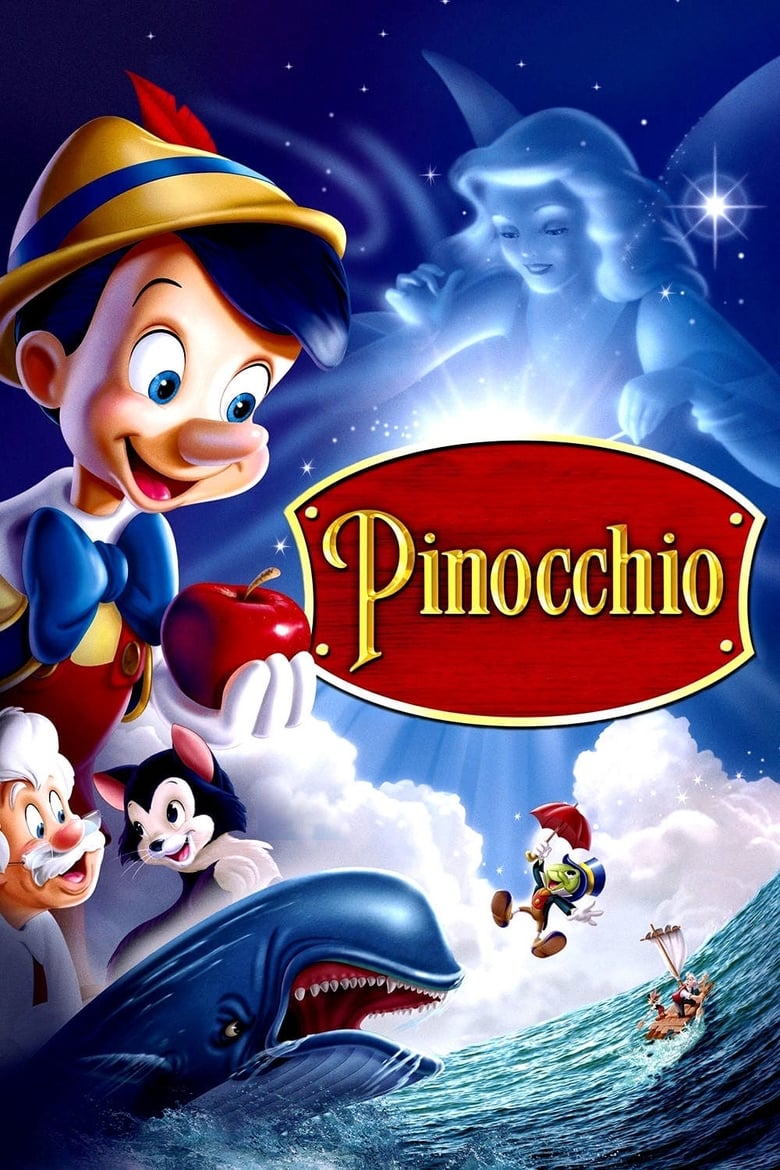
"When You Wish Upon a Star" is one of the most beautiful pieces of music ever to come out of a Disney film. It opens with such genuine warmth and promise that you'd be forgiven for expecting what follows to match it. And here's my honest problem with Pinocchio: it never quite does.
That's not to say this is a bad film. Far from it. The animation alone is worth studying. Geppetto's workshop is one of the great hand-drawn environments in the history of the medium, packed with detail, with clocks and toys and little trinkets that feel lived-in and loved. And then Pleasure Island arrives, and the whole thing darkens into something genuinely unsettling. The craft is extraordinary throughout, and I'd never argue otherwise. But craft and experience are two different things, and as an experience from start to finish, Pinocchio left me with more admiration than affection.
The tone is the real issue. This film swings between cosy and terrifying without always finding solid footing in either direction. Some of the darkness here is powerful. Some of it just feels like darkness for its own sake, scenes that unsettle without really earning their weight in the story. The Pleasure Island sequence in particular goes to some bleak places, and I don't object to children's films being frightening when there's genuine meaning behind it. I've always thought The Hunchback of Notre Dame (1996) handles that kind of tonal ambition with more confidence, more purpose. Here, the scary bits and the sweet bits feel like they belong to slightly different films.
Then there's Pinocchio himself. He is, and I say this knowing it's the point, deeply frustrating to watch. He makes a bad choice, gets warned, makes another bad choice, gets warned again, and keeps going. You could argue that's faithful to the moral of the tale. Learning through repeated failure and all that. But there's a difference between a character who grows through struggle and one who simply blunders from one preventable disaster to the next without the audience feeling much investment in the outcome. By the third or fourth time he's been led astray by obvious villains, I found myself less sympathetic and more impatient.
Jiminy Cricket fares better, and is genuinely fun company throughout. He's the conscience of the film in more ways than one, the warmth that keeps you from completely losing patience. And that song. Every time I hear "When You Wish Upon a Star," I'm reminded that Disney, at their best, could do something almost no other studio could: make you feel like a child again, just for a moment, regardless of how old you are.
The problem is that the rest of the film doesn't sustain that feeling. It's also noticeably slow in its middle stretch, which doesn't help. Compare it to something like Alice in Wonderland (1951), which throws you from one strange world to the next with real momentum, or even One Hundred and One Dalmatians (1961), which is warmer and more purely enjoyable as a sit-down watch. Pinocchio sits in a curious middle ground where its ambition exceeds its cohesion.
As a piece of animation history, it's unquestionably significant and technically impressive. I'm glad I watched it, and I'd watch it again. But timeless? That word implies something that works as well now as it ever did, something that holds together completely. And I'm not sure Pinocchio does. It's good. Genuinely good. Just not quite the masterwork its reputation insists it is.
Three stars.
Rating: ★★★ | Year: 1940 | Watched: 2025-07-26
Where to watch
Watch in the UK
Stream: Disney Plus · Artiflix
Rent: Apple TV Store · Rakuten TV · Amazon Video · Google Play Movies
Buy: Apple TV Store · Rakuten TV · Amazon Video · Google Play Movies
Physical: Amazon UK · Zavvi
Watch in the US
Stream: Disney Plus · Artiflix
Rent: Amazon Video · Apple TV Store · Google Play Movies · YouTube
Buy: Amazon Video · Apple TV Store · Google Play Movies · YouTube
Physical: Amazon US
Affiliate disclosure: Movies With Macca may earn a small commission on purchases or subscriptions started via these links. It costs you nothing extra.
Related on Movies With Macca
More from Hamilton Luske: Alice in Wonderland (1951) · One Hundred and One Dalmatians (1961)
More from the 1940s: Louisiana Story (1948) · The Ox-Bow Incident (1943) · Men Without Wings (1946) · The Bank Dick (1940)
More animation: Fantastic Planet (1973) · Alice in Wonderland (1951) · Mononoke the Movie: The Phantom in the Rain (2024) · Mononoke the Movie: Chapter II - The Ashes of Rage (2025)
More family: Alice in Wonderland (1951) · Wonder (2017) · Kirikou and the Wild Beasts (2005) · Anastasia (1997)