Ong-Bak (2003)
★★★ — Ong-Bak (2003)

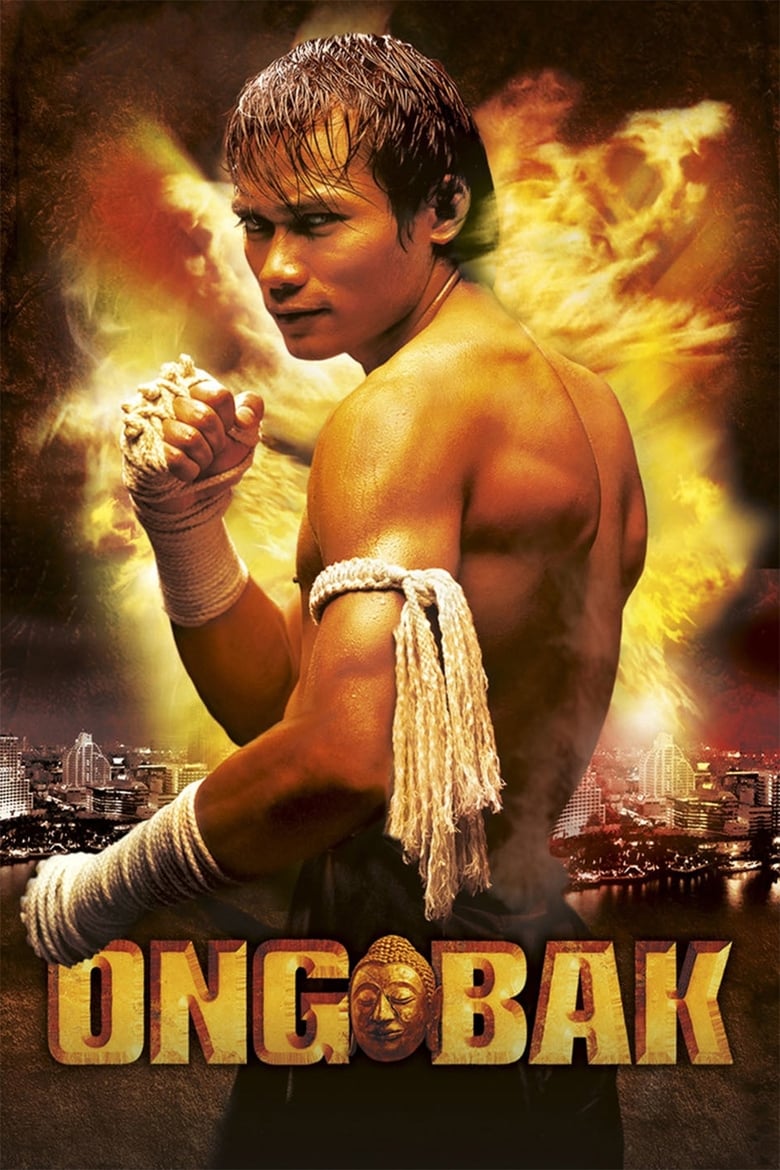
There's a moment in Ong-Bak where Tony Jaa launches himself elbow-first through the air and connects with a bloke's skull, and the entire room I was watching it in went absolutely silent for half a second before erupting. No CGI assist. No wires. No camera trickery. Just a human being doing something that shouldn't be physically possible, and doing it for real. That moment alone is worth the price of admission. The trouble is, the film keeps trying to top it for another hour, and the law of diminishing returns kicks in hard.
What makes Ong-Bak genuinely exciting, especially in context, is that it arrived as a proper corrective to a genre that had started disappearing up its own backside. So much action cinema around that time was drowning in weightless wire-fu and CGI enhancement, where fights looked spectacular but felt like nothing. Here was something grounded in actual human skill, showcasing Muay Boran, an ancient form of Thai boxing, through a performer who had clearly dedicated years of his life to the craft. Every strike, every leap, every collision carries real weight. You wince. You lean forward. You believe it's happening.
And Jaa is the real deal. Running up walls, threading himself through gaps, using his elbows and knees with a precision that looks almost casual even at full speed. The film is so proud of him, rightly so, that it replays certain stunts from multiple angles just to make sure you've clocked what you've just witnessed. It's a bit cheeky, but honestly, fair enough.
The problem is that Ong-Bak is almost entirely built around that pride, and not much else. The story, a stolen Buddha head, a village in peril, a young man heading to Bangkok to set things right, is tissue-thin. I'm not asking for Tolstoy from a martial arts film, but even within that modest framework there's barely any variation in tone or character. The people Jaa's hero meets along the way are sketches at best. The dialogue exists mainly to move him from one fight to the next. There's no wit, no warmth, no emotional anchor to make the action mean anything beyond the purely physical.
It ends up feeling like the best Jackie Chan films of the nineties, stripped of everything that made those films work beyond the stunts. Because what Chan always understood, and what Ong-Bak doesn't quite grasp, is that comedy and character are what make the danger feel dangerous. When you care about someone, or at least find them fun to be around, then the threat feels real and the triumph feels earned. Here you're just watching an extraordinarily gifted athlete perform in a near-vacuum.
By the time the fifth or sixth big set piece rolls around, the jaw-dropping has become routine, which is a genuine shame. Compare it to something like The Raid 2 (2014), which I think is one of the best action films ever made precisely because it bothers to build a world around its violence. Ong-Bak is the raw, uncut prototype of that kind of cinema, and you can feel both its importance and its limitations in equal measure.
So where does that leave it? Solidly decent. It's a landmark for Thai action cinema and a proper calling card for one of the most physically gifted performers the genre has ever produced. If you love fight films and you haven't seen it, you absolutely should, if only to appreciate what Jaa could do with his body and how fresh it must have felt when it first landed. Just go in knowing that story and soul aren't really on the menu. It's kicks, karma, and a stolen statue, delivered with tremendous athleticism and very little else.
Three stars.
Rating: ★★★ | Year: 2003 | Watched: 2025-10-14
Where to watch
Watch in the US
Stream: Amazon Prime Video · fuboTV · Philo · Amazon Prime Video with Ads
Rent: Amazon Video · Apple TV Store · Google Play Movies · YouTube
Buy: Amazon Video · Apple TV Store · Google Play Movies · YouTube
Physical: Amazon US
Affiliate disclosure: Movies With Macca may earn a small commission on purchases or subscriptions started via these links. It costs you nothing extra.
Related on Movies With Macca
More from Thailand: Only God Forgives (2013) · Street Fighter (1994) · How to Make Millions Before Grandma Dies (2024) · Ziam (2025)
More from the 2000s: Kirikou and the Wild Beasts (2005) · Anchorman: The Legend of Ron Burgundy (2004) · Daredevil (2003) · Apocalypto (2006)
More action: A Better Tomorrow (1986) · The General (1926) · Hand of Death (1976) · Daredevil (2003)
More crime: A Better Tomorrow (1986) · Angst (1983) · Stolen Face (1952) · Cairo Station (1958)