Memories of Murder (2003)
★★★★ — Memories of Murder (2003)

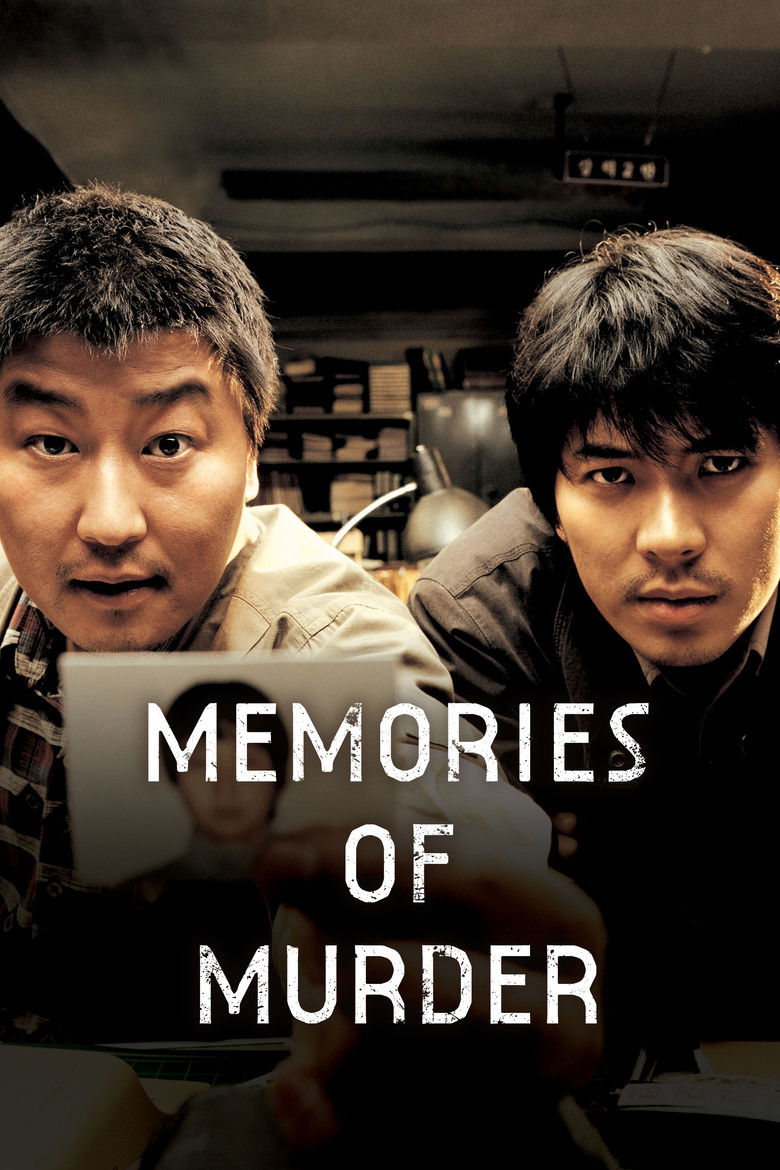
There's a shot near the end of this film that I haven't been able to shake since I first saw it. A man stares directly into the camera, into you, and the look on his face contains everything the film has been building towards: exhaustion, grief, and the hollow horror of an unanswered question. It's one of the most quietly devastating moments I've encountered in a crime film. And the fact that it's rooted in something that actually happened makes it hit even harder.
Memories of Murder is Bong Joon-ho working at a level that feels almost unfair. It follows two detectives in rural 1980s South Korea investigating a series of murders, the country's first known serial killings, with no forensic resources worth speaking of, no proper training, and a police force held together largely by bluster and desperation. When the film was made, the real case was still officially unsolved. The killer wouldn't be identified until 2019. That eerie, unresolved quality doesn't feel like a storytelling device. It seeps into the bones of the whole thing.
What I love most about it is the way it refuses to behave like a thriller. You're not watching a puzzle being assembled. You're watching people come undone. Song Kang-ho plays Detective Park, a man who runs almost entirely on gut instinct and bluff, and it's a brilliant, career-defining performance. He's funny, infuriating, pitiable and, at times, genuinely frightening in his wrongheadedness. His partner, played by Kim Sang-kyung, arrives from Seoul with methodical intelligence and a quiet confidence that slowly, then rapidly, crumbles into something darker. The film tracks both men's erosion with real tenderness, even as it holds them accountable for their failures.
Because there are failures. Ugly ones. Evidence is bungled, suspects are brutalised, confessions are beaten out of the wrong people. Bong doesn't let the period setting excuse any of it. This is a film about systemic incompetence, about a society whose institutions were simply not equipped, and in some cases not willing, to meet the moment. That makes it a bleak commentary on power and class as much as it is a crime story. If you've seen Parasite (2019), you'll recognise this preoccupation immediately. It's a through-line in Bong's work: the way structures that are supposed to protect people end up exposing or destroying them instead.
The direction is patient and precise in a way that demands your trust. There's dark comedy woven through the early stretches, broad and almost slapstick, and it sits beside genuine dread without either quality cancelling the other out. That tonal control is extraordinary. The cinematography is stark and gorgeous, the score subtle enough that you barely notice it working on you until it already has. Nothing here is designed to make you jump. It's designed to make you feel the walls closing in, slowly, over two hours, until there's nowhere left to go.
I've been on a proper run of South Korean cinema recently. The Handmaiden (2016) floored me, and A Bittersweet Life (2005) is a film I keep returning to. But Memories of Murder sits in its own category for me. It's not just a great Korean film. It's one of the greatest true-crime films ever made, full stop.
Not because it gives you answers. Precisely because it doesn't. The unknowing is the point. Justice doesn't arrive. Resolution doesn't arrive. What arrives instead is that final look into the camera, and the question it asks of you directly. I found it emotionally exhausting in the best possible way, the kind of exhaustion that means something real has happened to you while you were watching. Four stars, and not a frame wasted.
Rating: ★★★★ | Year: 2003 | Watched: 2025-11-16
Where to watch
Watch in the UK
Stream: MUBI · BFI Player · BFI Player Amazon Channel · MUBI Amazon Channel
Rent: Apple TV Store · Amazon Video · Google Play Movies · Curzon Home Cinema
Buy: Apple TV Store · Amazon Video · Google Play Movies · Sky Store
Physical: Amazon UK · Zavvi
Watch in the US
Rent: Amazon Video · Google Play Movies · YouTube · Fandango At Home
Buy: Amazon Video · Google Play Movies · YouTube · Fandango At Home
Physical: Amazon US
Affiliate disclosure: Movies With Macca may earn a small commission on purchases or subscriptions started via these links. It costs you nothing extra.
Related on Movies With Macca
More from Bong Joon Ho: Parasite (2019)
More with Song Kang-ho: Parasite (2019)
More from South Korea: Peninsula (2020) · Lost in Starlight (2025) · The Handmaiden (2016) · Yellow Colt (2014)
More from the 2000s: Kirikou and the Wild Beasts (2005) · Anchorman: The Legend of Ron Burgundy (2004) · Daredevil (2003) · Apocalypto (2006)
More crime: A Better Tomorrow (1986) · Angst (1983) · Stolen Face (1952) · Cairo Station (1958)
More drama: Viy (1967) · Wonder (2017) · A Better Tomorrow (1986) · Beautiful Boy (2018)