Yellow Colt (2014)
★★½ — Yellow Colt (2014)

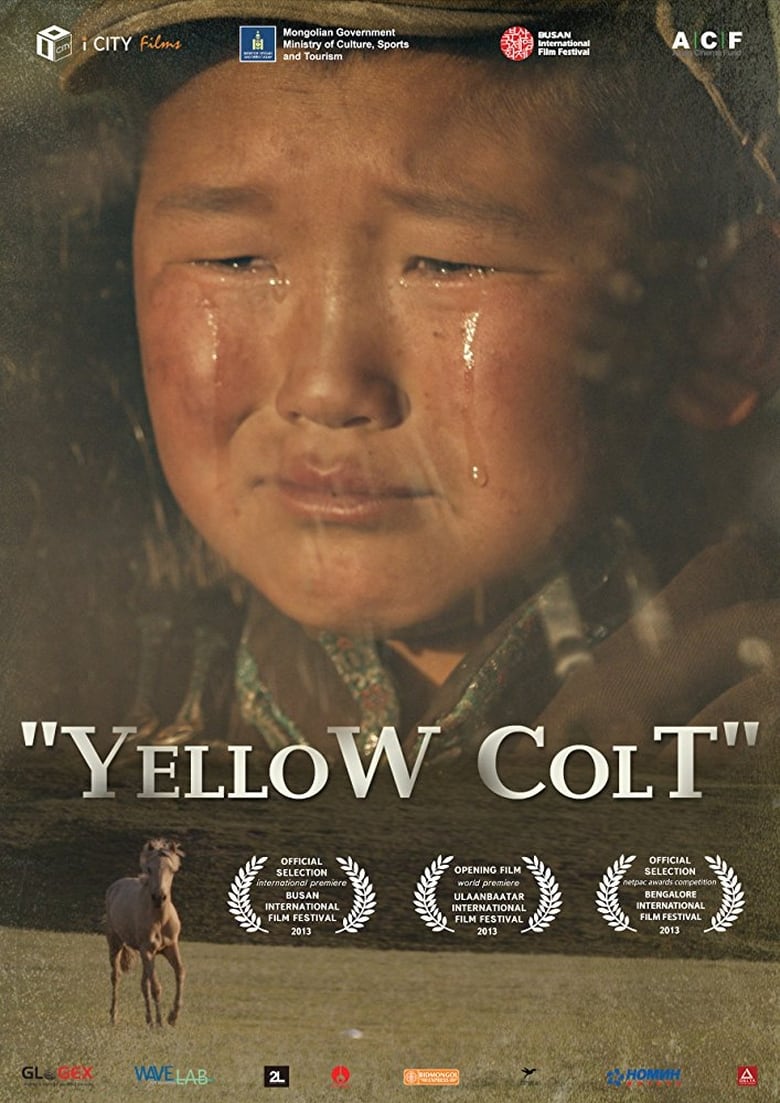
Can you drink horse milk? I genuinely didn't know the answer to that before sitting down with Yellow Colt, and I'll be honest, it wasn't a question I expected a Mongolian coming-of-age drama to answer for me. But here we are. That's the A-Z World Movie Tour for you: you end up places you'd never otherwise go, learning things you'd never otherwise know.
Mongolia itself is the real star of this film, and I don't mean that as a backhanded compliment. The steppes stretch out with a kind of indifferent grandeur that's genuinely hard to look away from. The open skies, the traditional Gers scattered across the landscape like punctuation marks on an endless page, the whole visual rhythm of the place, it has an almost hypnotic pull. And the music matches it. There's a folk instrumentation running through the film that feels completely rooted in the land, stirring without being showy. Just watching the textures of daily life in that environment, herding, the milking of mares, the fermentation of airag, gives the film a quiet authenticity that holds your attention even when the story starts to wander.
Because the story does wander. At its heart, this is a boy-and-his-horse tale, a setup as old as cinema itself, and Yellow Colt doesn't do a great deal to distinguish itself from that well-worn tradition. The emotional beats are broad, the character work thin. You can see the filmmakers care about the culture they're depicting, and that sincerity counts for something, but the script never quite digs deep enough to make the journey feel truly earned. The performances are earnest rather than electric, and there's a flatness to the dramatic arc that stops the film from really galloping anywhere surprising.
It's a bit like watching a beautiful landscape painting that you'd happily hang on a wall but wouldn't necessarily revisit for what it says. The surface is gorgeous. The depth is harder to find. I kept wanting the story to do more with its setting and its central relationship, to find the specific, telling detail that turns a familiar premise into something personal. Occasionally it gets there, particularly in those quieter observational moments around daily ritual. But just as often, it settles for the broad gesture when a smaller, sharper one would've landed harder.
If you're after another film about childhood, landscape and a culture rarely seen on screen, I'd point you towards Mustang, which covers some similar emotional territory (and, fittingly, also involves horses) with a good deal more urgency and specificity. That one stuck with me long after the credits rolled. Yellow Colt is gentler, more passive, content to observe rather than to press.
That said, I'd be too harsh if I dismissed it entirely. As a window into Mongolian life, it earns its place. The world it shows is one most of us will never see firsthand, and there's genuine value in that alone. I came away with a real curiosity about the country, its landscape, its traditions, and yes, its fermented mare's milk. Whether that curiosity was earned by the drama or simply by the scenery, I'm genuinely not sure.
Two and a half stars. Worth a watch if you're globe-trotting through world cinema, but manage your expectations on the storytelling front. Sometimes the journey matters more than the destination, and sometimes it's the other way around. Yellow Colt is very much a journey film, for better and for worse.
Rating: ★★½ | Year: 2014 | Watched: 2025-07-23
Where to watch
Watch in the UK
Physical: Amazon UK · Zavvi
Watch in the US
Physical: Amazon US
Affiliate disclosure: Movies With Macca may earn a small commission on purchases or subscriptions started via these links. It costs you nothing extra.
Related on Movies With Macca
More from South Korea: Memories of Murder (2003) · Peninsula (2020) · Lost in Starlight (2025) · The Handmaiden (2016)
More from the 2010s: Wonder (2017) · Beautiful Boy (2018) · The Witch (2015) · What We Do in the Shadows (2014)
More drama: Viy (1967) · Wonder (2017) · A Better Tomorrow (1986) · Beautiful Boy (2018)