Looking for Langston (1989)
★★½ — Looking for Langston (1989)

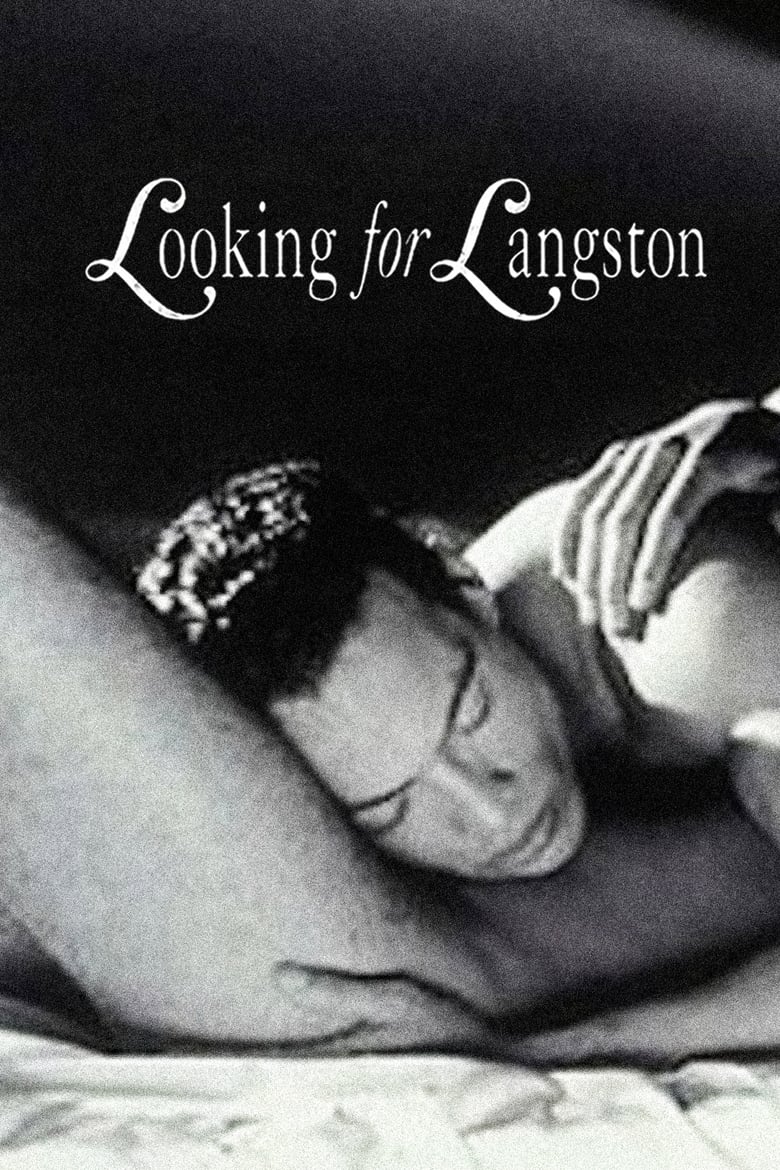
There's a moment in Looking for Langston where a jazz club seems to exist outside of time entirely. Golden light pools across faces, bodies move in slow communion, and a whispered line of poetry curls through the smoke like something half-remembered from a dream. It's ravishing. It's also, for me, where the film both succeeds completely and where it begins to lose me.
Isaac Julien's 1989 film is not trying to be a conventional documentary, and it would be unfair to treat it like one. It's part archival collage, part poetic elegy, part fever dream. It reaches back into the Harlem Renaissance to ask what was hidden, suppressed, or simply unspoken about Black queer desire and identity, drawing on the poetry of Langston Hughes, James Baldwin, Bruce Nugent, and others to construct something closer to a séance than a biography. The film isn't really "about" Langston Hughes in any straightforward sense. It's about the space around him. The silences. The things the history books quietly set aside.
And approached on those terms, it's a genuinely striking piece of work. The imagery is painterly without being precious. The sound design layers period jazz with whispered verse in a way that feels immersive rather than affected. There's real care in how Julien photographs his subjects, intimately, sensually, without ever tipping into exoticism. The reverence here is earned, not performed.
But here's my honest confession: I found myself admiring it more than I was moved by it. And that gap, between intellectual appreciation and actual emotional connection, is where the film lives for me. Because Looking for Langston is deliberately, almost militantly, non-narrative. There are no characters to follow, no story to track, no arc of any kind. Just mood. Metaphor. Atmosphere. Which is absolutely a legitimate artistic choice, and for the right viewer it will feel like pure liberation. For me, though, sitting in that much ambiguity for an extended stretch, it started to feel like being handed a beautiful object I couldn't quite hold.
It reminded me a little of how I felt watching Blue (1993), Derek Jarman's meditation on loss and blindness that gives you a single blue screen and a voice. That one hit me harder, maybe because the emotional stakes felt more immediate, more raw. Looking for Langston keeps its grief at a certain remove, wrapped in aesthetic beauty, and I respect that as a formal decision. I just didn't always feel it in my chest the way I think it wanted me to.
And I should be clear: this isn't a failure on the film's part. It's doing exactly what it sets out to do. If experimental, non-narrative cinema is your native language, if poetry is something you sit with rather than decode, if you're drawn to films that feel more like installations than stories, then this is going to land very differently for you than it did for me. I can see why it matters. I can see why it's considered an important work. I just can't pretend it fully reached me.
What I'll take away from it are images. That jazz club. Those slow glances across rooms. The way the light treats every face like it deserves to be remembered. There's beauty here in abundance, and a genuine political and historical tenderness that I found moving in flashes. It's a film that clearly loves its subjects, and there's something quietly radical about that love being placed so deliberately on screen.
Two and a half stars. Rich with artistry, short on the emotional grip I was hoping for. Worth your time if the form speaks to you. Worth your admiration regardless.
Rating: ★★½ | Year: 1989 | Watched: 2026-02-27
Related on Movies With Macca
More from United Kingdom: Lessons of Darkness (1992) · Shinjuku Boys (1995) · The Curse of Frankenstein (1957) · Blue (1993)
More from the 1980s: Nightmare City (1980) · A Better Tomorrow (1986) · Style Wars (1983) · Garlic Is as Good as Ten Mothers (1980)
More drama: Viy (1967) · Wonder (2017) · A Better Tomorrow (1986) · Beautiful Boy (2018)