
Halloween (1978)
★★★★ — Halloween (1978)

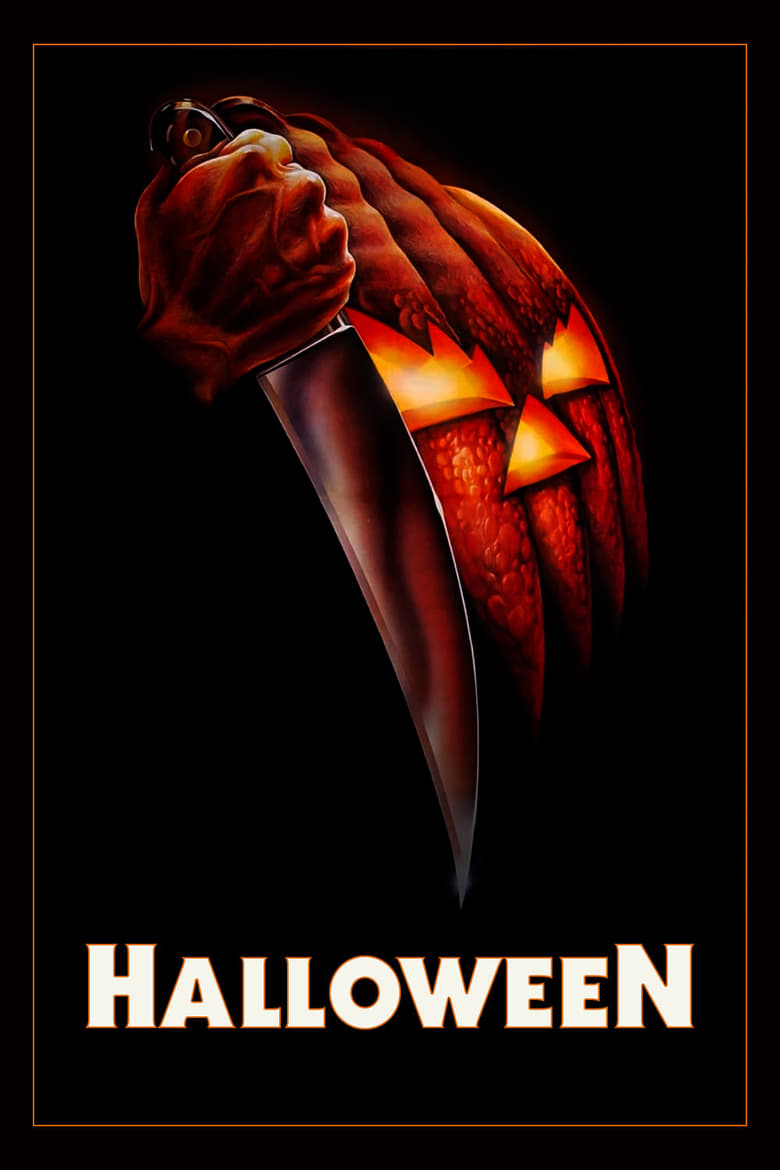
I still can't look out into my garden at night without getting that prickle on the back of my neck. Nearly fifty years on from its release, John Carpenter's Halloween has that effect on me. That's not nostalgia. That's craft.
If there's a gold standard for slasher films, this is it. No elaborate set pieces, no gimmicks, no buckets of gore thrown at the screen to compensate for a lack of ideas. Just pure, patient, suffocating suspense, built from shadows and silence and one of the most iconic horror scores ever committed to film. That main theme, all stabbing piano keys and relentless rhythm, gets under your skin in the first thirty seconds and never really leaves.
What Carpenter understands, and what so many imitators have failed to grasp, is that fear lives in the spaces between things. Every slow pan across a suburban street, every moment where the camera lingers just a half-second too long on a dark doorway, every quiet that stretches out past comfort. Michael Myers barely moves quickly. He doesn't need to. He walks, and somehow that's worse. He's not really a man in a mask, he's something else entirely. The shape of fear itself, as the film practically tells you. An unstoppable, unknowable force that turns the most ordinary setting imaginable, a quiet American neighbourhood on Halloween night, into somewhere deeply, horribly wrong.
And then there's Jamie Lee Curtis. Her performance as Laurie Strode is her breakout role, and it's brilliant precisely because it doesn't feel like a performance at all. She's bookish and kind and a little awkward, and you're rooting for her from the first scene. She set the benchmark for women in horror going forward, and it's a benchmark that's taken a long time for the genre to consistently meet again.
I know some people find it slow by modern standards. I'd push back on that, because the slowness is the point. Halloween builds and builds with such deliberate intent that when the violence does arrive, it hits you like a door swinging open in the dark. The restraint makes everything count. Carpenter knows that what you imagine is almost always scarier than what you're shown, and he trusts you enough to do some of the work yourself.
It's worth saying that Carpenter's work in this period is just staggering when you look at it as a body of work. I loved Assault on Precinct 13 (1976) for similar reasons, that same economy of tension, that same confidence in restraint. And if Halloween has you hungry for more of his atmosphere, The Fog (1980) is well worth your time, even if it doesn't quite hit the same heights. For my thoughts on where the story goes next, you can read what I made of Halloween II (1981), though let's just say the law of diminishing returns kicks in fairly swiftly.
But none of that dims the original. Halloween is the undisputed king of slasher cinema, and I don't expect that to change. It works because it's simple. It works because it's confident. And it works because, even now, it makes a perfectly ordinary back garden feel like somewhere you really shouldn't be standing alone in the dark.
Four stars.
Rating: ★★★★ | Year: 1978 | Watched: 2007-01-31
Where to watch
Watch in the UK
Stream: Shudder · Shudder Amazon Channel · Cultpix
Rent: Apple TV Store · Amazon Video · Sky Store
Buy: Apple TV Store · Amazon Video · Sky Store
Physical: Amazon UK · Zavvi
Watch in the US
Stream: fuboTV · Philo · AMC Plus Apple TV channel · AMC+ Amazon Channel
Rent: Amazon Video · Apple TV Store · Google Play Movies · YouTube
Buy: Amazon Video · Apple TV Store · Google Play Movies · YouTube
Physical: Amazon US
Affiliate disclosure: Movies With Macca may earn a small commission on purchases or subscriptions started via these links. It costs you nothing extra.
Related on Movies With Macca
More from John Carpenter: Assault on Precinct 13 (1976) · They Live (1988) · The Fog (1980) · Big Trouble in Little China (1986)
More with Donald Pleasence: Death Line (1972) · Halloween II (1981)
More from the 1970s: Fantastic Planet (1973) · Here and Elsewhere (1976) · Italianamerican (1974) · Punishment Park (1971)
More horror: Invasion of the Body Snatchers (1956) · Viy (1967) · Nightmare City (1980) · Angst (1983)
More thriller: Invasion of the Body Snatchers (1956) · Angst (1983) · The Long Walk (2025) · Punishment Park (1971)



