Freaks (1932)
★★ — Freaks (1932)

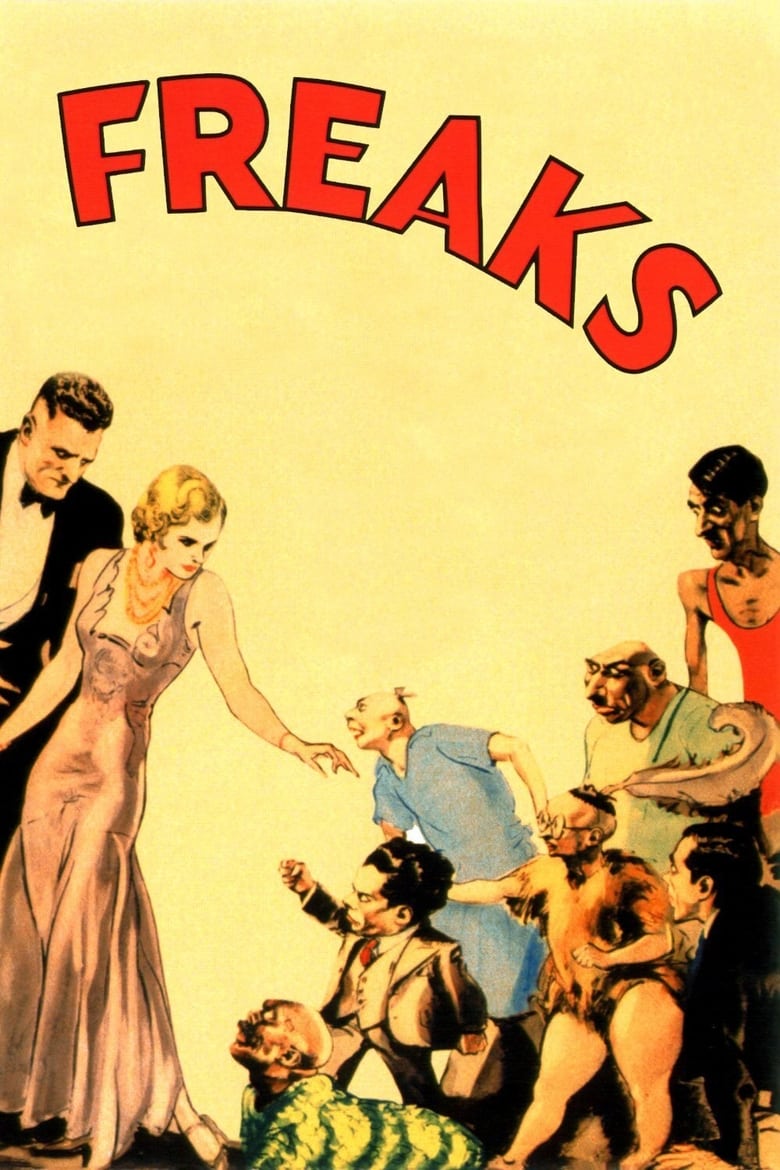
My mate first put this on during a late-night session, which is probably the exact conditions under which Freaks lands hardest. The lights low, the mood strange, and a film unspooling on screen that you genuinely cannot get a read on. Is it brave? Is it exploitative? Is it both? By the time the credits rolled, I still wasn't sure, and I'm not convinced I'm meant to be.
Tod Browning's 1932 film is one of those titles that gets passed around in certain circles as a must-see, usually with a knowing look attached. And there's no denying its historical weight. The cast is drawn from real sideshow performers, people with genuine physical disabilities, and placing them at the centre of a mainstream studio picture was, by the standards of the time, an extraordinary decision. The film opens with something approaching warmth. There's a tight-knit community here, a sense of loyalty and shared humanity among the troupe, and for a brief while it feels like Browning might actually be making the progressive film it's sometimes credited as being.
Then things start to curdle, and they curdle fast.
The plot hinges on a betrayal by Cleopatra, a trapeze artist who feigns affection for one of the troupe's members with mercenary intentions. She's the film's villain, and she's also one of the few able-bodied characters given real screen time. That's where the discomfort starts to set in. The disabled performers are framed through lingering close-ups that dwell on their bodies in a way that feels less like humanising and more like gawking. The camera's eye is not exactly compassionate. It's fascinated, and fascination is a different thing entirely.
The infamous climax, that rain-drenched, mud-soaked revenge sequence, is the moment the film fully loses me. It's designed to shock, to deliver a kind of grotesque poetic justice, but what it actually does is lean hard into fear and revulsion. The very people the film supposedly champions become the monsters in the closing act, terrifying precisely because of how they look and move. Whatever goodwill the earlier scenes built up, it evaporates there. The framing undermines the message, whether Browning intended that or not.
I've seen Browning's work elsewhere. I reviewed The Unknown (1927), and that film showed he could build genuine dread and psychological complexity. Here, the craft is in service of something murkier. The question that keeps nagging at me isn't whether Freaks is well-made. It's who it was made for. Studio audiences in 1932 were not, on the whole, being invited to sit with the sideshow performers in solidarity. They were being invited to stare, to feel unsettled, and then to go home.
Now, I don't want to be too dismissive. There are moments in the first half that feel genuinely ahead of their time, scenes that grant the performers dignity and interiority that mainstream cinema almost never bothered with. And the discomfort the film creates is real and worth sitting with. But discomfort isn't the same as insight, and a film that makes you squirm doesn't automatically earn its place in the progressive canon just because it dares to show faces that weren't usually on screen.
The legacy of Freaks is rightly complicated, and anyone telling you it's a straightforward classic is selling you something. It's historically significant, absolutely. It raises questions that are still worth arguing about. But watching it now, in good conscience, is a genuinely uncomfortable experience, and not always in the way that makes you feel like you've learned something. More often it's the discomfort of watching something that can't quite decide what it is, and ends up somewhere a lot less honourable than it started.
Two stars. A curiosity, not a classic, and a film whose reputation I'd encourage anyone to interrogate rather than just accept.
Rating: ★★ | Year: 1932 | Watched: 2025-07-29
Where to watch
Watch in the UK
Stream: Amazon Prime Video · Amazon Prime Video with Ads · Bloodstream
Rent: Apple TV Store · Amazon Video · Google Play Movies · Sky Store
Buy: Apple TV Store · Amazon Video · Google Play Movies · Sky Store
Physical: Amazon UK · Zavvi
Watch in the US
Stream: YouTube TV · Bloodstream
Rent: Amazon Video · Apple TV Store · Google Play Movies · YouTube
Buy: Amazon Video · Apple TV Store · Google Play Movies · YouTube
Physical: Amazon US
Affiliate disclosure: Movies With Macca may earn a small commission on purchases or subscriptions started via these links. It costs you nothing extra.
Related on Movies With Macca
More from Tod Browning: The Unknown (1927)
More from the 1930s: Earth (1930) · Monkey Business (1931) · Sabotage (1936) · People on Sunday (1930)
More drama: Viy (1967) · Wonder (2017) · A Better Tomorrow (1986) · Beautiful Boy (2018)
More horror: Invasion of the Body Snatchers (1956) · Viy (1967) · Nightmare City (1980) · Angst (1983)