Flaming Creatures (1963)
★ — Flaming Creatures (1963)

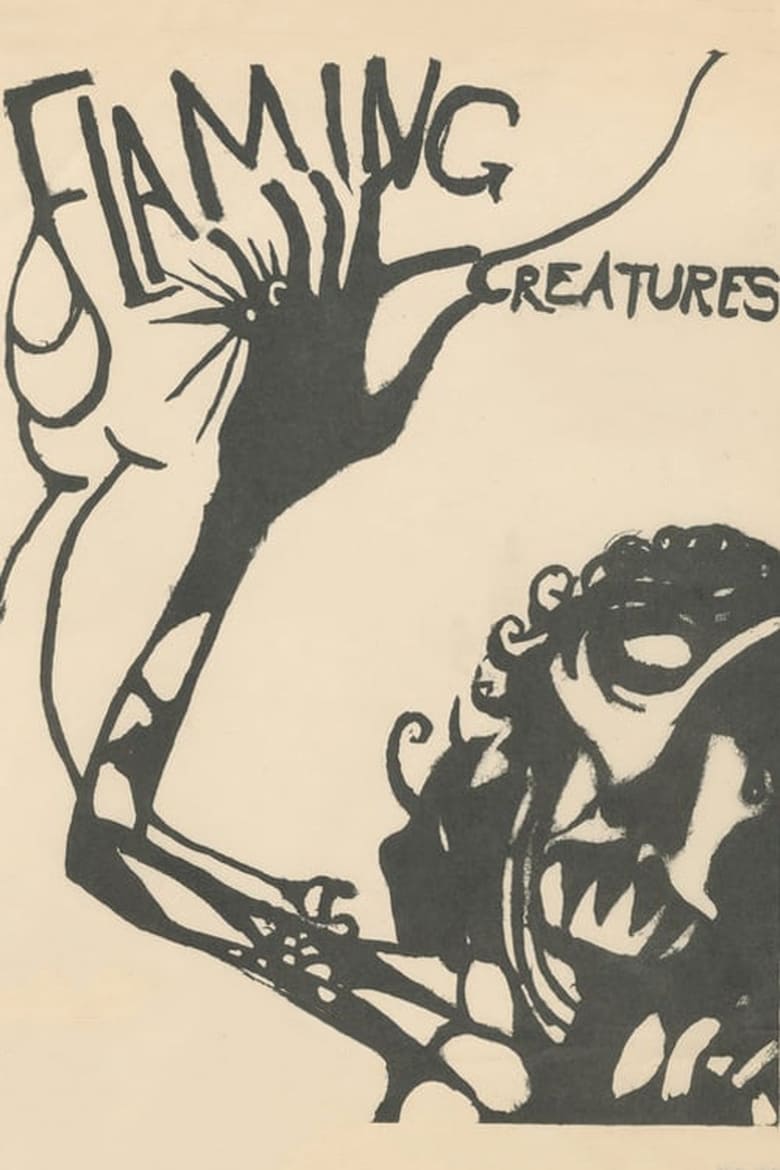
Some films earn their notoriety. Some films simply have it, and the two things are not the same. Flaming Creatures is, by any conventional measure, one of the most historically significant works of American underground cinema. It was banned. It was seized by police. Susan Sontag wrote about it. Jonas Mekas went to court over it. And yet, sitting down to actually watch the thing, I found myself checking the time roughly every four minutes, waiting for something, anything, to happen.
Jack Smith's 1963 experiment drops you into what appears to be a sand-covered loft, populated by languid, ambiguously gendered figures who writhe, pose, and drift in and out of frame. The visuals are murky and severely overexposed, shot on degraded 16mm stock to the point where the image frequently dissolves into abstraction. The sound design, if you can call it that, is a low soup of moans, whispers, and what sounds like music played through a wall from three doors down. There's no narrative, no discernible structure. The "events," such as they are, amount to slow-motion posing and a simulated orgy that manages to be both confrontational in intent and staggeringly dull in execution.
I'll give it this: in 1963, the LGBTQ sensibility on display here was genuinely radical. The blurring of gender, the unapologetic queerness, the refusal to frame any of it as aberrant or shameful, that mattered. It was brave, and the legal persecution Smith faced because of this film was real and ugly. History owes the film that acknowledgement. But historical bravery and present-tense watchability are different things entirely, and Flaming Creatures has almost none of the latter.
The defence you'll most often hear is that the technical roughness is a deliberate aesthetic choice, that the grain and the blown-out whites and the amateur framing are part of the point. Maybe. But there's a version of that argument that becomes a convenient shield for any film that looks a mess. When I watch something like Daisies (1966), I see a film that's genuinely chaotic and formally anarchic but also propulsive, funny, and alive. Flaming Creatures doesn't feel alive. It feels inert. The transgression has no charge behind it.
The problem isn't that it's weird or challenging or without conventional story. I don't need a three-act structure. I need some sense that the film is going somewhere, or feeling something, or doing something other than existing in a state of carefully cultivated languor. Shock-for-shock's-sake was already a tired game in 1963, and it has only grown tireder since. Without the context of its banned status and its place in the underground film canon, this is simply a badly lit collection of slow poses. With that context, it's a badly lit collection of slow poses that people once arrested someone for screening.
Look, I understand why it's in the textbooks. I understand why academics find it useful. But I reviewed a film here, not a historical document, and as a film, it offers almost nothing beyond a kind of grim endurance. The viewing experience is alienating in a way that doesn't reward you on the other side of it. Some difficult films earn their difficulty. This one just hoards it.
Not everything that was once scandalous deserves our sustained attention now. Some things were important in the moment and have since calcified into footnotes best encountered as a paragraph in a book rather than forty-five minutes of your evening. Flaming Creatures is one of them. Read about it. Understand its place in history. But I can't in good conscience tell you to actually sit through it.
One star.
Rating: ★ | Year: 1963 | Watched: 2026-03-17
Related on Movies With Macca
More from the 1960s: Viy (1967) · Persona (1966) · Carnival of Souls (1962) · Daisies (1966)
More comedy: The Eagle (1925) · The General (1926) · Americana (2023) · The Naked Gun: From the Files of Police Squad! (1988)
More horror: Invasion of the Body Snatchers (1956) · Viy (1967) · Nightmare City (1980) · Angst (1983)