Day of the Wacko (2002)
★★★★ — Day of the Wacko (2002)

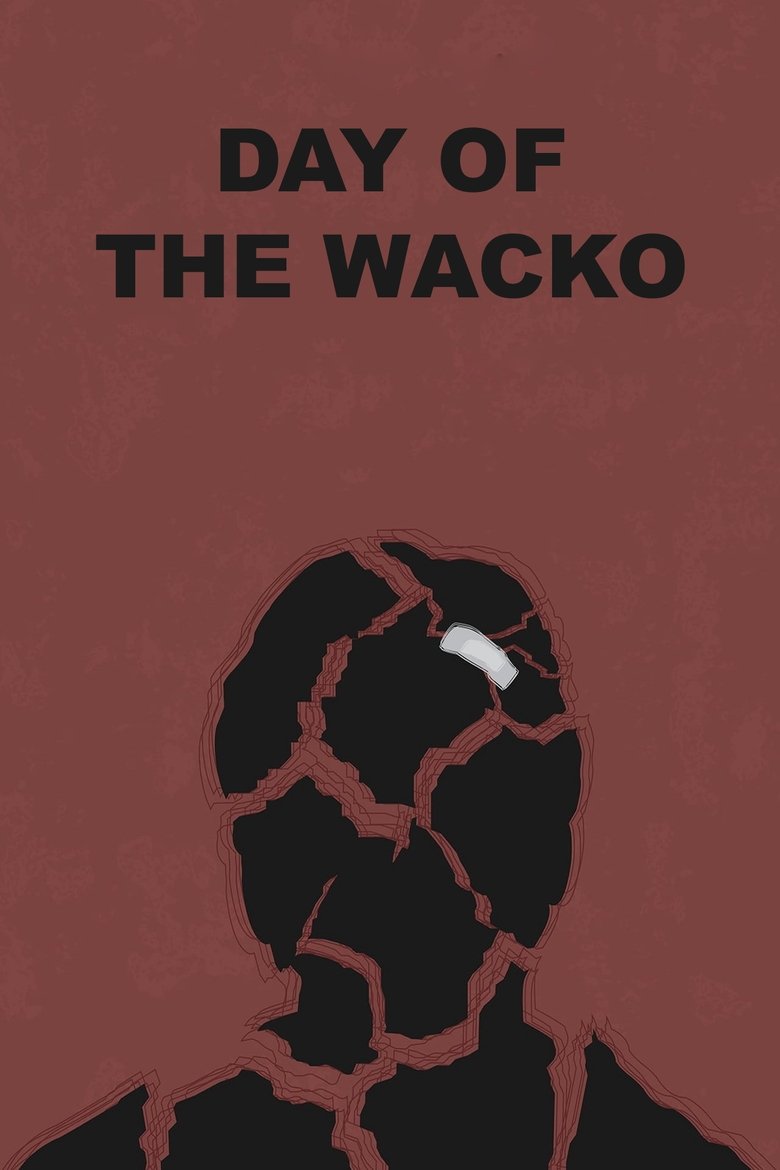
Nothing happens in Day of the Wacko. And I mean that as the highest possible compliment.
There's no inciting incident, no third-act revelation, no villain to defeat. What there is, for the entirety of this Polish gem from 2002, is a middle-aged Warsaw intellectual named Adaś Miauczyński, and the relentless, grinding, darkly hilarious disaster of simply existing inside his own head for a single day. By the time the credits roll, you'll feel like you've run a marathon you didn't sign up for. And somehow, you'll be grateful for it.
Marek Kondrat plays Adaś with a precision that's genuinely startling. This is not the kind of performance where you catch an actor acting. Kondrat disappears so completely into this man's rituals, his superstitions, his spiralling internal logic, that watching him feels uncomfortably voyeuristic at times. Adaś is a sufferer of OCD and anxiety, wrapped in a thick overcoat of intellectual self-loathing and biting wit. He checks doors. He sits a certain way. He repeats numbers. He narrates his own existence in an internal monologue that never, ever, mercifully shuts up. And writer-director Marek Koterski frames all of this not as quirk or comic eccentricity, but as survival. This is what getting through a day looks like when your own mind is the main obstacle.
What Koterski does so brilliantly is refuse to dramatise any of it for effect. The camera stays close, the pacing mimics the particular exhaustion of mental fatigue, and the humour, and it is funny, comes from recognition rather than mockery. You laugh, then you wince, then something tightens in your chest because you've had that thought, or something like it. The checking of the door handle before leaving. The intrusive nonsense that loops on repeat while you're trying to hold a normal conversation. Koterski doesn't explain OCD or package it neatly. He just shows you what it costs, minute by minute.
I found myself thinking about Yi Yi while watching this, another film where the drama is entirely internal and domestic, where the biggest events are the smallest ones. Both films trust that ordinary life, rendered honestly enough, is more than sufficient. Neither needs a plot. Both earn their runtime.
The bleakness here is real, I won't pretend otherwise. This is not a comfortable watch. Minor encounters feel catastrophic. Awkward social moments linger like bruises. Nothing resolves cleanly because nothing in Adaś's world ever does. And yet there's an undeniable warmth underneath all of it, a warmth that comes from the film's refusal to judge its protagonist. Koterski clearly knows this man from the inside. You don't write Adaś Miauczyński at that level of detail without having spent real time in that particular mental landscape yourself.
It's exhausting to watch. Intentionally, necessarily exhausting. The film puts you through the wringer not because it wants to punish you, but because it wants you to understand. And by the end, you do. You feel the weight of a day that, from the outside, looked like nothing much at all.
Poland has given us extraordinary films that carry the full burden of history and tragedy, and I've been moved deeply by things like The Pianist and Passenger (1963) on this A-Z World Movie Tour. But Day of the Wacko operates in an entirely different register, quieter, smaller, and in its own way just as devastating. It's a masterpiece of psychological realism, and one of the most honest portrayals of a troubled mind I've ever seen on screen.
Four stars. Seek it out.
Rating: ★★★★ | Year: 2002 | Watched: 2025-08-21
Related on Movies With Macca
More from Poland: Passenger (1963) · Pamfir (2022) · The Kite (2019) · The Pianist (2002)
More from the 2000s: Kirikou and the Wild Beasts (2005) · Anchorman: The Legend of Ron Burgundy (2004) · Daredevil (2003) · Apocalypto (2006)
More comedy: The Eagle (1925) · The General (1926) · Americana (2023) · The Naked Gun: From the Files of Police Squad! (1988)
More drama: Viy (1967) · Wonder (2017) · A Better Tomorrow (1986) · Beautiful Boy (2018)