City of Joy (2016)
★★★★½ — City of Joy (2016)

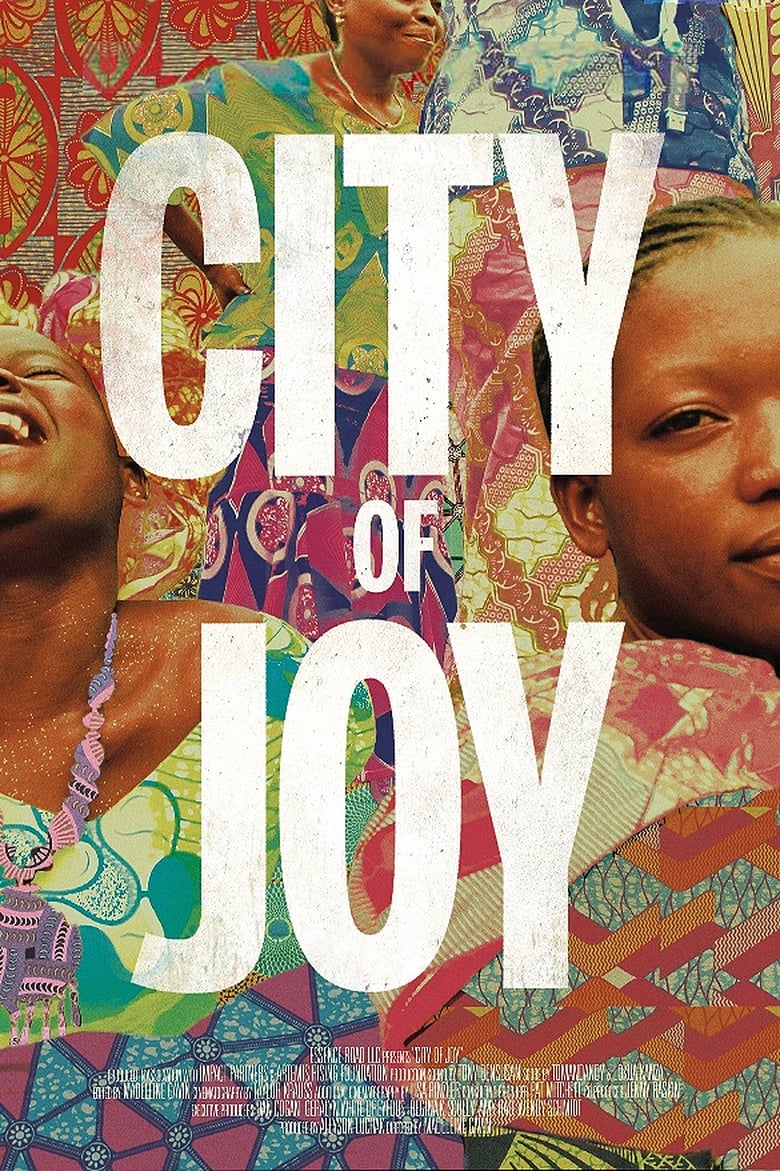
City of Joy is not a film you watch. It's one you survive. I don't say that lightly, and I don't say it to be dramatic. I say it because from the moment this documentary begins to the moment the credits roll, it grips you by the throat and doesn't let go. And even after it does, it stays with you. In your chest. In your gut. In that part of your brain that keeps returning to things you can't quite process.
Before I go any further, here is the donation link for the Panzi Foundation, the organisation at the heart of this film. Please use it: gofundme.com/charity/panzi-foundation-panzi-foundation-usa-panzi-hospital-and-foundations. I donated as much as I could. I'd ask you to do the same.
This is my entry for the Democratic Republic of Congo on my A-Z World Movie Tour, and it's one of those stops on that journey where the word "entry" feels almost obscenely inadequate. The DRC deserves to be known for more than its conflict, but this film demands you look at that conflict directly, without flinching, without looking away. It's about the systematic use of sexual violence as a weapon of war, and the women who survive it, and what happens next.
The testimonies here are almost unbearable. Women describing gang rape, mutilation, the theft of their children, all recounted with a quiet, devastating calm that chills you to the bone. There is no sensationalism. No exploitation. These are testimonies etched in survival, told by women who have decided that silence is no longer an option. You sit there feeling utterly helpless, and then the film does something extraordinary. It shows you what comes after.
The City of Joy itself is a sanctuary, a place where survivors are given space to grieve, to heal, to train, and ultimately to lead. Watching these women laugh together, dance together, scream into the open air with everything they have, it's one of the most agonising and electrifying things I've seen on screen in years. There is joy here. Real, hard-won, defiant joy. The kind that doesn't arrive despite everything these women have been through, but almost because of it. The fire in their bellies feels almost supernatural.
The film is equally unflinching about naming the systems that allow this to continue. The UN's complicity is called out. The West's appetite for conflict minerals is called out. The global indifference that lets this cycle spin on and on, decade after decade, is called out. If you walk away from this not furious at the structures and the powers that enable it, you genuinely weren't paying attention.
The doctors and activists working in this corner of the world are extraordinary. People risking everything, every single day, to stitch back together bodies and psyches torn apart by organised violence. Watching them work, watching them care, is both humbling and enraging in equal measure, because you're constantly aware of how much heavier the burden is than it should ever have to be.
My one gripe, and it's a genuine one, is a matter of balance. The film is necessarily heavy on trauma, and that weight is earned and important. But I wanted more time with the triumphs. More of those quiet moments of rebuilding, the women who go back to their communities as leaders, the slow and painstaking reclamation of a life. The title promises joy, and while it delivers on that promise in flashes, I'd have loved to see it breathe a little longer in those moments. That said, what the film does show you is seismic.
It reminded me, in tone if not in subject, of my experience watching Sunday in Brazzaville, another film rooted in Central Africa that asks you to sit with a place and its people properly, not as backdrop but as the whole point. The DRC deserves that same attention here, and City of Joy gives it.
Four and a half stars. This isn't entertainment. It's a wake-up call and a battle cry and a plea, all at once. These women don't want your pity. They want your action. So please, if this review moves you at all, follow that donation link. Do something. These stories deserve more than just our tears.
Rating: ★★★★½ | Year: 2016 | Watched: 2025-06-09
Where to watch
Watch in the UK
Stream: Netflix · Netflix Standard with Ads
Physical: Amazon UK · Zavvi
Watch in the US
Stream: Netflix · Netflix Standard with Ads
Physical: Amazon US
Affiliate disclosure: Movies With Macca may earn a small commission on purchases or subscriptions started via these links. It costs you nothing extra.
Related on Movies With Macca
More from Congo: Sunday in Brazzaville (2012)
More from the 2010s: Wonder (2017) · Beautiful Boy (2018) · The Witch (2015) · What We Do in the Shadows (2014)
More documentary: Letter from Siberia (1957) · Lessons of Darkness (1992) · Style Wars (1983) · Here and Elsewhere (1976)