Three Songs for Benazir (2021)
★★★ — Three Songs for Benazir (2021)

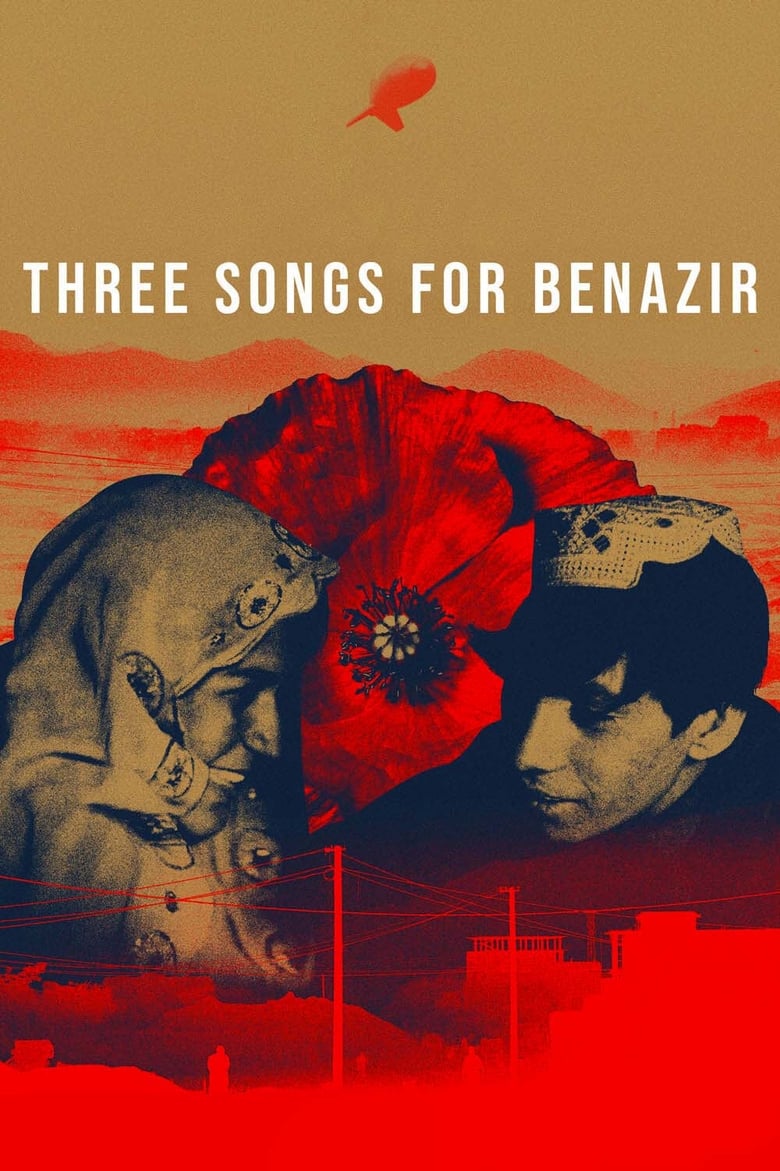
There's a moment in Three Songs for Benazir where the landscape itself seems to hold its breath, and you realise you're not watching a documentary in any traditional sense. You're watching something closer to a poem set to image and sound. That's both the film's greatest strength and the source of its frustrations.
Set in modern-day Afghanistan, this short film centres on a young couple: a dreamer with a poet's soul and his wife, Benazir, trying to carve out a life together against the backdrop of a country that has known little but conflict. It's a slight story, deliberately so, and the filmmakers are clearly more interested in mood, texture and feeling than in conventional plot. The cinematography is genuinely stunning. It finds beauty in arid, unforgiving terrain without ever romanticising the hardship. There's a real eye at work here, and the way music and silence are threaded through the film gives it a rhythm that pulls you in, even when the narrative refuses to give you a foothold.
The central conceit, blending spoken word poetry with a documentary-style realism, is an intriguing one. It reminded me a little of my experience with Letter from Siberia, where the form itself becomes part of the argument, where the how of the telling matters as much as the what. Here, that approach works in fits and starts. When it clicks, it's genuinely moving. You feel the weight of lives being lived in the margins of history, the quiet insistence on love and aspiration in a place the world associates almost exclusively with devastation.
But I won't pretend the whole thing lands as cleanly as I wanted it to. The abstract storytelling and slow, measured pacing create a distance that's hard to fully close. There were stretches where I felt like I was observing these characters from the far side of a window rather than sitting alongside them. The film grazes the surface of their inner lives without quite breaking through, and for all the visual poetry on offer, I occasionally found myself wanting more: more interiority, more friction, more of the mess and specificity that makes characters feel truly alive rather than beautifully composed.
That said, I think there's something important in what the filmmakers are doing. Too much coverage of Afghanistan, particularly in Western media, flattens the country into a single, unrelenting image of war. What this film insists on, quietly but persistently, is the humanity that exists in spite of all that. The dreams, the tenderness, the very human desire to build something. That impulse is worth honouring, and Three Songs for Benazir honours it with real care. It also made me think of Island Soldier, another film that tries to look at a community defined by conflict through the lens of individual human experience rather than geopolitics. The approach here is more abstract, more formally adventurous, but the spirit is similar.
It's a short film, so the commitment asked of you is modest. And I'd encourage you to make it, especially if you've grown tired of films that treat entire nations as little more than settings for other people's tragedies. This one puts its subjects at the centre with genuine respect. It just doesn't always give you enough to hold onto. It's bold, it's beautiful in places, and it's trying to do something genuinely different. That counts for plenty, even when the execution falls slightly short of the ambition.
Three stars.
Rating: ★★★ | Year: 2021 | Watched: 2025-05-20
Where to watch
Watch in the UK
Stream: Netflix · Netflix Standard with Ads
Physical: Amazon UK · Zavvi
Watch in the US
Stream: Netflix · Netflix Standard with Ads
Physical: Amazon US
Affiliate disclosure: Movies With Macca may earn a small commission on purchases or subscriptions started via these links. It costs you nothing extra.
Related on Movies With Macca
More from the 2020s: Mononoke the Movie: The Phantom in the Rain (2024) · Mononoke the Movie: Chapter II - The Ashes of Rage (2025) · The Long Walk (2025) · Americana (2023)
More documentary: Letter from Siberia (1957) · Lessons of Darkness (1992) · Style Wars (1983) · Here and Elsewhere (1976)