The Passion of the Christ (2004)
★★½ — The Passion of the Christ (2004)

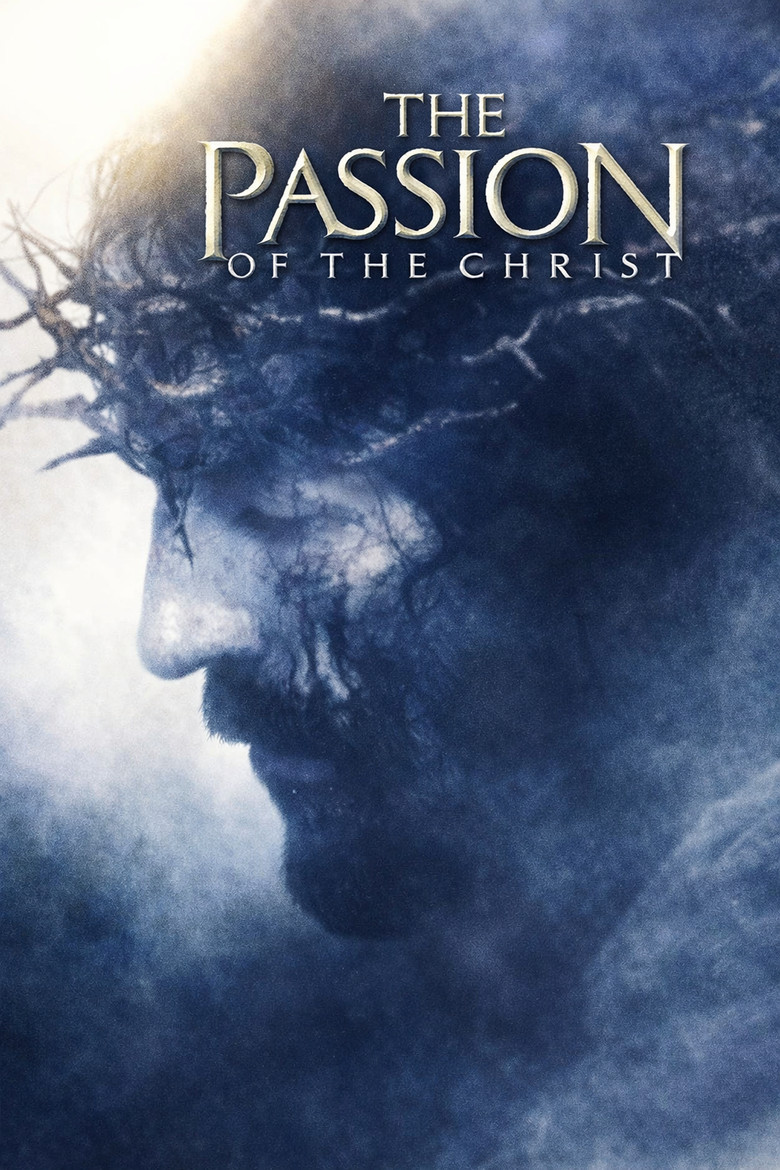
There's a moment fairly early in The Passion of the Christ where you realise this isn't going to let up. And it doesn't. For two hours, Mel Gibson puts you through it. The scourging, the crown of thorns, the long, agonising walk, the crucifixion itself. Every crack of the whip rendered with horrible clarity. Every wound detailed. The sound design alone is engineered to make your stomach turn. It is, without question, an ordeal to sit through.
I think that's the point. And I've sat with that for a while, trying to decide whether intention is enough.
Gibson made this with a fervour that's impossible to dismiss. The whole film is shot through with genuine, burning personal conviction. The decision to have the characters speak in Aramaic and Latin, with subtitles, was a bold one, and it gives the film a raw, almost documentary texture that a more polished Hollywood production would have smoothed away. The cinematography is stark and unforgiving. Jim Caviezel, in the lead role, puts himself through something physically extraordinary. You can't watch this and doubt that everyone involved believed in what they were making.
But belief and craft aren't quite the same thing as a fully realised film. And that's where I kept getting snagged. The Passion of the Christ is almost entirely stripped of context. The teachings are gone. The miracles are glimpsed only in brief, fragmentary flashbacks. The hope that makes the story of Jesus what it actually is, the reason billions of people have found meaning in it across centuries, is barely present. What we get instead is suffering, prolonged and unrelenting, and eventually that starts to feel less like spiritual experience and more like punishment for the audience. Gibson is so committed to depicting the physical torment that almost everything else gets crowded out.
There's barely any character depth beyond the central figure. The supporting cast exist largely to weep, sneer, or flinch. The emotional register is almost entirely one-note, because there's nowhere else for it to go when the entire film is constructed around a single sustained act of agony. I found myself going numb somewhere around the midpoint, which I suspect is the opposite of what Gibson intended.
It's worth saying: for many viewers, this film is genuinely powerful. I know people of faith for whom it hit hard and meaningfully. I'm not going to argue with that response. But as a piece of storytelling, judged on its own terms as a film, it's extraordinarily narrow. It's less a portrait of Jesus than a single, drawn-out moment of his death. The choice to begin where it begins and end where it ends, without the weight of everything that came before, means there's no real journey. Just suffering. And suffering, however unflinchingly rendered, needs something to push against.
Gibson has always been drawn to punishment on screen. I've written about Braveheart before, where the violence serves a story with genuine sweep and emotion. I've also written about Apocalypto, which is relentless in a similar way but has a propulsive, forward-driving energy that gives the brutality somewhere to go. The Passion doesn't have that momentum. It digs in and stays put.
Technically, there are things to admire. The production design is detailed and committed. Caviezel's performance is as gruelling as the material demands. And Gibson clearly has a visual instinct that goes beyond the ordinary. But the sheer, grinding relentlessness of it wears you down to the point where you stop feeling and start simply enduring. Which might be, on some level, the intended effect. But endurance isn't the same as engagement.
Two and a half stars. Made with absolute conviction, technically serious in parts, and clearly meaningful to many. But as a film, it's almost all suffering and very little else. I respect what Gibson was trying to do. I can't quite say I want to watch it again.
Rating: ★★½ | Year: 2004 | Watched: 2025-08-29
Where to watch
Watch in the UK
Stream: ITVX Premium · Lionsgate+ Amazon Channel
Rent: Apple TV Store · Rakuten TV · Amazon Video · Google Play Movies
Buy: Apple TV Store · Rakuten TV · Amazon Video · Google Play Movies
Physical: Amazon UK · Zavvi
Watch in the US
Rent: Amazon Video · Apple TV Store · Google Play Movies · YouTube
Buy: Amazon Video · Apple TV Store · Google Play Movies · YouTube
Physical: Amazon US
Affiliate disclosure: Movies With Macca may earn a small commission on purchases or subscriptions started via these links. It costs you nothing extra.
Related on Movies With Macca
More from Mel Gibson: Apocalypto (2006) · Braveheart (1995)
More from the 2000s: Kirikou and the Wild Beasts (2005) · Anchorman: The Legend of Ron Burgundy (2004) · Daredevil (2003) · Apocalypto (2006)
More drama: Viy (1967) · Wonder (2017) · A Better Tomorrow (1986) · Beautiful Boy (2018)