The Hills Have Eyes (1977)
★★★ — The Hills Have Eyes (1977)

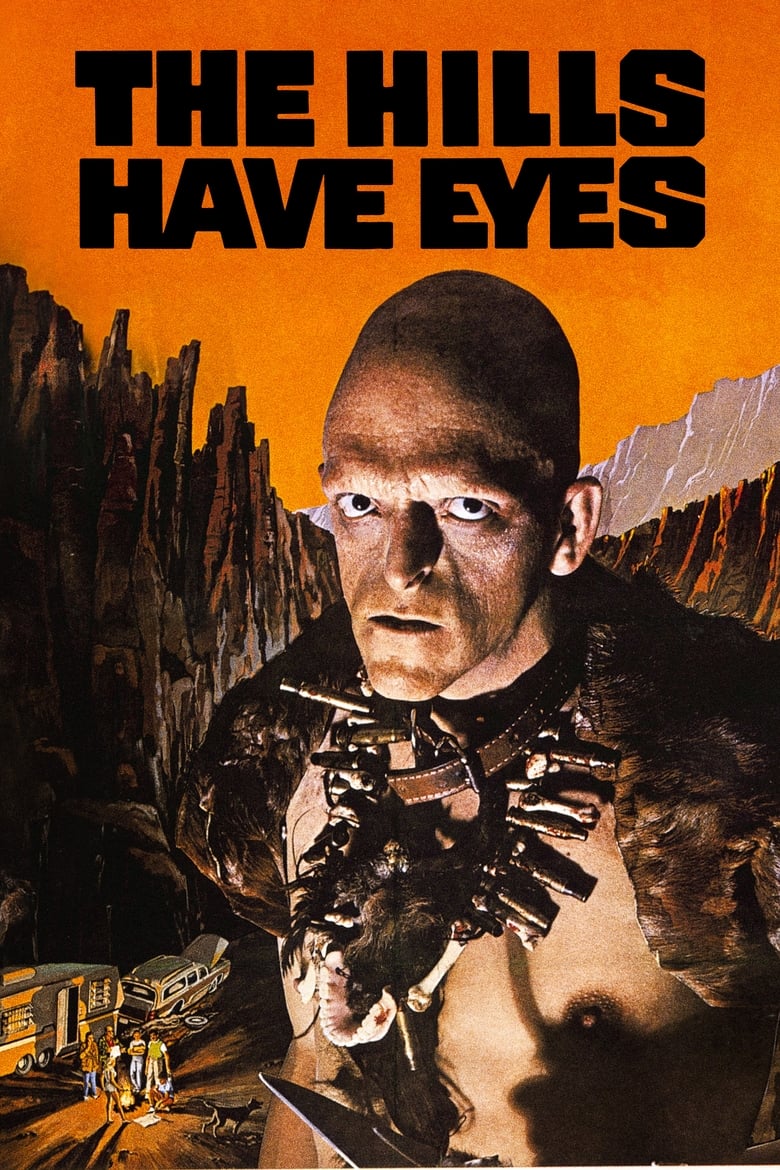
My dad showed me this film when I was about twelve years old, and I'm not sure I've fully forgiven him for it. Not because it traumatised me in the way proper horror should, but because it's the kind of film that gets under your skin in a quieter, grimier way. It doesn't jump out at you. It just sits there, ugly and mean, and waits.
Wes Craven made this at his most raw, and you can feel it in every frame. The camerawork is shaky, the sets are cheap, and there's absolutely no polish on any of it. Which, honestly, is exactly why it works. The story is about as simple as they come: a decent family, stranded out in the American desert, is stalked and picked off by a family of inbred cannibals living in the hills. That's your lot. No twist, no mythology, no lore to unpack. Just grim, grinding survival horror with a real sense of helplessness running through it.
It's not great, and I want to be straight about that. The acting is rough in places, the pacing lurches around in the middle act, and some of the dialogue is genuinely, laughably dreadful. "I'm not gonna eat no more white meat!" is a real line that a real person wrote down and filmed. But somehow, even with all that, the film doesn't stop being unsettling. The atmosphere carries it. The isolation of the desert setting, the way the violence feels personal and ugly rather than cool or stylised, the absence of any glamour whatsoever. There are no slick kills here to cheer at. It just feels mean.
There's a bit of Scottish folklore baked into the DNA of this one, supposedly. The legend of Sawney Bean, the cannibalistic clan said to have terrorised parts of Scotland, is cited as an inspiration, and whether or not that's entirely accurate, the idea of a parallel family existing just outside the edges of civilised society gives the film a nastier edge than your average creature feature. The cannibals aren't monsters in the traditional sense. They're a mirror, cracked and horrible, held up to the "normal" family at the centre of the story.
Craven was laying groundwork here, and that's worth acknowledging. You can draw a straight line from the sensibility of this film through to A Nightmare on Elm Street (1984) and eventually Scream (1996). He always had a knack for finding the pressure points in ordinary American life and pressing hard on them. A family holiday gone catastrophically wrong, the suburbs rubbing up against something feral and forgotten. It's not subtle, but it doesn't need to be.
By today's standards it isn't particularly scary, I'll grant you that. The horror genre has evolved considerably, and a lot of what felt transgressive in 1977 now reads more as bleak and uncomfortable than genuinely frightening. But disturbing and frightening aren't the same thing, and this film is definitely still the former. It has a nastiness to it that modern horror sometimes irons out in pursuit of spectacle. There's no spectacle here. Just dread, dirt, and the occasional line of dialogue so bad it loops back round to being perfect.
Three stars. Watchable, nasty, and a solid entry in the grindhouse nightmare canon. Not Craven's best work, but an important piece of what he'd eventually become. And if your dad shows it to you when you're twelve, just know that some things take a while to shake off.
Rating: ★★★ | Year: 1977 | Watched: 2025-09-05
Where to watch
Watch in the UK
Rent: Google Play Movies · YouTube
Buy: Google Play Movies · YouTube
Physical: Amazon UK · Zavvi
Watch in the US
Stream: Fandor
Physical: Amazon US
Affiliate disclosure: Movies With Macca may earn a small commission on purchases or subscriptions started via these links. It costs you nothing extra.
Related on Movies With Macca
More from Wes Craven: A Nightmare on Elm Street (1984) · Scream (1996)
More from the 1970s: Fantastic Planet (1973) · Here and Elsewhere (1976) · Italianamerican (1974) · Punishment Park (1971)
More horror: Invasion of the Body Snatchers (1956) · Viy (1967) · Nightmare City (1980) · Angst (1983)