The Green Mile (1999)
★★★★ — The Green Mile (1999)

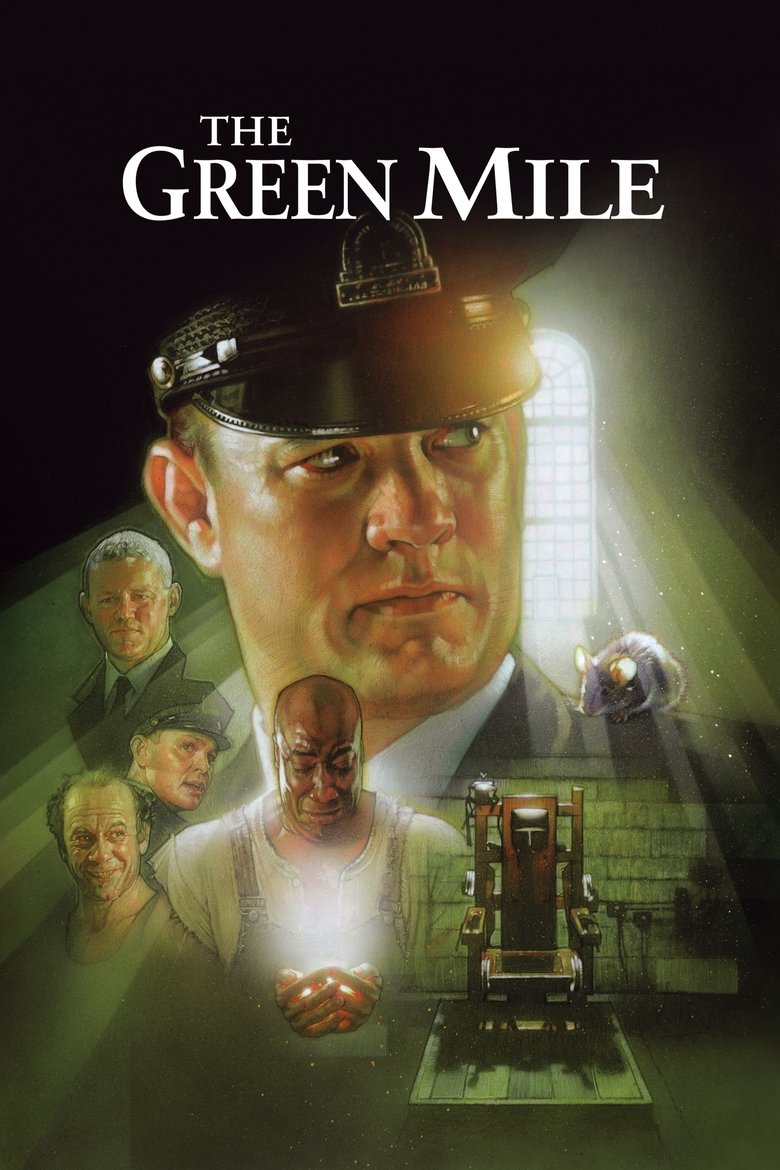
There are films you love, and then there are films you can only really bring yourself to watch once. Not because they're bad, not even close, but because they wring something out of you that takes a long time to grow back. Frank Darabont's The Green Mile is one of those. I've seen it. I felt it. And I'm genuinely not sure I'm in any hurry to go through it again.
Set on death row in 1930s Louisiana, the film follows the guards and inmates of Cold Mountain Penitentiary, and in particular the arrival of John Coffey, a giant of a man convicted of a crime that the film makes clear, early and heartbreakingly, he did not commit. What unfolds is part prison drama, part supernatural mystery, and part quiet human tragedy. It's a story about mercy and injustice, about what it costs to witness extraordinary grace in a world built on cruelty. Darabont, who also gave us The Shawshank Redemption, was clearly the right man for this kind of material. He understands how to make a prison feel like a moral universe all of its own.
Tom Hanks plays Paul Edgecomb, the senior guard at the centre of it all, and it's a typically strong performance. Understated, compassionate, haunted. Hanks has always been good at playing decency without making it feel dull, and he manages that here. But the film belongs to Michael Clarke Duncan. His portrayal of John Coffey is, honestly, majestic. A towering physical presence who speaks in a gentle rumble and carries in his eyes a sorrow that seems to go far deeper than any single man's suffering. It was his breakout role, and it's not hard to see why. He makes you believe every single thing the story asks you to believe, which is no small feat given how much the story asks.
The supporting cast hold up their end too. David Morse, Doug Hutchison, Bonnie Hunt, all of them bring genuine depth to roles that could easily have tipped into caricature or sentimentality. The villain of the piece, one of the guards, is the kind of character you want to reach through the screen for. Which means the performance is doing exactly what it should.
Now, the criticisms, and they're real ones. This film is over three hours long, and it feels it. Darabont lingers. He stretches out silences and rituals and quiet moments in a way that builds atmosphere, yes, but it also tests patience, especially in the middle stretch. Stephen King's source novel is episodic by nature, and that structure doesn't always make the leap to screen gracefully. There are sections that feel repetitive, moments where you're aware that the film is marking time rather than moving. For a story this powerful, that's a frustrating quality to sit with.
And yet. When the final act arrives, it hits with a force that's genuinely difficult to shake off. The emotional payoff is earned, completely and fully earned, and the sense of injustice lands not just in the head but somewhere deeper. You feel it in the bones. The wrongness of it. The weight of it. That's what the long, slow build is for, and in the end, Darabont justifies nearly every minute of it.
It's a flawed film in its rhythm, but close to flawless in its feeling. A story about grace in the darkest place imaginable, told with enormous care by people who clearly understood what they had. Four stars, and a firm recommendation, with the honest caveat that you should probably clear your evening and maybe keep a bit of distance from anyone you love straight afterwards.
Rating: ★★★★ | Year: 1999 | Watched: 2025-08-25
Where to watch
Watch in the UK
Stream: Sky Go · Now TV Cinema
Rent: Apple TV Store · Rakuten TV · Amazon Video · Google Play Movies
Buy: Apple TV Store · Rakuten TV · Amazon Video · Google Play Movies
Physical: Amazon UK · Zavvi
Watch in the US
Rent: Amazon Video · Apple TV Store · Google Play Movies · YouTube
Buy: Amazon Video · Apple TV Store · Google Play Movies · YouTube
Physical: Amazon US
Affiliate disclosure: Movies With Macca may earn a small commission on purchases or subscriptions started via these links. It costs you nothing extra.
Related on Movies With Macca
More from Frank Darabont: The Shawshank Redemption (1994)
More with Tom Hanks: Toy Story 4 (2019) · Inferno (2016) · Angels & Demons (2009) · The Da Vinci Code (2006)
More from the 1990s: Lessons of Darkness (1992) · Shinjuku Boys (1995) · Blue (1993) · Cemetery Man (1994)
More fantasy: Viy (1967) · Alice in Wonderland (1951) · Mononoke the Movie: The Phantom in the Rain (2024) · Mononoke the Movie: Chapter II - The Ashes of Rage (2025)
More drama: Viy (1967) · Wonder (2017) · A Better Tomorrow (1986) · Beautiful Boy (2018)