Steamboat Willie (1928)
★★★½ — Steamboat Willie (1928)

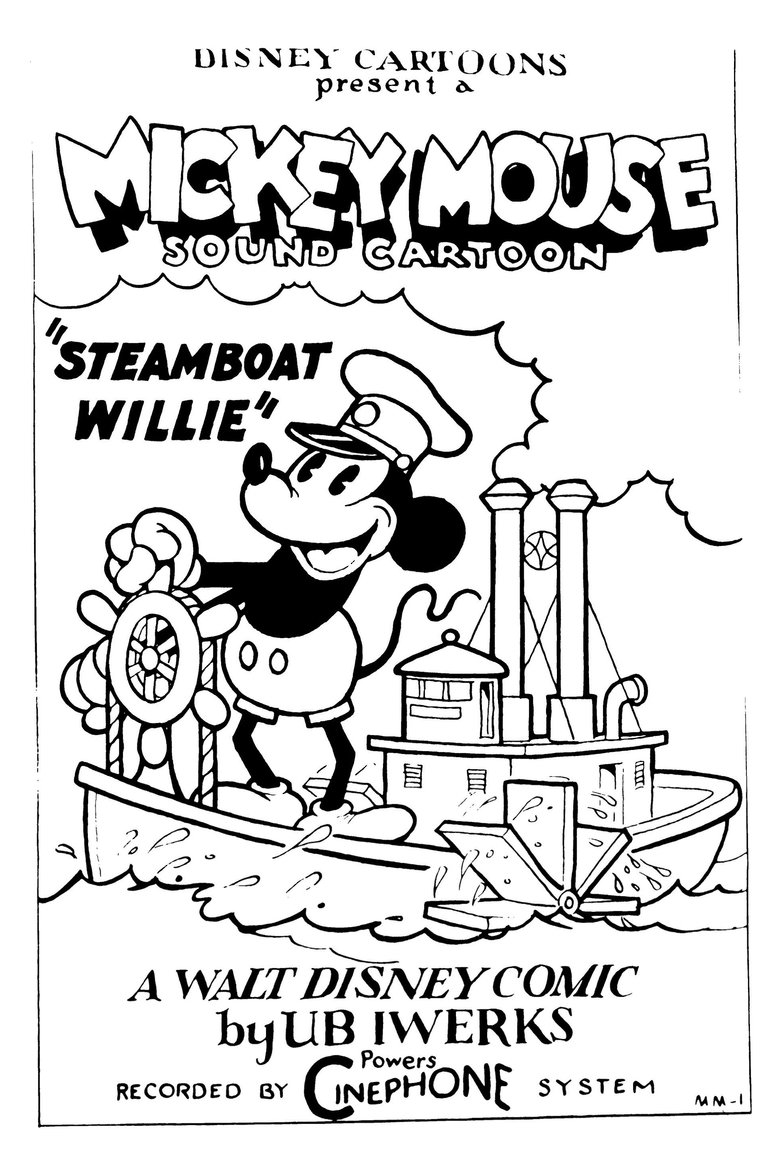
It plays with the pig's tits. I just want to get that on the record before anything else, because I think it tells you everything you need to know about what Steamboat Willie actually is, versus what we've been conditioned to believe it is. This is not the wholesome birth of a beloved family empire. This is a black-and-white cartoon about a deeply unhinged mouse who torments farm animals for his own amusement, and it is absolutely brilliant for it.
Think about that for a second. The entire Disney corporation, the theme parks, the merchandise, the Marvel films, the Star Wars saga, all of it traces its DNA back to roughly seven minutes of Mickey Mouse yanking tails, spinning a cat by the tail like a lasso, and yes, squeezing a sow's teats to honk out a tune. The foundation of the most powerful entertainment brand in history is a sadistic little rodent using livestock as a musical instrument. I find that genuinely funny, and a little bit wonderful.
What strikes you immediately is how mean Mickey is. Not mischievous in a cheeky, loveable way. Mean. He's got this manic energy, this gleeful cruelty, that the sanitised version of the character buried somewhere around the 1940s and never really recovered. The Mickey we know today is a corporate mascot, all white gloves and cheerful waving. The Mickey in Steamboat Willie looks like he'd start a fight. I'm not sure when exactly he mellowed out, but watching this, you can't help feeling something was lost along the way.
That said, the historical weight here is real and it's worth sitting with. Synchronised sound in animation didn't just happen. Someone had to do it first, properly, in a way that made audiences feel it. The way the music and the action lock together, the way every honk and squeal and pluck lands exactly on the beat, it's rough by modern standards but it's also astonishing when you remember what came before it. I've spent time with early Oswald the Lucky Rabbit shorts like Trolley Troubles and All Wet, and as charming as those are, watching Steamboat Willie afterwards you can feel the ground shifting beneath your feet. Something changed here.
The animation itself is scrappy. The lines wobble, the proportions are loose, and Mickey's design hasn't quite settled into the icon he'd become. But there's a vitality to it, a sense that everyone involved was making it up as they went and having a brilliant time doing so. That energy comes through the screen, even a century later. And I do mean a century. It's genuinely bizarre to sit there in 2024 and watch something from 1928 that still has a pulse.
I watched this with my kids, and here's the thing: they loved it. They weren't watching it as a history lesson. They weren't being respectful about its significance. They were just laughing at a mouse being absolutely feral with a goat. The simple, chaotic humour just works across the decades in a way that a lot of more polished animation frankly doesn't. There's something to be said for that.
Is it a great short? Not quite. It's more important than it is great, and those aren't the same thing. The pacing drags slightly once the initial novelty of the sound gag wears off, and the whole thing feels more like a proof of concept than a fully realised piece of storytelling. If you want to see what came next, and how quickly the studio refined the formula, The Skeleton Dance from just a year later shows a remarkable leap in confidence and craft.
But none of that diminishes what this is. A scrappy, slightly bonkers, genuinely funny piece of animation history, featuring a version of Mickey Mouse who absolutely would not be allowed near children today. Three and a half stars, and I'd watch it again.
Rating: ★★★½ | Year: 1928 | Watched: 2025-04-04
Where to watch
Watch in the UK
Stream: Amazon Prime Video · Disney Plus · Amazon Prime Video with Ads
Rent: Amazon Video
Buy: Amazon Video
Physical: Amazon UK · Zavvi
Watch in the US
Stream: Disney Plus
Rent: Amazon Video
Buy: Amazon Video
Physical: Amazon US
Affiliate disclosure: Movies With Macca may earn a small commission on purchases or subscriptions started via these links. It costs you nothing extra.
Related on Movies With Macca
More from Walt Disney: Trolley Troubles (1927) · All Wet (1927) · The Skeleton Dance (1929) · The Barn Dance (1929)
More with Walt Disney: The Skeleton Dance (1929) · The Barn Dance (1929) · Barnyard Olympics (1932) · Mickey's Steam Roller (1934)
More from the 1920s: The Eagle (1925) · The General (1926) · The Docks of New York (1928) · A Throw of Dice (1929)
More animation: Fantastic Planet (1973) · Alice in Wonderland (1951) · Mononoke the Movie: The Phantom in the Rain (2024) · Mononoke the Movie: Chapter II - The Ashes of Rage (2025)
More comedy: The Eagle (1925) · The General (1926) · Americana (2023) · The Naked Gun: From the Files of Police Squad! (1988)