Simón (2023)

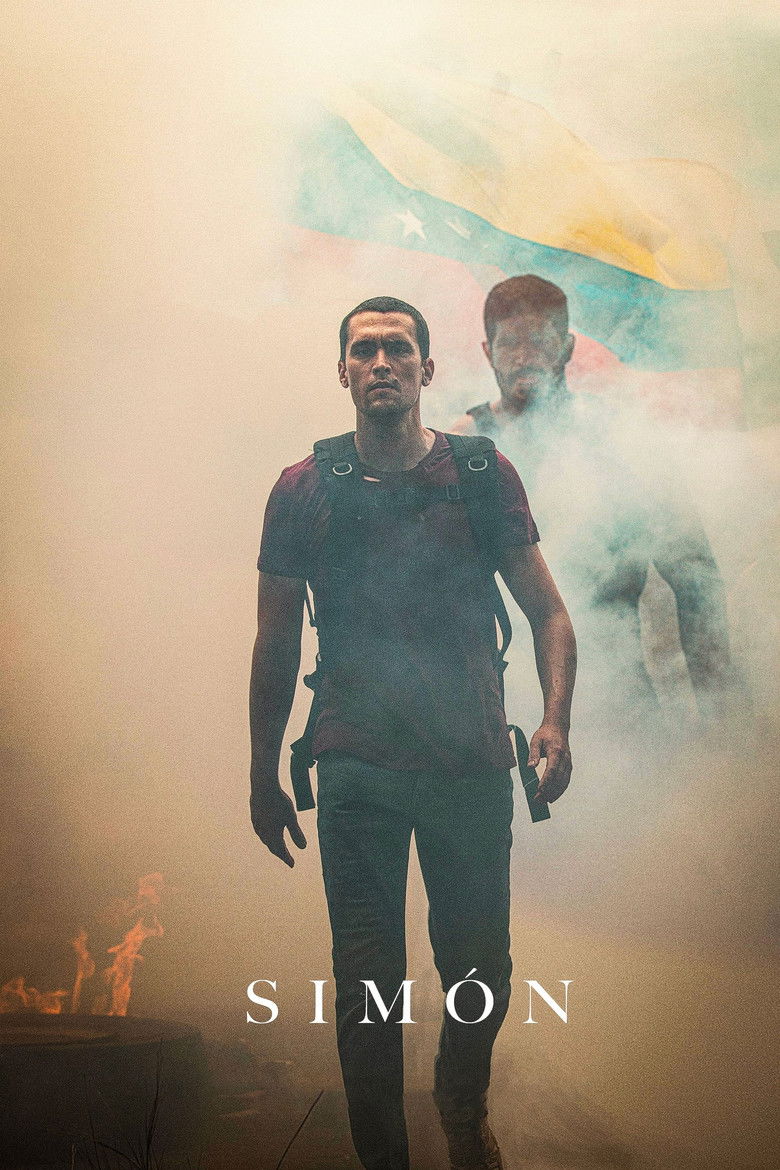
There's a question at the heart of Simón that I couldn't shake long after the credits rolled: what does it actually mean to fight for something? Not in the abstract, flag-waving sense, but in the grinding, personal, what-do-I-owe-this-cause sense. Diego Vincentini's Venezuelan political thriller, rooted in true events, puts that question to its young protagonist and refuses to let him, or us, off easily.
The setup is deceptively simple. Simón is a student activist in Venezuela, caught between two impossible options: go home and keep resisting an authoritarian regime, or take asylum in the United States, stay safe, and carry the guilt of exile for the rest of his life. It sounds like the stuff of a political pamphlet, but Vincentini grounds it so firmly in character that it never feels like a lecture. This is a film about the very human cost of conviction, about what ideology actually costs when it's your life on the line and not just your principles.
Christian McGaffney is the reason it works as well as it does. His performance as Simón is emotionally raw without ever tipping into melodrama. You feel his exhaustion, his fear, his stubbornness, all of it simmering just beneath the surface. It's the kind of work that carries a film on its shoulders and makes you forget you're watching craft at all. Roberto Jaramillo is excellent in support too, bringing real warmth and weight to his role as Cucho, Simón's musclebound friend. The two of them together have a lived-in, believable chemistry that grounds the more heightened moments.
The filmmaking itself is striking. The cinematography uses light and shadow and composition to mirror Simón's psychological state, not in a showy way but in a way that feels earned. The soundtrack does what a good score should: amplify the tension without announcing itself. And then there's the twist. I won't say a word about it, except that it's genuinely unexpected, thematically resonant, and it reframes everything that came before without feeling like a cheap trick. That's a rare thing. It reminded me a little of the way Pickpocket uses its final revelation to make you reconsider the whole emotional journey, snapping the meaning of what you've watched into sudden, sharper focus.
The flashbacks, used to reveal Simón's past and the roots of his activism, are expertly integrated. They add emotional depth without disrupting the momentum, which is no small achievement. Too often, that structure becomes a crutch, a way of papering over a thin present-tense narrative. Here, they feel essential, filling in the character rather than explaining him.
Where the film stumbles is pacing. Certain sequences linger longer than they need to, while others rush past moments that deserved more room to breathe. It's a minor complaint in the grand scheme of things, but it does keep the film from quite reaching greatness. You can feel the potential for something truly extraordinary, and the slight unevenness is frustrating precisely because so much else is so good.
It's no surprise the film dominated Venezuela's national awards. The craft on display is undeniable, and the controversy over its omission from the country's Oscar submission feels entirely justified to me. This is the kind of film that deserves a wide audience, the sort of politically urgent, character-driven work that contemporary cinema could do with more of. If you've got any interest in films grappling seriously with resistance, exile and the price of freedom, this belongs on your watchlist.
Three and a half stars. A courageous, quietly devastating portrait of a man caught between conscience and survival, and one of the more compelling political films I've seen in recent memory.
Rating: ★★★½ | Year: 2023 | Watched: 2026-06-01
Where to watch
Watch in the UK
Rent: Amazon Video
Buy: Amazon Video
Physical: Amazon UK · Zavvi
Watch in the US
Stream: Netflix · Netflix Standard with Ads
Physical: Amazon US
Affiliate disclosure: Movies With Macca may earn a small commission on purchases or subscriptions started via these links. It costs you nothing extra.