Funny Games (1997)

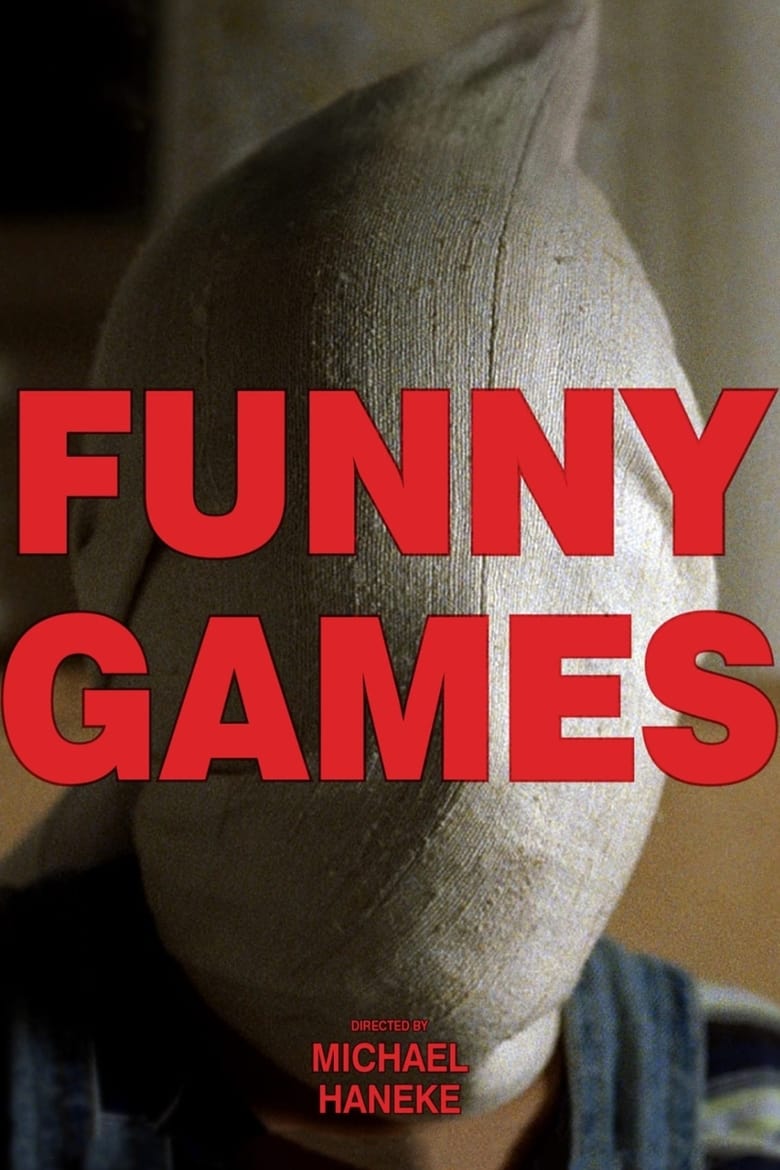
There's a moment in Funny Games where one of the two young men tormenting a terrified family turns to the camera, looks you dead in the eye, and smirks. It's technically accomplished. It's also one of the most insufferable things I've ever sat through in a cinema, and not for the reasons Michael Haneke intends.
I'll give Haneke this: the man knows how to make a film. The cinematography is crisp and controlled, the performances are unsettling in exactly the way they're designed to be, and the pacing is so deliberate it feels surgical. The meta-devices, the fourth-wall breaks, the infamous moment where the narrative is literally rewound like a VHS tape, are executed with a cold, calculated precision that you can only really pull off if you know exactly what you're doing behind the camera. Haneke knows exactly what he's doing. That's part of the problem.
The premise is this: two polite, eerily cheerful young men arrive at a family's holiday home and proceed to subject them to a prolonged, methodical ordeal of psychological and physical torment. The film frames this not as horror or thriller but as a provocation aimed squarely at the audience. We, Haneke argues, are complicit in screen violence. We consume it, we demand it, we normalise it. Funny Games is his lecture on the subject, and he delivers it with the warmth and generosity of a professor who genuinely despises his students.
On paper, that's a compelling intellectual premise. In practice, it's two hours of relentless humiliation dressed up as critique. The fourth-wall breaks don't feel like clever subversion. They feel like a filmmaker wagging his finger at you for having the audacity to feel distressed by what you're watching. There's no catharsis here, no earned insight, no emotional reason to endure what's on screen. Just punishment, and then more punishment, and then a smirk. If the intended effect is to make you feel implicated, the actual effect, for me at least, was just anger. And not the productive, reflective kind.
I think about what separates confrontational cinema from genuinely punishing cinema. I reviewed Angst (1983), which is an extremely difficult watch by any measure, brutal and deeply uncomfortable, but it earns its ugliness by committing to its subject with an honesty that feels purposeful rather than performative. Funny Games, by contrast, keeps stepping outside itself to tell you how clever it is. The rewind scene, in particular, isn't a subversion of genre expectations so much as it is a director refusing to let the audience have anything. Not tension, not release, not even the grim satisfaction of watching a horror film play out on its own terms. It's critique as cruelty, and the distinction matters enormously.
What makes it all the more frustrating is that the craft is genuinely there. If Haneke had turned these same skills toward a story that believed in its audience rather than despised them, I think the result could have been extraordinary. Instead, we get a well-made ordeal that mistakes misanthropy for profundity, and an intellectual position so rigidly held that it leaves no room for anything as messy or human as genuine feeling.
The score I'm giving this reflects those two things sitting uncomfortably alongside each other. The craft is real. The experience is, for me, repellent. If you're a film theory student or someone who genuinely loves confrontational art-house cinema on its most uncompromising terms, you may find value in what Haneke's constructed here. I won't argue you're wrong to. But if you come out of it feeling angry, manipulated, or just plain hollow, you're not missing the point. You're just human, and the film has treated that humanity as a problem to be corrected rather than a thing worth caring about.
Watch it if you feel you must. But don't let anyone tell you you're supposed to enjoy it, and don't let anyone tell you that finding it repellent means you've failed some kind of intellectual test. Sometimes a film genuinely is as cold and cheerless as it appears. One and a half stars.
Rating: ★½ | Year: 1997 | Watched: 2026-06-05
Where to watch
Watch in the UK
Stream: BFI Player Amazon Channel · Curzon Amazon Channel · BFI Player Apple TV Channel
Rent: Apple TV Store · Amazon Video · Google Play Movies · Curzon Home Cinema
Buy: Apple TV Store · Amazon Video · Google Play Movies · Sky Store
Physical: Amazon UK · Zavvi
Watch in the US
Stream: HBO Max Amazon Channel · Criterion Channel · HBO Max · Howdy Amazon Channel
Rent: Amazon Video · Apple TV Store · Google Play Movies · Fandango At Home
Buy: Amazon Video · Apple TV Store · Google Play Movies · Fandango At Home
Physical: Amazon US
Affiliate disclosure: Movies With Macca may earn a small commission on purchases or subscriptions started via these links. It costs you nothing extra.