Sugar Cane Alley (1983)

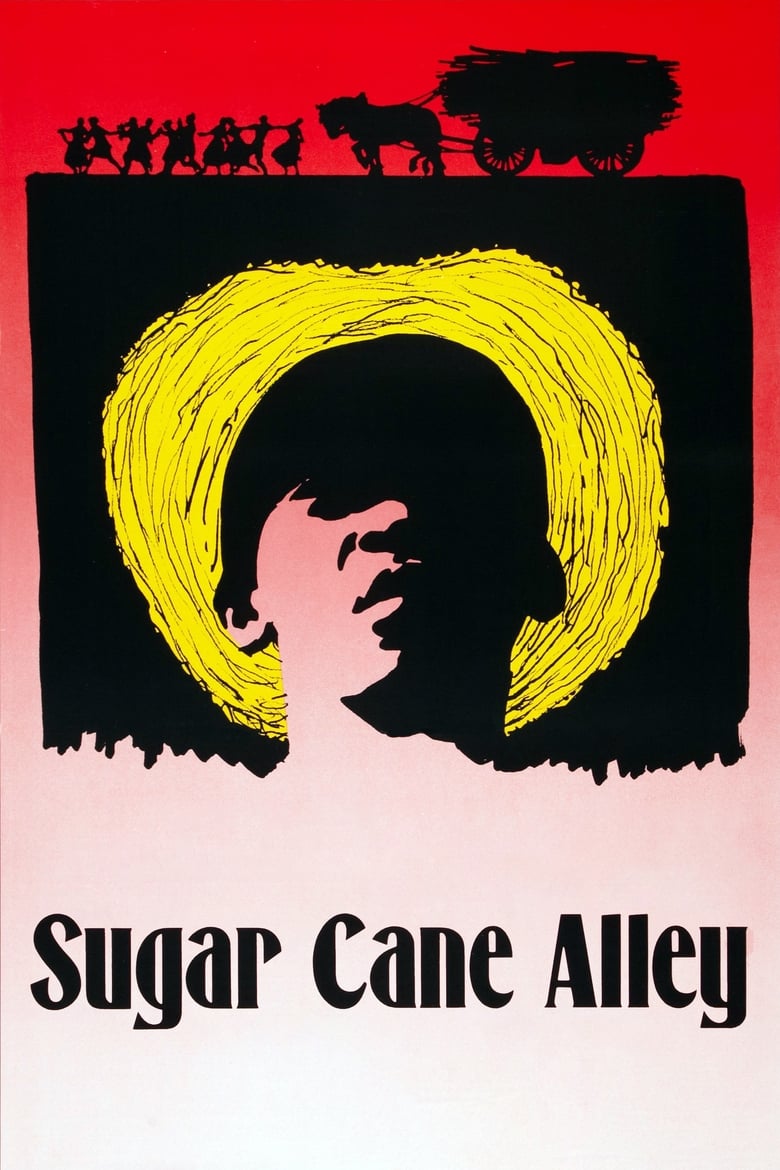
There's a moment fairly early in Sugar Cane Alley where you stop watching and start remembering, even if Martinique in the 1930s is about as far from your own life as it's possible to get. That's the quiet miracle Euzhan Palcy pulls off here: a story so rooted in a specific time, place, and culture that it shouldn't feel universal, yet somehow does. I came to this film knowing virtually nothing about Martinique's colonial history, its racial hierarchies, or the crushing economic conditions of its sugar plantations, and Palcy uses that ignorance as an invitation rather than a barrier, drawing you in gently, and then making sure you feel the weight of everything.
The film follows a young boy named José, living in a plantation shanty settlement and being raised by his grandmother after his mother's passing. Palcy drew heavily from her own upbringing to make it, and that autobiographical foundation shows in every frame. This doesn't feel like a dramatised period piece dressed up in period costumes. It feels like memory: specific, sensory, and emotionally unguarded in a way that more polished productions rarely manage. The swaying cane fields, the worn textures of the village, the way people move around each other in shared, cramped spaces: all of it carries the texture of lived experience rather than reconstruction.
José's journey is tender and carefully observed, but honestly, the film belongs to his grandmother. She's one of the most extraordinary figures I've encountered in a coming-of-age story: fiercely protective, deeply wise, and possessed of a quiet dignity that makes every one of her sacrifices land like a gut punch. She never asks for your admiration, and that's precisely why she earns it completely. Palcy's direction around her is remarkably economical. There's no overscoring of emotional beats, no close-ups lingering on tears. The restraint is total, and it makes the moments that do hit you feel genuinely earned.
For a film operating on modest production resources, it carries its historical subject with real confidence. The colonial power structures, the class tensions between Black Martiniquans and the white Creole elite, the way education becomes both a path to freedom and a complicated act of cultural negotiation: all of this is woven into José's story without ever feeling like a lecture. You absorb it because you're invested in the people, not because the film has stopped to explain itself to you. The soundtrack, too, earns its place, grounding you in the culture without ever swamping the drama.
Are there rough edges? Yes, a few. The pacing occasionally loses its footing, and there are moments where the technical polish shows its limitations. But I'd argue those imperfections actually serve the film. They give it a documentary honesty, a sense that you're watching something retrieved rather than constructed. I've felt a similar quality in No Dogs or Italians Allowed, where deeply personal cultural memory drives the filmmaking in ways that smoother, bigger productions simply can't replicate.
What Palcy achieves here is rare: a film that is thoroughly local and thoroughly human at the same time. Caribbean cinema has produced work of genuine power and originality, and this sits at the very top of that tradition. If you're looking for other entry points into that world, I'd point you toward She Paradise, which takes a very different angle on contemporary Caribbean life but shares something of the same eye for how ordinary people carry extraordinary pressures.
Sugar Cane Alley is not a flawless production, but I'm not sure a flawless production could have achieved what this one does. It's warm, heartbreaking, quietly furious, and deeply compassionate, all at once. Watch it for the grandmother, stay for everything else.
Four stars.
Rating: ★★★★ | Year: 1983 | Watched: 2026-06-05