Josep (2020)

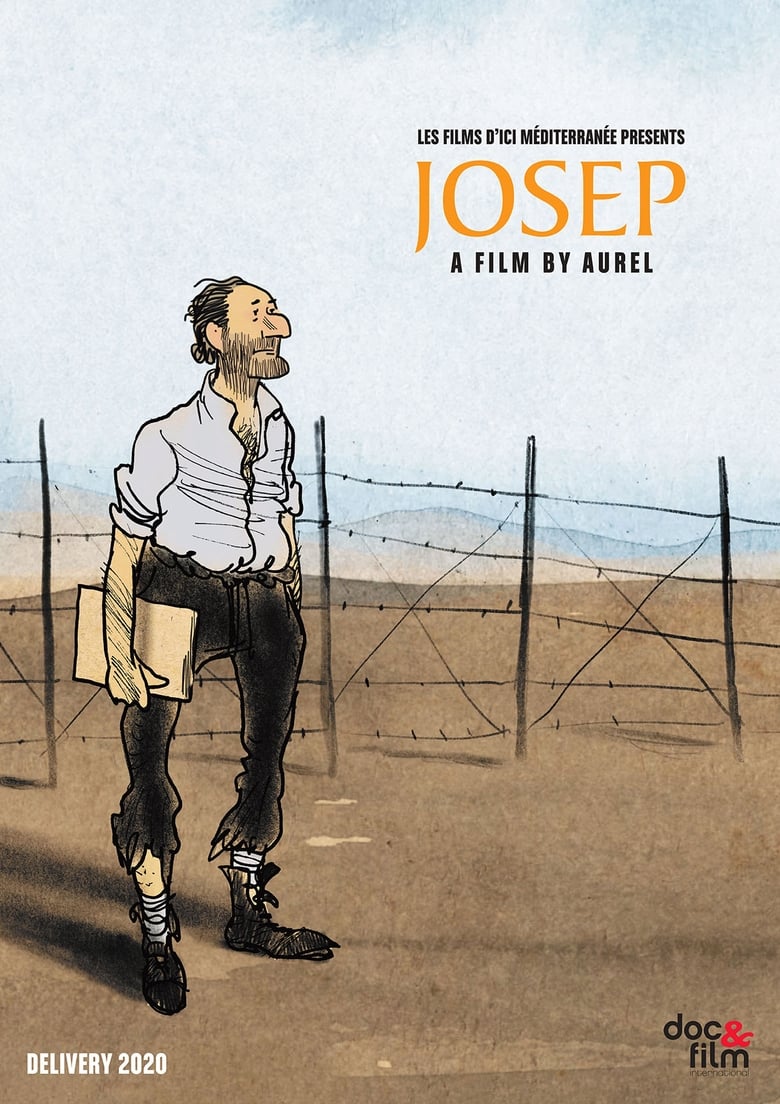
There's a moment in Josep where the animation itself seems to breathe, where the rough, expressive lines and painterly washes of colour feel less like a stylistic choice and more like a confession. It's the kind of filmmaking that stops you short and reminds you what the medium can do when it isn't chasing spectacle. Aurel's film is a deeply personal piece of work, and that intimacy is both its greatest strength and, depending on your patience for slow-burning reflection, its biggest obstacle.
Based on the life of Spanish Republican cartoonist Josep Bartolí, the film traces his escape from Franco's regime, his time in French internment camps during the Second World War, and the long shadow those years cast over the rest of his life. It's a story told largely through memory, filtered through old age and loss, and Aurel leans hard into that retrospective quality. The result is less a traditional narrative than a series of recollections, stitched together with grief and quiet wonder.
The animation style is the first thing you notice, and it earns every bit of attention. It's rough, tactile, almost restless, like sketches that never quite settled into their final form. But that rawness is entirely intentional. There's a deliberate visual shift too, between the present-day framing and the flashback sequences, where the aesthetic simplifies and softens. It's an elegant piece of visual storytelling. Trauma rendered one way, reflection rendered another. You feel the difference without needing it explained to you. I was reminded a little of Fantastic Planet in how committed the film is to a singular visual logic, though Josep is far warmer in its intentions.
What Aurel is really interested in is the quiet interior life of a man shaped by displacement and hardship. The film doesn't dramatise suffering for effect. It doesn't reach for the rousing moment or the tear-jerking crescendo. Instead it sits with its subject, examines him honestly, and trusts the audience to find their own footing in the silences. Josep Bartolí's story is one of resilience, but the film is careful never to romanticise that. Endurance is shown as something worn and unglamorous, not triumphant.
That restraint is admirable. It's also, if I'm being straight with you, occasionally a little too much of a good thing. There are stretches where the minimalism tips into inertia, where the film's commitment to mood over momentum asks a bit more of your patience than it earns. I wanted, now and then, for the historical context to be filled in more fully, for the world around Josep to feel as vivid as the man himself. The introspective approach means that some of that wider picture stays blurry, and I wasn't always sure whether that was a strength or an evasion.
It's worth flagging that this is very much a niche film. If you're coming to it expecting the kinetic energy of mainstream animation, or even the dark fairy-tale density of something like Pan's Labyrinth, you'll likely find yourself adrift. Josep moves at its own rhythm, and it doesn't apologise for that. Some viewers will find the melancholic tone too subdued. I found it mostly compelling, with occasional reservations.
But here's the thing. When it works, it really works. The passages that let the artwork speak, that allow the connection between creativity and survival to simply exist on screen without underlining it, those land with genuine emotional weight. Art as a way of holding yourself together when everything else is being stripped away. That's a theme handled here with honesty and care, and it lingers.
Three stars. Josep is a good, deeply felt piece of animation, poignant and visually striking, and it earns its place in the conversation about what the form can achieve when pointed at serious subject matter. Not for every mood, and not without its frustrations. But for those willing to meet it on its own quiet terms, it offers something genuinely moving.
Rating: ★★★ | Year: 2020 | Watched: 2026-05-26
Where to watch
Watch in the UK
Physical: Amazon UK · Zavvi
Watch in the US
Stream: Amazon Prime Video · OVID · Amazon Prime Video with Ads
Rent: Amazon Video · Apple TV Store · Google Play Movies · YouTube
Buy: Amazon Video · Apple TV Store · Google Play Movies · YouTube
Physical: Amazon US
Affiliate disclosure: Movies With Macca may earn a small commission on purchases or subscriptions started via these links. It costs you nothing extra.