Pickpocket (1959)

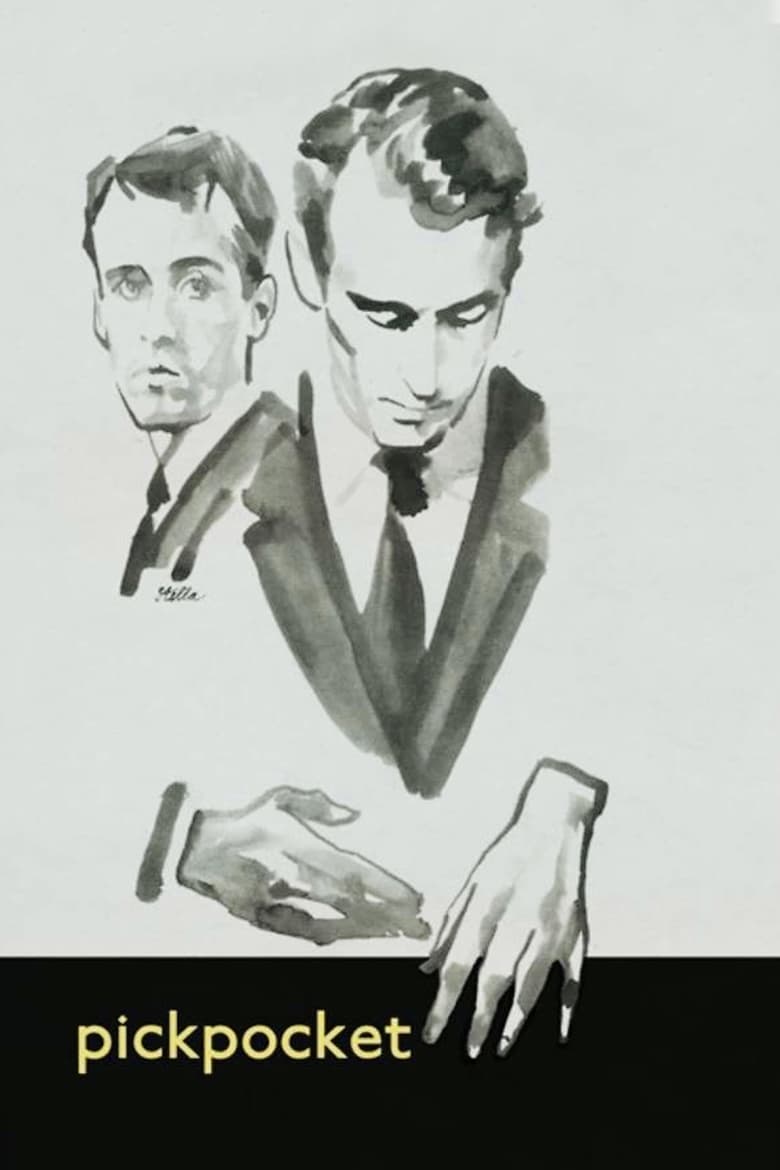
There's a version of Pickpocket that I can see myself loving. A morally complex character study of a young Parisian drifter who transforms petty theft into something approaching philosophy, shot in stark black-and-white, directed by one of French cinema's most distinctive voices. On paper, that's exactly my kind of film. And yet, after sitting with Robert Bresson's 1959 drama, my honest reaction is something closer to respectful indifference than genuine admiration.
Let me be fair to what Bresson is doing here, because he's clearly doing something. The theft sequences are genuinely extraordinary, staged with an almost choreographic precision that makes the sleight of hand feel hypnotic. Hands move, wallets disappear, the camera watches it all with a cool, clinical eye. There's real craft in those moments, and I won't pretend otherwise. The black-and-white photography is stark and quietly beautiful throughout, and the central performance, deliberately flat as it is, carries a kind of haunted authenticity that you can't entirely shake off.
Bresson's whole method here involves stripping everything back: non-professional actors, elliptical editing, sparse dialogue, an almost documentary-like detachment from the emotional centre of the story. For a certain kind of viewer, that approach produces something hypnotic and profound. I can see why devotees of his work treat this as essential viewing, a precise philosophical exploration of guilt, grace and the quiet desperation of a man rationalising crime as art and existential necessity.
The trouble, for me, is that admiration and engagement are two very different things, and Pickpocket kept me firmly in the first camp while shutting me out of the second. The pacing isn't just slow, it's glacial in stretches, with repetitive sequences that, however intentional, begin to test patience well before the finale arrives. And that finale, which I gather moves a lot of people deeply, landed for me with very little dramatic weight. I could see what it was reaching for. I just didn't feel it.
That emotional distance is Bresson's signature, and I understand it isn't a flaw so much as a deliberate philosophical choice. He refuses to sensationalise, refuses to sentimentalise, and there's something genuinely admirable in that refusal. But there's a fine line between restraint as a virtue and restraint as a barrier, and for modern viewers coming to this without a prior relationship to Bresson's style, Pickpocket frequently tips into the latter. The film keeps you at arm's length and seems almost entirely unbothered by whether you want to get closer.
I keep thinking about what separates films that are emotionally cool but still gripping from those that feel like endurance tests dressed up as art. It's a hard line to define. I've found myself genuinely absorbed by austere, elliptical filmmaking before, and I've bounced off it badly, and Pickpocket sits in that frustrating middle ground where I can articulate exactly why it matters historically while also being honest that it didn't do much for me personally.
If you're a committed cinephile, or you're working your way through the canon of French cinema adjacent to the New Wave, then yes, absolutely seek this out. It's a significant film and Bresson's vision is distinctive enough to be worth experiencing on its own terms. But if you're coming for a compelling character drama with real emotional momentum, I'd temper those expectations now. You'll leave with a degree of respect for what you've watched. Whether you'll feel anything beyond that is another matter entirely.
Two and a half stars.
Rating: ★★½ | Year: 1959 | Watched: 2026-05-27
Where to watch
Watch in the UK
Stream: BFI Player · BFI Player Amazon Channel · BFI Player Apple TV Channel
Rent: Apple TV Store · Amazon Video
Buy: Apple TV Store · Amazon Video
Physical: Amazon UK · Zavvi
Watch in the US
Rent: Amazon Video · Apple TV Store · Fandango At Home
Buy: Amazon Video · Apple TV Store · Fandango At Home
Physical: Amazon US
Affiliate disclosure: Movies With Macca may earn a small commission on purchases or subscriptions started via these links. It costs you nothing extra.