Moshari (2022)

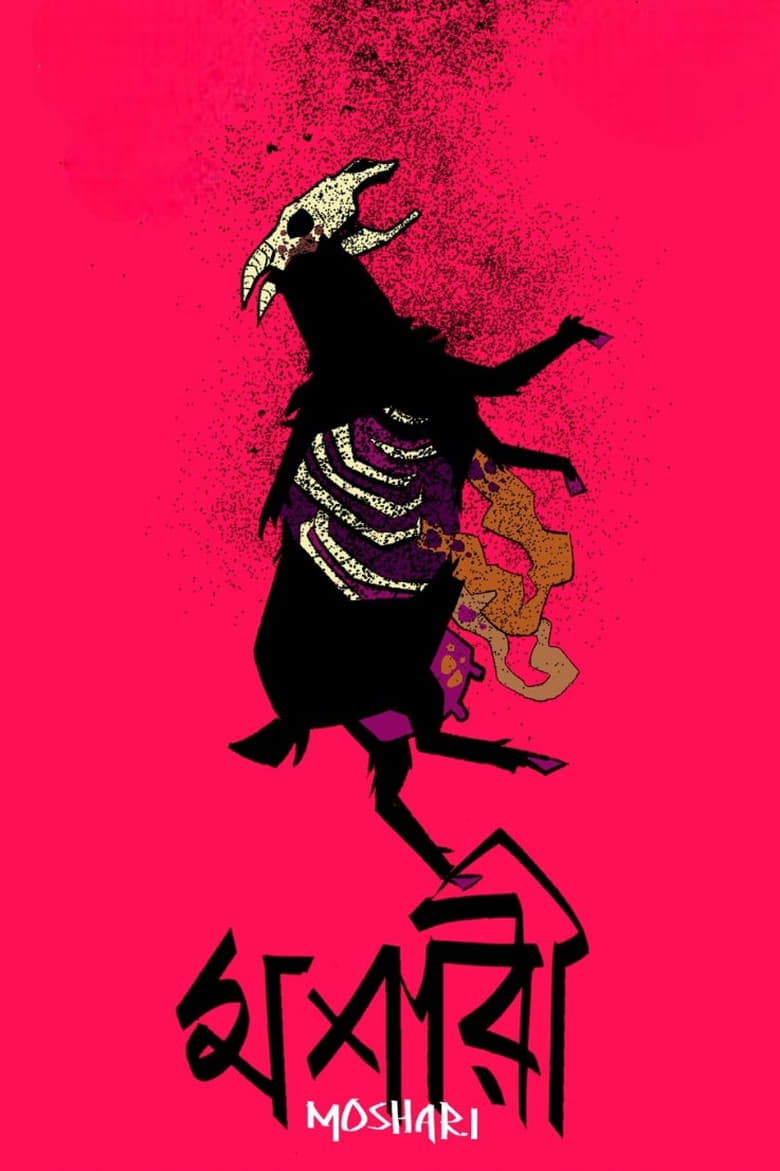
Two sisters. One mosquito net. Something outside that wants in. That's all Moshari needs, and the fact that it pulls off what it pulls off in the space of a short film is genuinely impressive. I quite enjoyed this one, and I think if you give it ten minutes of your time, you probably will too.
Directed by Nuhash Humayun and executive produced by Jordan Peele and Riz Ahmed, Moshari comes out of Bangladesh and carries a zombie-apocalypse flavour, though it keeps things bracingly tight. There's no sprawling world-building, no ensemble cast running through corridors. Just two sisters, a fragile net, and the horrible knowledge that the only thing standing between them and whatever is out there is a thin sheet of fabric. The premise is brilliantly simple: the net is your protection, and a single tear could end everything. That tension, knowing that safety is fragile and temporary and literally threadbare, is what carries the whole film. It's one of those ideas that makes you annoyed you didn't think of it yourself.
What I'm still not entirely sure about, even having sat with it for a while, is whether the threat is genuinely supernatural or whether Humayun is doing something more pointed, using horror as a frame for something as ordinary and deadly as a hole in a mosquito net in the real world. Honestly? That ambiguity works in the film's favour. It keeps you slightly off-balance throughout, which is exactly where a horror film wants you. The unsettling quality comes not just from what's lurking outside, but from what the two sisters reveal about themselves under pressure. That's where the film earns its keep as more than just a well-executed concept.
The jump scares, when they come, are well-earned rather than cheap. And the cinematography is surprisingly effective at building dread within such a confined space, without resorting to flashy tricks or visual noise. Humayun understands that suggestion is often scarier than revelation, and he shows admirable restraint for a filmmaker working in a genre that frequently rewards excess. It reminded me a little of what I found compelling about When Evil Lurks, that willingness to let atmosphere do the heavy lifting rather than throwing everything at the screen.
It's not perfect, mind you. At short-film length, character development is always going to be squeezed, and some of the dialogue tips a touch towards the expository. You can feel the constraint of the format in places. But for a contained, high-concept horror piece, it punches well above its weight. The fact that Peele and Ahmed backed it tells you something about its potential, and Humayun delivers on that promise without overreaching. He's clearly a filmmaker worth keeping an eye on.
If you've got any interest in atmospheric, idea-driven horror from outside the usual English-language pipeline, it's well worth seeking out. And if you come away from it still genuinely unsure whether you've just watched a monster movie or a public-health parable, well. That's probably the point.
Three and a half stars.
Rating: ★★★½ | Year: 2022 | Watched: 2026-06-08
Where to watch
Watch in the US
Physical: Amazon US
Affiliate disclosure: Movies With Macca may earn a small commission on purchases or subscriptions started via these links. It costs you nothing extra.