Jenin, Jenin (2003)
Jenin, Jenin (2003)

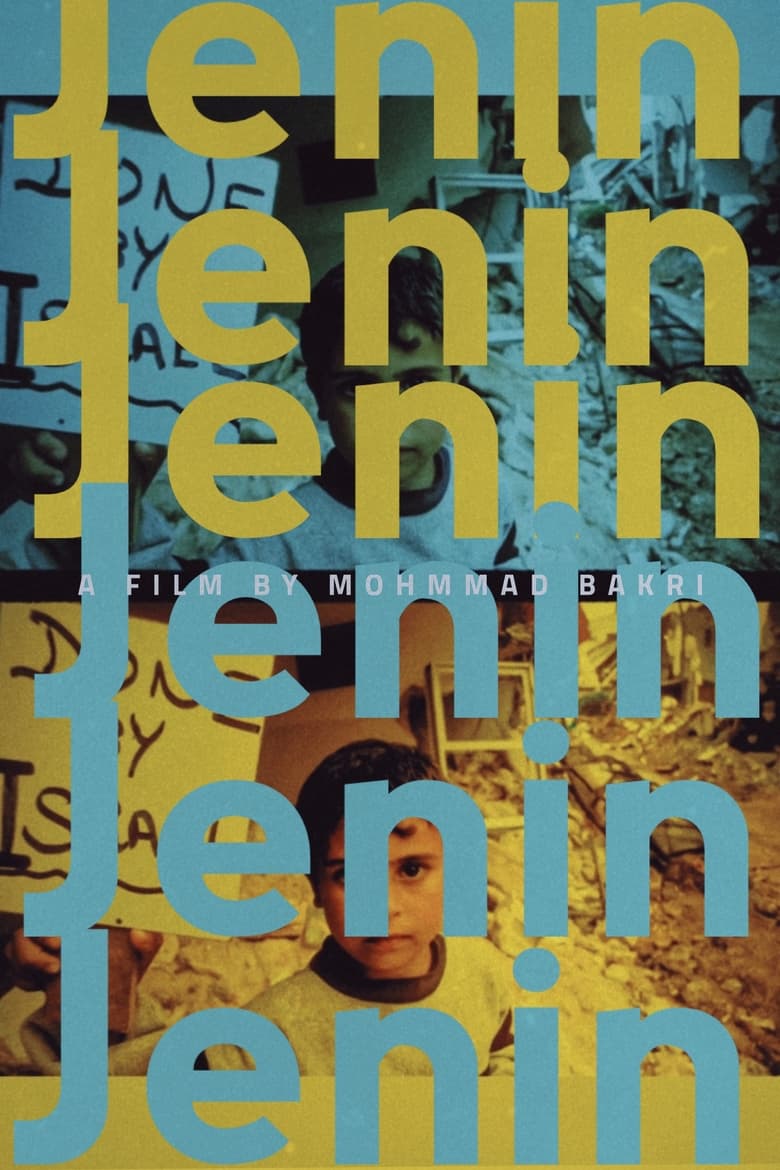
Twenty-four years. That's how long it's been since this film was released. And sitting here watching it, that number keeps circling in my head, because nothing, and I mean nothing, has changed. The faces are different. The rubble is in a different street. But the story is the same, told by the same people, about the same aggressor.
Jenin, Jenin was made in the immediate aftermath of the Israeli military's incursion into the Jenin refugee camp in 2002, a siege that drew international condemnation and fierce dispute over the scale of civilian casualties and the destruction wrought. Director Mohammed Bakri went in with a camera and let the survivors speak. That's it. That's the film. And it is shattering.
There's no rating I can give this. Unrated feels right, not because the filmmaking is beneath judgement, but because sitting there ticking boxes for craft and structure feels grotesque when what you're watching is testimony from people who lost their homes, their families, their neighbours, in the space of days. Putting stars on it feels like filing a complaint about the font on a death notice.
I've watched a fair few documentaries about this region now, from a range of perspectives, different countries, different historical moments. Some are advocacy pieces. Some try hard for balance. Some are quietly furious. Jenin, Jenin doesn't pretend to be anything other than what it is: Palestinian voices, Palestinian grief, Palestinian rage, given a platform by a Palestinian filmmaker. Bakri has been taken to court over this film in Israel, which tells you something in itself.
What strikes you most watching the testimonies is the ordinariness of the people speaking. An old man describing what happened to his house. A woman trying to find the words. A young person standing in rubble that used to be a street. There's no performance of grief here. It's too raw for that. These are people still inside the shock of it, and the camera simply stays with them.
I watched No Other Land (2024) not long ago, and the same hollow feeling settled in my chest during that film too. A different location, a different set of filmmakers, over two decades later, and the through line is unmistakable. Villages being demolished. People being displaced. The world watching and then moving on. If you want to understand why so many people find that film so urgent, watch Jenin, Jenin first. They are, heartbreakingly, chapters in the same story.
The one thing that appears constant across everything I've watched about this region, across the decades, across the shifting political language, across the rotating cast of world leaders who express concern and do nothing, is the identity of the aggressor. I won't dress that up. I won't both-sides it for the sake of appearing measured. The evidence, film after film, year after year, is not ambiguous.
I've also been moved by All That's Left of You (2025), which approaches Palestinian experience through a different form entirely but carries the same weight of dispossession at its centre. Art made by people who need the world to pay attention, because official channels have failed them repeatedly and catastrophically.
What do you do with a film like this? You watch it. You don't look away. You don't reach for your phone. You sit with the discomfort, because the discomfort is the point. The people on screen don't get to escape their reality by picking up a remote. The least you can do is stay in the room with them for eighty-odd minutes.
Twenty-four years since this film came out. And as I write this, the same atrocities are occurring to the same people, in the same place, carried out by the same forces. That's not a film critic's observation. That's just the unbearable truth of it. Watch this film. Then ask yourself what that continuity means.
Rating: Not rated | Year: 2003 | Watched: 2026-03-07
Related on Movies With Macca
More from Palestinian Territory: No Other Land (2024)
More from the 2000s: Kirikou and the Wild Beasts (2005) · Anchorman: The Legend of Ron Burgundy (2004) · Daredevil (2003) · Apocalypto (2006)
More documentary: Letter from Siberia (1957) · Lessons of Darkness (1992) · Style Wars (1983) · Here and Elsewhere (1976)