Gabbeh (1996)

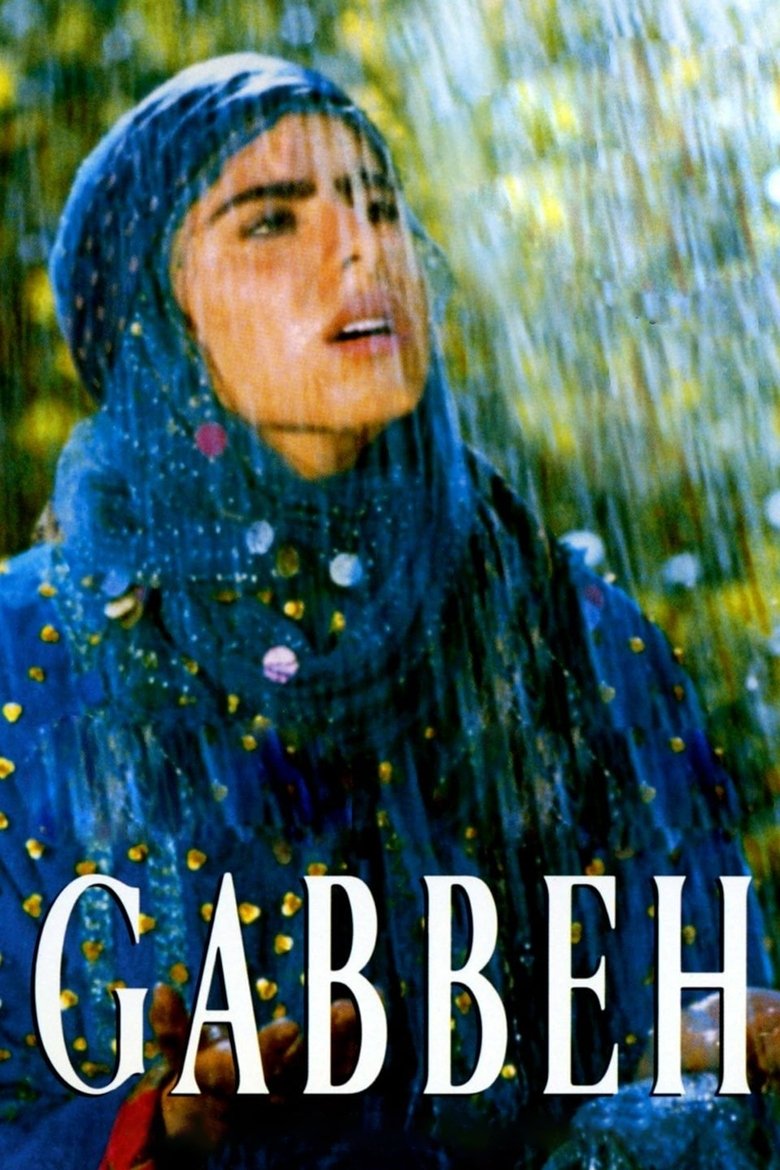
Iran's cinema in the 1990s was producing some of the most formally inventive films anywhere in the world, often working around strict state censorship by turning inward, toward allegory, folk memory, and the textures of everyday life. The Best Iranian Films to Stream gives a broader picture of that tradition if you want a starting point, but Gabbeh (1996) stands as one of its more singular achievements: a film that takes the patterns woven into a Persian tribal rug as both its literal subject and its governing formal logic. The gabbeh of the title is a type of rug made by the Qashqai nomads of southern Iran, its designs not purely decorative but narrative, encoding scenes from the lives of the people who made them. Makhmalbaf uses that idea not as background colour but as the engine of the entire film, letting the boundary between the woven image and the living world dissolve almost from the opening minutes.
Mohsen Makhmalbaf wrote, directed, and edited the film himself, a concentration of control that gives it a noticeably unified sensibility. By the mid-1990s he had already moved through several distinct creative phases, from the austere political cinema of his early career to something far more lyrical and self-questioning. Salaam Cinema, made the previous year, found him in a playfully interrogative mood; Gabbeh is quieter and stranger, closer to a prose poem than a conventional narrative. The film was co-produced between Iranian studio Sanaye Dasti and the French company MK2 Productions, the latter's involvement reflecting the growing international appetite for Iranian art cinema at precisely this moment. At 72 minutes, it makes no concession to conventional feature-length expectations, and is better for it. The story, such as it is, centres on a young woman, Gabbeh (Shaghayeh Djodat), who materialises from the rug itself to tell an elderly couple (played by real-life husband and wife Hossein Moharami and Rogheih Moharami) the story of her courtship by a mysterious horseman. Abbas Sayah and Parvaneh Ghalandari complete the principal cast, with many of the figures in the film drawn from actual Qashqai communities rather than professional actors, which gives the whole thing an ethnographic honesty beneath its dreamlike surface.
The look of the film is the work of cinematographer Mahmoud Kalari, who shoots the landscapes of the Zagros region in a way that feels less like location photography and more like the landscapes are actively performing. The colours are saturated to an almost hallucinatory degree, the saffron and crimson and cobalt of the rugs bleeding outward into the sky and the earth around them, so that you are rarely entirely sure where the woven world ends and the natural one begins. Kalari and Makhmalbaf had worked together before, and there is a fluency to the visual grammar here that only comes from an established partnership. The score by Hossein Alizadeh draws on classical Persian music, with a modal quality that hovers between lament and celebration, never quite resolving into either. It sits against the images without underlining them, allowing silence to do as much work as melody. Makhmalbaf's own editing holds to a similarly unhurried rhythm, cutting on movement and colour rather than conventional dramatic logic. See also my review of The Day I Became a Woman, another film from Iranian cinema that uses women's experience and a similarly poetic register to quietly devastating effect, and A Moment of Innocence, Makhmalbaf's film from the same year, which approaches his own past with a comparable formal inventiveness.
I do not, as a rule, get on especially well with arthouse cinema; more often than not it leaves me cold. Gabbeh is the glorious exception. I have seen a handful of Mohsen Makhmalbaf's films now, enough for him to be fast becoming one of my favourite directors, and this one had me from almost the first frame.
It is, to state the obvious, beautiful. The scenery is stunning, the young woman at its centre is luminous, and above all the colours are extraordinary, so rich and saturated that they put me in mind of Kurosawa's Ran, which from me is about the highest praise going. This is a film that thinks in colour, where the hues of a woven rug carry as much feeling as any line of dialogue.
And the story is beautifully told, a folk tale of love and longing spun out of the patterns in a gabbeh, a Persian rug, as an elderly couple clean it and the past stirs to life around them. What stays with me most, though, is harder to pin down. There is a pull to it, a quiet, yearning quality that made me want to keep watching, and to go and seek out more like it, for reasons I cannot quite put into words.
That is the mark of something special: when a film reaches you in a way you cannot fully explain. Four stars. A gorgeous, transporting piece of cinema that won over even my arthouse scepticism, and a lovely reminder of why it is worth pushing past your own habits every now and then.
Gabbeh was selected as Iran's submission for the Academy Award for Best Foreign Language Film, and screened at Cannes, where it found the international audience its quietly radical form deserved. It is the kind of film that sits outside most of the usual categories, too rooted in a specific folk tradition to feel like conventional arthouse, too formally controlled to be mistaken for documentary, too warm and strange and human to be reduced to a theoretical exercise. Films that reach people who do not normally get on with this kind of cinema tend to do so not by compromising their strangeness but by finding the feeling inside it, and that is precisely what this one does. Some films you admire from a respectful distance. This one pulls you in.
Rating: ★★★★ | Year: 1996 | Watched: 2026-11-05
Trailer
▶ Watch the official trailer for Gabbeh (1996) on YouTube
Where to watch
Watch in the UK
Rent: Amazon Video · YouTube
Buy: Amazon Video · YouTube
Physical: Amazon UK · Zavvi
Watch in the US
Rent: Amazon Video · Google Play Movies · YouTube
Buy: Amazon Video · Google Play Movies · YouTube
Physical: Amazon US
Affiliate disclosure: Movies With Macca may earn a small commission on purchases or subscriptions started via these links. It costs you nothing extra.