Sailor Moon R: The Movie - The Promise of the Rose (1993)

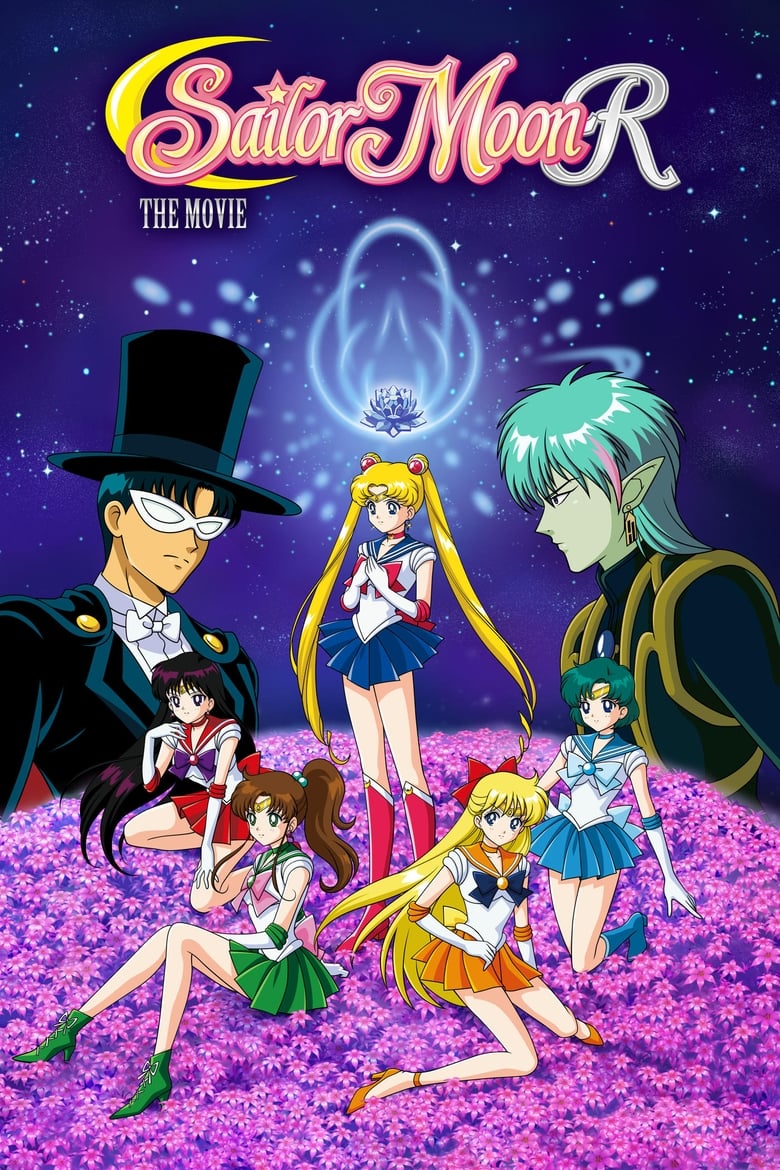
The early 1990s were a remarkable period for the magical girl subgenre in Japan. Sailor Moon, adapted from Naoko Takeuchi's manga serialised in Nakayoshi magazine from 1991, did not simply contribute to that tradition, it redefined it, shifting the focus away from lone heroines and towards a team of girls whose bonds of friendship and loyalty were as central as any battle sequence. By the time Sailor Moon R: The Movie, The Promise of the Rose arrived in Japanese cinemas in December 1993, the television series was already a phenomenon, and the film served the dual function of rewarding dedicated fans while packaging the world in a glossier, more theatrically polished format than a weekly broadcast could manage. For many viewers outside Japan, encountering it years later via home video releases and fan communities, this film and its companions represent a first point of contact with the franchise. It is worth keeping that in mind: this is a film with genuine cultural weight before you even sit down to watch it. For a companion piece from roughly the same vintage in Japanese animation, see also my review of Porco Rosso, which Miyazaki released the previous year.
The film was produced by Toei Animation and TV Asahi, the same partnership behind the television run, and directed by Kunihiko Ikuhara, who would go on to earn considerable critical attention for his work on the later Sailor Moon S season and, separately, for Revolutionary Girl Utena. Ikuhara has always been a director drawn to symbolic and emotionally layered material, and even within the constraints of a sixty-one minute feature tied closely to a franchise formula, there are signs of that sensibility. The script comes from Sukehiro Tomita, a veteran writer on the television series, and it concerns itself with an alien visitor from Mamoru's childhood who arrives bearing a flower, and a grudge, with consequences for the whole planet. The premise is slim by design. These companion films to running series rarely attempt to reinvent the wheel, and this one is no exception: it leans on established character dynamics, trusting that the audience's existing affection will carry a good deal of the emotional load.
The principal voice cast reprises their television roles. Kotono Mitsuishi leads as Usagi, known to Western audiences as Serena or Bunny depending on the dub, and her performance has the warm, slightly frantic energy that defines the character. Toru Furuya brings a measured gravity to Mamoru, which matters here more than in a typical episode given that his backstory is the emotional fulcrum of the plot. Michie Tomizawa, Aya Hisakawa, and Emi Shinohara round out the inner team, each recognisable and comfortable in their roles, the kind of ensemble work that comes from sustained collaboration on a long-running series. Cinematographer Motoi Takahashi gives the film a warmer, slightly richer palette than the television episodes could achieve within their production schedules. There is a visual ambition in the quieter scenes, botanical imagery used with some care, that sits interestingly alongside the broader action sequences. Composer Takanori Arisawa, another carry-over from the series, provides a score that moves between orchestral swell and lighter, more playful passages, maintaining the tonal register fans would recognise. Editor Yasuhiro Yoshikawa keeps the film brisk, which at sixty-one minutes is probably the right instinct. I also reviewed Kase-san and Morning Glories, another short-form anime feature with a similarly close relationship to its source material, which makes for an interesting comparison on how the format handles that kind of adaptation pressure.
I can see Sailor Moon's importance clearly enough. This is a cultural touchstone, the sort of thing without which you probably do not get the Powerpuff Girls and a whole lineage of magical-girl-team cartoons that followed. Its place in the history is not in doubt. What I struggled with, I have to admit, is connecting to the thing itself.
A big part of that is simply how it looks. The art style feels dated to me, and the animation with it, very much a product of early-nineties anime in a way that kept me at arm's length throughout. I know that will be exactly the charm for a lot of people, the nostalgia baked into every frame, but coming to it cold, without that history, I found it hard to warm to.
I was also never quite sure who it was for. It has the bright colours and broad strokes of something aimed squarely at children, and yet there are flashes of something else, a stranger, more melancholy streak, that muddy that read. The plot, an old alien friend of Mamoru's turning up with an earth-threatening flower, is slight either way. Two and a half stars. A clear cultural landmark, and I would not argue with its influence for a second, but one I personally found dated and difficult to click with.
Sailor Moon R: The Promise of the Rose sits in an interesting position in the canon of anime theatrical releases: polished but unremarkable as a standalone film, yet undeniably significant as an artefact of a moment when a franchise was at the height of its cultural reach. For fans arriving with that context already loaded, there is real pleasure to be had here. For those coming to it without that background, it is perhaps more valuable as a document than as an experience. Either way, its place in the conversation about what anime can do, and what magical girl stories in particular have meant to generations of young viewers, is not something you can simply set aside. If the franchise as a form interests you, I also covered Neon Genesis Evangelion: The End of Evangelion, another theatrical spin-off from a beloved series that chose, rather differently, to follow its own instincts wherever they led. Sometimes a film that challenges its audience outlasts one that simply satisfies them. Sometimes, of course, it just alienates everyone. The rose, as it were, cuts both ways.
Rating: ★★½ | Year: 1993 | Watched: 2026-11-04
Trailer
Where to watch
Watch in the US
Rent: Amazon Video · Apple TV Store · Fandango At Home
Buy: Amazon Video · Apple TV Store · Google Play Movies · YouTube
Physical: Amazon US
Affiliate disclosure: Movies With Macca may earn a small commission on purchases or subscriptions started via these links. It costs you nothing extra.