A Moment of Innocence (1996)

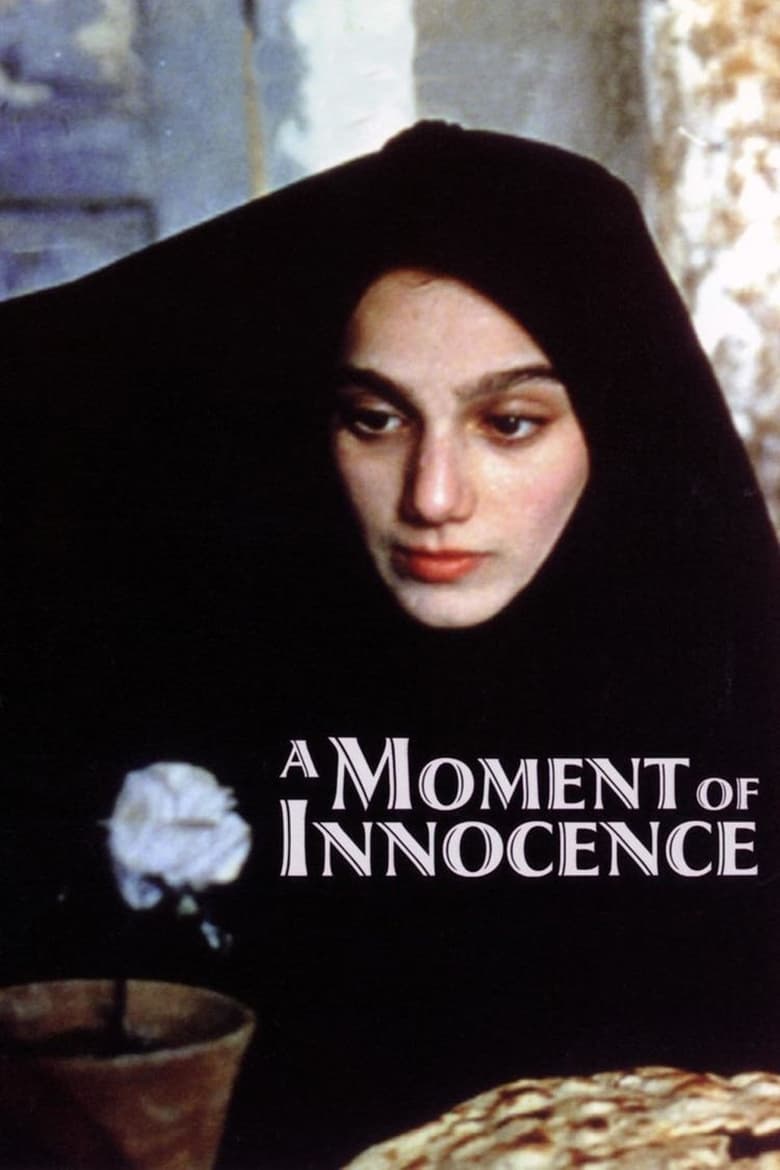
That final frame. I'm not going to describe it, I'm not going to hint at it, I'm just going to tell you that it stopped me cold. In a single, perfectly held image, A Moment of Innocence earns everything that came before it, including the bits that tested my patience. It's the kind of ending that makes you sit with the credits rolling and feel genuinely grateful that you stuck with it.
This is only my second film from Mohsen Makhmalbaf, the other being Salaam Cinema, and already I'm starting to understand why he occupies such a revered place in Iranian cinema. The premise here is as bold as it gets: Makhmalbaf revisits a chapter of his own past, specifically a violent attack he carried out on a policeman during a political protest when he was just 17 years old. He then invites that very policeman, now aged, to collaborate on a film retelling it. Both men are present. Both men are directing their younger stand-ins. Both men remember things differently. The result is something that blurs the line between documentary and fiction so completely that you stop trying to work out where one ends and the other begins, and you just let it wash over you.
What makes it so fascinating is the introspection at its heart. Makhmalbaf doesn't let himself off the hook. He's not making a film to vindicate his younger self or to romanticise youthful radicalism. He's genuinely wrestling with it, turning the camera on his own history with a level of honesty that's quietly disarming. The policeman's perspective is treated with equal weight, and that generosity of spirit gives the whole thing a real moral complexity. These are two men trying to make sense of a shared wound from opposite sides of it.
I'll be honest, the middle act does meander. There are stretches that feel abstract to the point of frustration, and if you come to this expecting a tight, conventional narrative, you'll likely find yourself drifting. It's a film that demands patience, and it earns that demand rather than simply assuming it. But this is experimental filmmaking with genuine purpose behind the form, not experimentation for its own sake.
The structure, that layered, almost meta approach of watching a director reconstruct his own past in real time with real participants, keeps you slightly off-balance throughout. You're never quite sure where the emotional weight is going to settle. Scenes that seem playful acquire a quiet gravity. Moments that feel like detours turn out to be load-bearing walls. It's clever without being showy about it, which is harder to pull off than it sounds.
And then comes that ending. I've already said I won't describe it, and I mean it. What I will say is that it reframes everything that precedes it. Regret, memory, violence, forgiveness, the strange alchemy of time, it's all right there in a single image. Completely spellbinding. The kind of moment that makes you feel, briefly, that film can do things no other art form can manage.
Four stars. Rough around the edges in places, yes, and not a film for every mood or every viewer. But when Makhmalbaf finds his footing, the result is genuinely magical, and that final frame alone is worth the price of admission.
Rating: ★★★★ | Year: 1996 | Watched: 2026-06-26
Trailer
▶ Watch the official trailer for A Moment of Innocence (1996) on YouTube