
The Day I Became a Woman (2000)

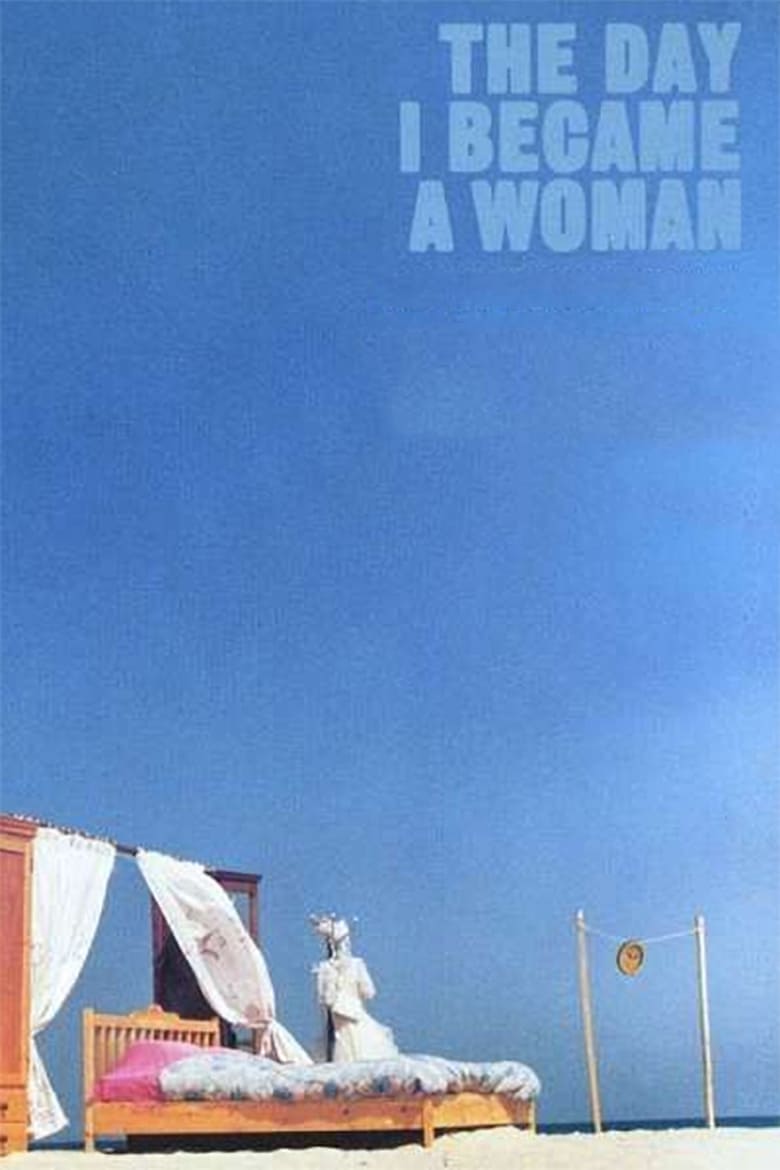
There is a nine-year-old girl in the first story of The Day I Became a Woman who has until noon. That is her deadline. Once the sun hits its highest point on her birthday, she will officially be a woman, and she will never be allowed to play with boys again. So she bargains. She negotiates a last hour of freedom, clutching a lolly like a talisman against the inevitable. It is a small, simple scene, and it is quietly devastating.
The film is built on a lovely, simple structure: three separate stories, each following a female character at a different stage of life. A young girl on the cusp of womanhood. A married woman mid-race, quite literally pedalling for her freedom. An elderly woman spending money, for the first time in her life, on everything she was ever denied. Together, they trace the shape of a whole life lived under Iran's strict gender rules, from the moment a girl is told to stop being a girl, all the way to the end. It is miniature and enormous at the same time.
I came to it without knowing much about its director, Marzieh Meshkini, and only looked her up afterwards. It turns out she is the wife of Mohsen Makhmalbaf, one of my favourite Iranian film-makers. Once you know that, the family resemblance is unmistakable. There is the same poetry, the same taste for allegory, the same deceptively gentle touch that lets something enormous sneak up on you before you have had a chance to brace yourself. I have spent a fair bit of time with Iranian cinema, and it has a particular gift for wringing vast meaning out of very plain images. I felt that same gift at work in This Is Not a Film, Jafar Panahi's extraordinary act of defiance, and I feel it here too, though Meshkini's register is warmer, more fable-like.
What I admire most is how lightly the film carries its anger. Plenty of cinema from this region takes on the prejudices women face head-on, and does so powerfully. I think of Osama, which is harrowing and direct, almost unbearably so. Meshkini chooses a different path. There is wit here. There is a kind of wry, patient fury rather than a scream. The second story, the bicycle race, is the clearest example of that. A woman rides and rides while her husband, her brothers, her male relatives chase her down on horseback, imploring her to stop, to get off, to come home and be a wife. It is almost absurdist. It is also a quietly extraordinary piece of film-making, and easily the standout of the three.
The film does not quite hold together as a perfectly unified whole. The three stories are a little uneven in weight and execution, and I am not sure the final segment, for all its charm and its sadness, lands with quite the same force as what comes before it. It is more a collection of eloquent gestures than a fully satisfying arc, and if you come to it wanting narrative momentum, you might find yourself restless. That is worth knowing going in.
But restless is not how I left it. I left it touched, and a little moved, and with a film-maker on my radar I had no business having missed this long. Meshkini has an eye for images that stay with you. A girl eating a lolly against the clock. A woman on a bicycle, pedalling and pedalling, the horizon ahead of her and the patriarchy thundering along behind. An old woman by the sea, surrounded by goods she is buying for a life she will barely get to live. They are images that belong in a conversation alongside something like Turtles Can Fly, another film from this part of the world that finds an oblique, poetic way into something that should by rights be too painful to look at directly.
Three and a half stars. A gentle, graceful, quietly defiant little film, and a very good place to start with a director I will now happily seek out.
Rating: ★★★½ | Year: 2000 | Watched: 2026-09-02
Trailer
▶ Watch the official trailer for The Day I Became a Woman (2000) on YouTube



