Education (2020)
★★★½ — Education (2020)

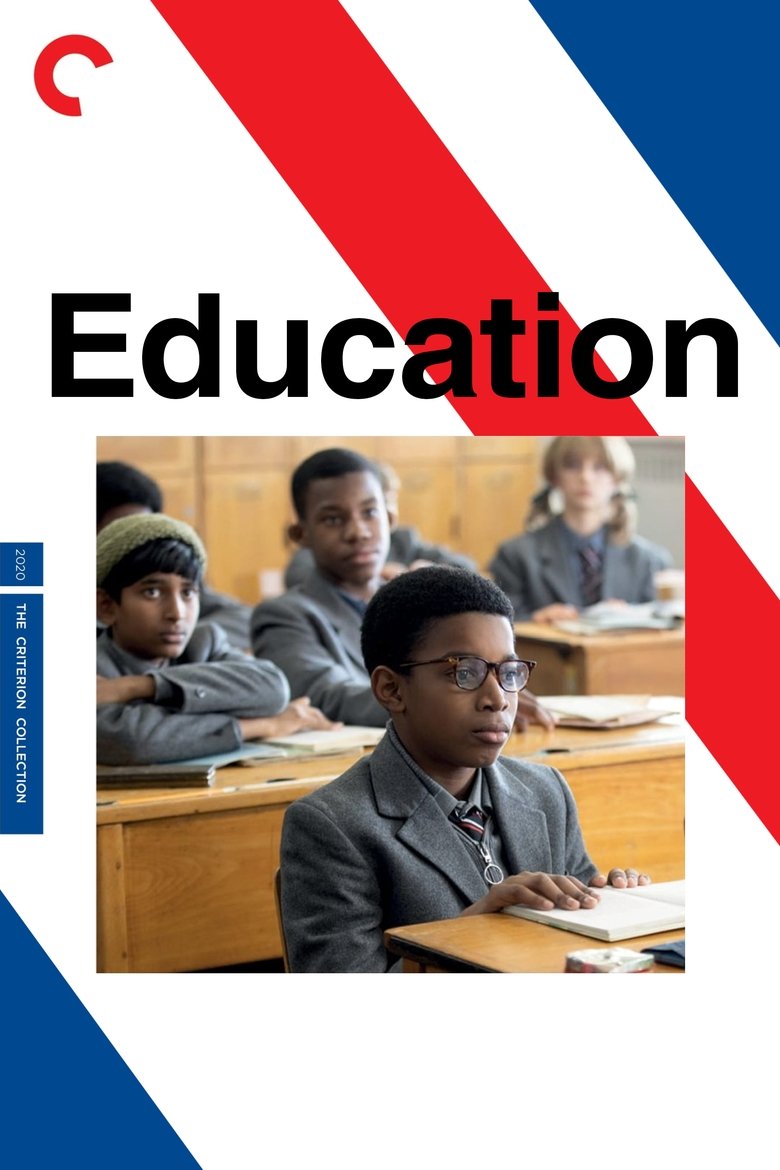
It made me cry. Not the quiet, polite kind of crying either, but the sort that catches you off guard and leaves you sitting with a knot in your chest long after the credits roll. And the tears weren't only from sadness, though there's plenty of that. They came from anger, the hot, slow-burning kind that comes when you're confronted with a history that should be better known and isn't. And then, eventually, from something closer to hope.
Education is the final film in Steve McQueen's Small Axe anthology, and if you've followed the series through to this point, you'll know what to expect in terms of craft and seriousness of purpose. What you might not expect is just how quietly it operates. This is a film that builds its case the way water wears down stone, gradually, patiently, and without a single wasted moment.
The subject is one of the more shameful episodes in recent British history: the practice of labelling Black children as "educationally subnormal" and routing them into segregated schools where expectations were low, resources were scarce, and the future was effectively pre-closed. The film follows twelve-year-old Kingsley Smith, played by Kenyah Sandy in a performance I'd describe as luminous if I thought the word did it justice. Kingsley is bright, curious, mad about space, and full of the kind of interior life that good children's performances make you feel rather than tell you about. Sandy carries all of that without ever seeming to work at it.
McQueen's restraint is where the film earns its power. There's no villain twirling a moustache, no single moment of operatic cruelty. Instead, the injustice accumulates through glances, assumptions, small bureaucratic gestures, the casual certainty of people who've decided what Kingsley is before they've bothered to find out. It's the mundanity of it that stings. Systems don't need to be malicious to be destructive. They just need to be indifferent.
But here's what I keep coming back to: the film's emotional centre isn't Kingsley. It's his mother, Agnes, played by Sharlene Whyte with a fierce, controlled grace that deserves every bit of attention it's received. We watch her move from a kind of exhausted compliance, trying to work within a system she doesn't fully trust, towards something harder and more determined. Her awakening, and the community of Black parents who find each other and organise around a shared refusal to accept what's been handed to them, is where the film locates its real triumph. It's not a story about waiting to be saved. It's a story about people deciding they won't wait any longer.
The period detail is immaculate without ever feeling like a costume drama. The score works underneath the emotion rather than announcing it. And the performances across the board are excellent, from the adults navigating a system stacked against them to Sandy himself, who anchors every scene he's in with a naturalism that's genuinely rare.
There's something in the film's portrait of a child whose potential is nearly extinguished by institutional prejudice that reminded me of Mustang, another film about young people whose futures are quietly, systematically narrowed by the world around them. Both films find their power not in depicting catastrophe but in depicting the slow, suffocating logic of systems that treat people as categories rather than human beings.
I've sat with this one for a few days now and I don't think my feelings have cooled. If anything, the anger has settled into something more resolute. Education transforms institutional cruelty into a story of dignity and collective resistance, and it does so without sentimentality, without easy triumph, and without letting the audience off the hook. It demands that you reckon with a history that was happening not in some distant past but in living memory, in British schools, to real children.
Four stars. A fitting close to one of the most essential British film projects of recent years, and proof that Steve McQueen is operating at a level few filmmakers anywhere in the world can match right now.
Rating: ★★★½ | Year: 2020 | Watched: 2026-03-10
Related on Movies With Macca
More from United Kingdom: Lessons of Darkness (1992) · Shinjuku Boys (1995) · The Curse of Frankenstein (1957) · Blue (1993)
More from the 2020s: Mononoke the Movie: The Phantom in the Rain (2024) · Mononoke the Movie: Chapter II - The Ashes of Rage (2025) · The Long Walk (2025) · Americana (2023)
More drama: Viy (1967) · Wonder (2017) · A Better Tomorrow (1986) · Beautiful Boy (2018)