City of God (2002)
★★★★★ — City of God (2002)

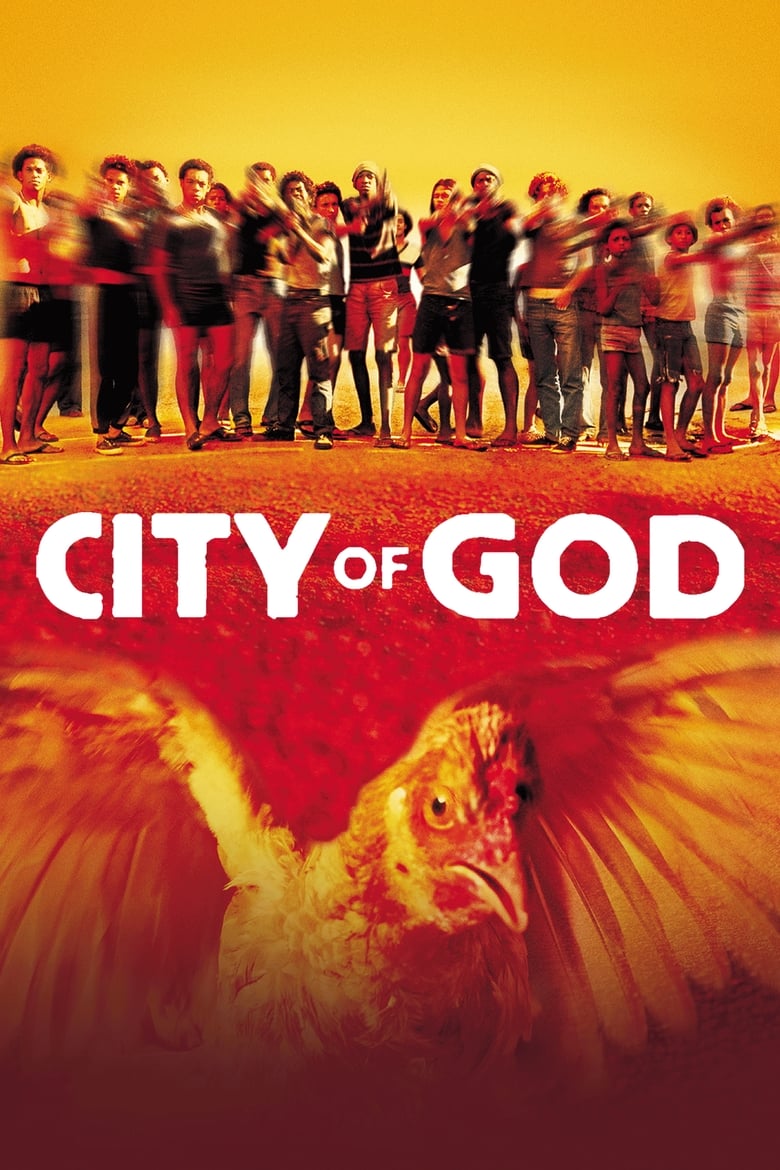
Some films you sit down to watch knowing the reputation that precedes them, half-expecting to be slightly let down. City of God is not one of those films. It earns every word of praise that has ever been written about it, and then some. This is one of the greatest films ever made. I'm not hedging. I'm not softening it. That's just the truth.
What Fernando Meirelles and Kátia Lund have pulled off here is staggering. The film drops you into the Cidade de Deus housing project in Rio de Janeiro and holds you there across decades of violence, survival, ambition and tragedy. It never lets you breathe for long, but it never exhausts you either. That balance, keeping a film this dense and this propulsive feeling effortless, is something most directors spend an entire career chasing without catching it.
The structure is what really gets me. I love an episodic film, the kind that divides itself into chapters and trusts the audience to follow. There's a confidence in that approach, a willingness to say: we're going to slow down here, zoom in on this person's story for a while, and then we're going to pull back out and show you how it all connects. City of God does this with such precision. Each section feels like its own short film, with its own rhythm and its own emotional weight, and yet by the end everything is woven together so tightly that pulling on any single thread would unravel the whole thing.
The characters are a huge part of why it works. There are a lot of them, and the film introduces them quickly, sometimes in a flurry of freeze-frames and voiceover narration. On paper that sounds like a recipe for confusion. In practice? I had no trouble keeping track. Each person is so distinctly drawn that they lodge in your memory almost immediately. The tragedy is that many of them don't get long on screen before the world of the film chews them up. That's the point, of course. Life in Cidade de Deus does not hand out long stories to everyone.
And this is all based on real events. That's the thing that kept hitting me throughout. The chaos, the cycles of retaliation, the way children get swallowed up by gang life before they're old enough to know what's happening to them, this actually happened. There's a weight to the film that fiction alone can't quite manufacture. You feel it in every scene.
I picked this up as part of my A-Z World Movie Tour, Brazil's entry, and what an entry it is. I've been watching some brilliant films through that project, including Rio 2096: A Story of Love and Fury (2013), which approaches Brazil's history from a very different angle, but City of God sits in a category of its own. It's the kind of film that makes you want to immediately press play again just to catch everything you might have missed the first time around.
The pacing is expert throughout. The script is tight and purposeful. The performances, many of them from non-professional actors drawn from the very communities the film depicts, are extraordinary. Nothing about it feels constructed or artificial. It feels lived in, urgent and real.
Five stars. No hesitation. What else can you say? City of God has been discussed, analysed and celebrated for over two decades now, and every bit of it is deserved. If somehow you've not seen it yet, fix that immediately.
Rating: ★★★★★ | Year: 2002 | Watched: 2026-04-09
Where to watch
Watch in the UK
Rent: Apple TV Store · Amazon Video · Sky Store
Buy: Apple TV Store · Amazon Video
Physical: Amazon UK · Zavvi
Watch in the US
Stream: Paramount Plus Essential
Rent: JustWatch TV · Amazon Video · Apple TV Store · Google Play Movies
Buy: Amazon Video · Apple TV Store · Google Play Movies · YouTube
Physical: Amazon US
Affiliate disclosure: Movies With Macca may earn a small commission on purchases or subscriptions started via these links. It costs you nothing extra.
Related on Movies With Macca
More from Brazil: Rio 2096: A Story of Love and Fury (2013) · The Day I Met You (2023) · From Trash to Treasure (2020)
More from the 2000s: Kirikou and the Wild Beasts (2005) · Anchorman: The Legend of Ron Burgundy (2004) · Daredevil (2003) · Apocalypto (2006)
More drama: Viy (1967) · Wonder (2017) · A Better Tomorrow (1986) · Beautiful Boy (2018)
More crime: A Better Tomorrow (1986) · Angst (1983) · Stolen Face (1952) · Cairo Station (1958)