What's Opera, Doc? (1957)
★★½ — What's Opera, Doc? (1957)

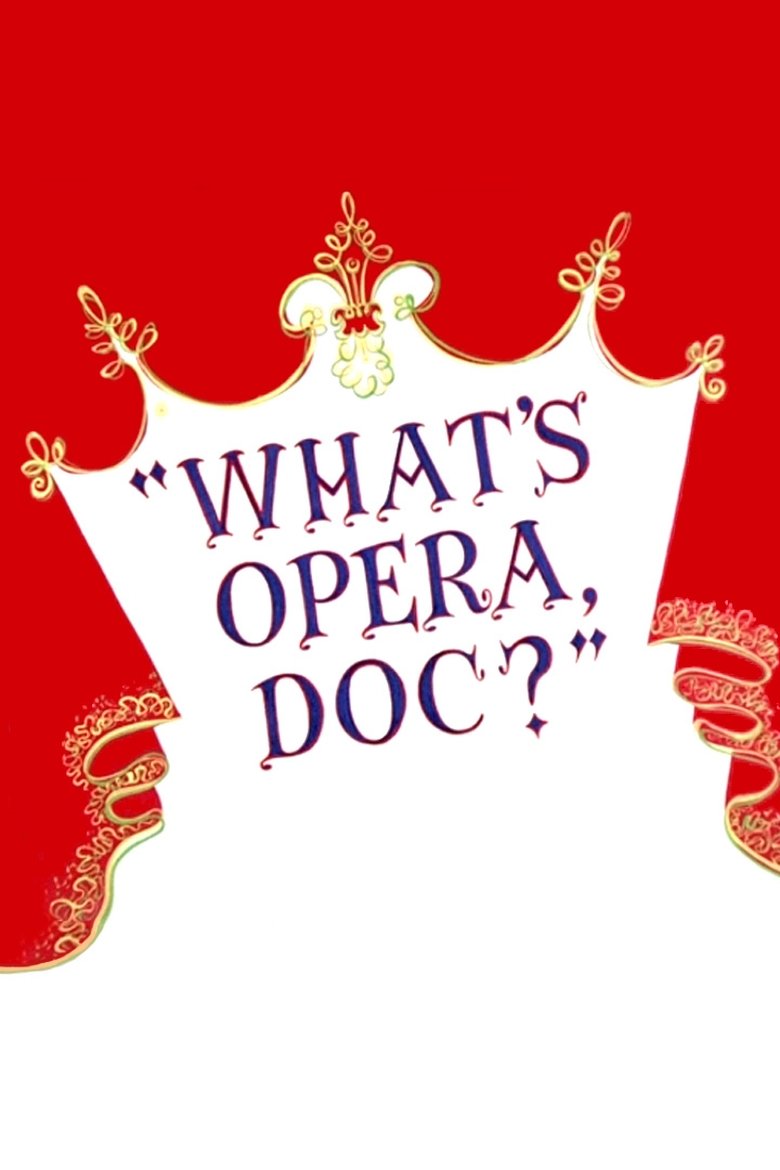
Here's the thing about What's Opera, Doc?: I admire it more than I enjoy it. And I'm not sure I'm supposed to say that out loud.
Elmer Fudd in a Viking helmet, belting "Kill the wabbit!" to the tune of Wagner across a stormy, Technicolor dreamscape. Bugs Bunny in a Brunhilde costume, playing the doomed heroine with that trademark smirk. Chuck Jones conducting the whole thing like a miniature opera of genuine dramatic ambition, crammed into seven minutes of lush, sweeping animation. It's visually extraordinary. The backgrounds have a scale and boldness that most feature films would envy, and the way the short commits to its operatic conceit is genuinely impressive. I get why it's been called one of the greatest cartoons ever made. I do.
But knowing something is great and actually having a great time watching it are two different things, and I've been mixing those up about this short for years.
The problem, for me, is pacing. Seven minutes might not sound like long, but when you're used to the machine-gun rhythm of classic Looney Tunes, this one moves like it's got all the time in the world. Compare it to Duck Amuck, which I find endlessly rewatchable precisely because it never lets you settle. Every few seconds there's a new gag, a new idea, a new layer of self-aware chaos. What's Opera, Doc? is operating on a different frequency entirely. It's doing drama. It's doing parody of drama. And the humour it generates is more conceptual than visceral. You think "yes, clever" rather than actually laughing.
That's a legitimate creative choice, and I don't want to be unfair to it. The absurdity of the premise does the heavy lifting, and there's something genuinely funny about Elmer Fudd achieving, in this short alone, what he never manages across hundreds of cartoons: he actually gets Bugs. The ending has a real melancholy sting to it, a joke that lands as both punchline and something approaching tragedy. That's no small achievement in a cartoon from 1957.
But here's where I'll be honest about my own experience: when a film, or a short, or anything really, carries that much accumulated reverence, it becomes almost impossible to watch it fresh. You're not watching What's Opera, Doc?, you're watching The Greatest Cartoon Ever Made, and the weight of that reputation sits on top of every frame. The admiration gets in the way of the enjoyment. I've felt this with other celebrated works too, where the critical consensus has calcified into something so solid you can barely see the actual thing underneath it.
What Jones pulls off here in terms of visual craft is real. The Technicolor palette is extraordinary, all deep purples and slashing lightning and dramatic silhouettes, and the willingness to treat the Bugs and Elmer dynamic as something worthy of Wagnerian grandeur is both funny and oddly touching. As a piece of animation history, it's essential. I wouldn't argue with anyone who calls it a landmark.
I just wouldn't put it on when I fancy a laugh. Not over the sharp timing and genuine wit of something like One Froggy Evening, which manages its own kind of ambition while never letting the gags go cold. That one gets under my skin every single time. This one I appreciate and then put back on the shelf.
Two and a half stars. Visually striking, historically significant, and genuinely beloved by a lot of people whose taste I respect. But sometimes the most celebrated works are the ones we admire far more than we actually enjoy, and I think it's worth saying so rather than just nodding along with the consensus.
Rating: ★★½ | Year: 1957 | Watched: 2026-03-12
Related on Movies With Macca
More from Chuck Jones: One Froggy Evening (1955) · Duck Amuck (1953)
More with Mel Blanc: Duck Amuck (1953)
More from the 1950s: Invasion of the Body Snatchers (1956) · Alice in Wonderland (1951) · Letter from Siberia (1957) · Invaders from Mars (1953)
More animation: Fantastic Planet (1973) · Alice in Wonderland (1951) · Mononoke the Movie: The Phantom in the Rain (2024) · Mononoke the Movie: Chapter II - The Ashes of Rage (2025)
More comedy: The Eagle (1925) · The General (1926) · Americana (2023) · The Naked Gun: From the Files of Police Squad! (1988)