
One Froggy Evening (1955)
★★★½ — One Froggy Evening (1955)

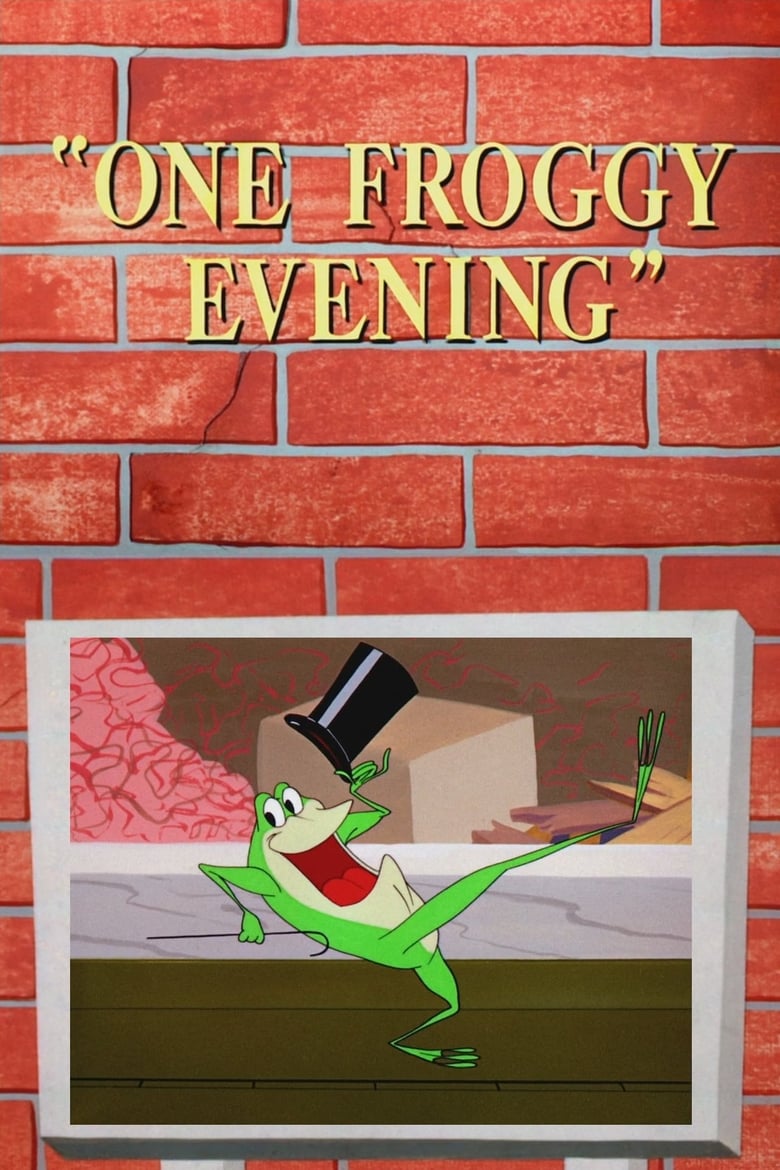
There's a specific kind of cruelty to the joke at the heart of One Froggy Evening, and it gets me every time. A construction worker cracks open a time capsule, finds a frog inside, and the frog promptly launches into a full vaudeville number, top hat and cane and all, with more charisma than most human performers could muster. The man's eyes go wide. His mind races toward dollar signs. And then, the moment anyone else is in the room, the frog just... sits there. Croaks. Stares. Every single time.
Seven minutes. Chuck Jones needed just seven minutes to construct one of the most airtight comic premises in the history of the medium. The escalating desperation, the shattered dreams, the way the poor fella's life visibly collapses around him while this amphibian remains utterly, serenely indifferent. It's Sisyphean tragedy dressed up as a cartoon, and it lands because Jones commits to the logic completely. There's no winking at the audience, no relief valve. The joke tightens like a vice.
What makes Michigan J. Frog such an enduring creation is that his performances are genuinely good. "Hello! Ma Baby," "The Michigan Rag," delivered with such infectious energy and panache that you're swept up in them just like the worker is. That's the trap. You understand completely why this man loses his mind over a singing frog, because you'd lose yours too. The songs are joyous little time capsules of Tin Pan Alley and vaudeville, and there's real warmth in them even as they're being weaponised for comedy. When the frog performs, it feels like a gift. When the frog stops, it feels like punishment.
Jones was operating at the absolute peak of his powers here, and if you've spent any time with his other work from this era, as I have with Duck Amuck and What's Opera, Doc?, you'll know he had a particular gift for short films that operate on multiple levels at once. Duck Amuck deconstructs the form itself. What's Opera, Doc? takes the mick out of high culture while somehow becoming high culture. And One Froggy Evening tells a story about greed, obsession, and the particular madness of being chosen by fortune and then immediately abandoned by it. These aren't just cartoons. They're arguments about how stories work.
The pacing here is impeccable. There's no fat on it. Every beat earns its place, and the final shot, which I won't spoil for anyone who's somehow never seen it, arrives with a genuine pang of something close to pathos. It's funny and bleak and oddly beautiful all at once. The irony is razor-sharp, but it doesn't feel mean. It feels true.
Is it the most iconic cartoon short ever made? That's a proper pub argument, and I'd happily have it. I think it's in the conversation, certainly. Its fingerprints are all over popular culture, from The Simpsons to Family Guy to any number of internet memes built around the same basic premise of a thing that performs brilliantly for one person and refuses to cooperate for anyone else. The template has been borrowed endlessly because the template is perfect.
Three and a half stars, and honestly, I go back and forth on whether it deserves the full four. The half star I'm withholding is largely symbolic, a way of acknowledging that seven minutes is seven minutes, however brilliant. But in terms of craft, timing, and sheer comic architecture, this is as good as the form gets. Short, endlessly rewatchable, and quietly devastating in the best possible way. Pure magic.
Rating: ★★★½ | Year: 1955 | Watched: 2026-03-12
Related on Movies With Macca
More from Chuck Jones: What's Opera, Doc? (1957) · Duck Amuck (1953)
More from the 1950s: Invasion of the Body Snatchers (1956) · Alice in Wonderland (1951) · Letter from Siberia (1957) · Invaders from Mars (1953)
More animation: Fantastic Planet (1973) · Alice in Wonderland (1951) · Mononoke the Movie: The Phantom in the Rain (2024) · Mononoke the Movie: Chapter II - The Ashes of Rage (2025)
More comedy: The Eagle (1925) · The General (1926) · Americana (2023) · The Naked Gun: From the Files of Police Squad! (1988)



