True Confessions (1981)
★★★ — True Confessions (1981)

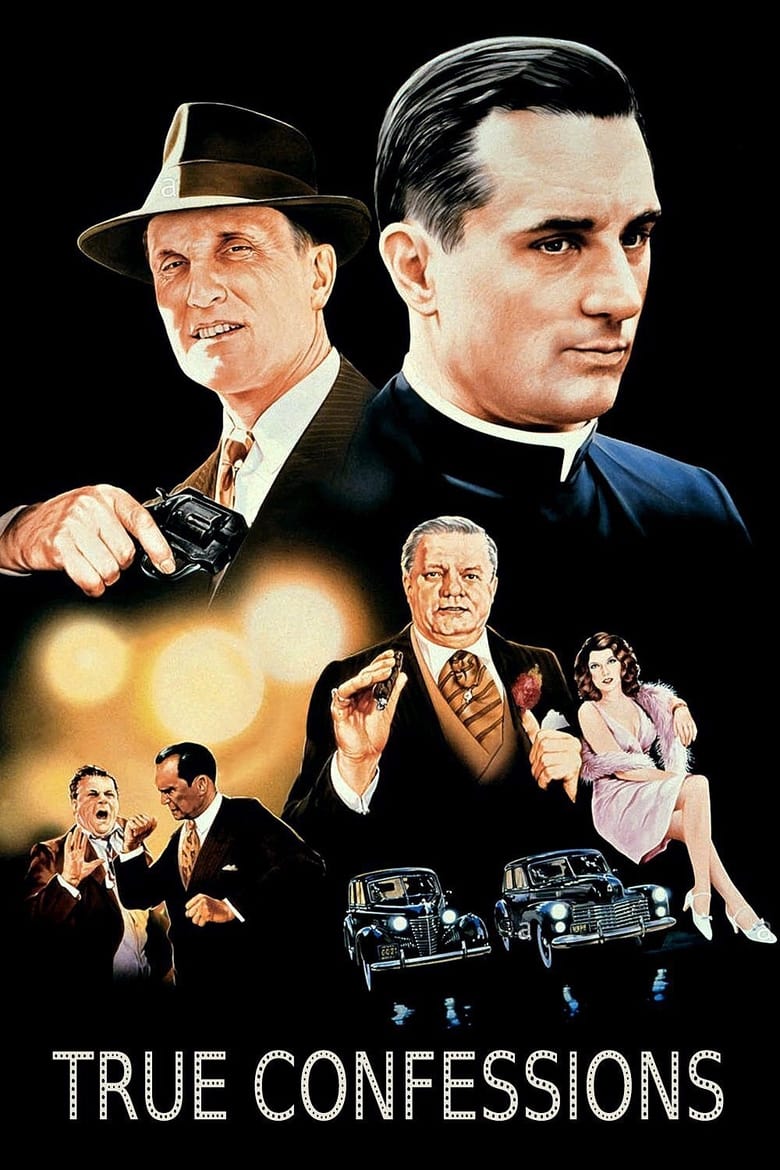
There's a specific kind of frustration that comes with a film that has everything going for it and still doesn't quite get there. That's True Confessions in a nutshell. Robert De Niro and Robert Duvall, two of the finest actors of their generation, circling each other as brothers on opposite sides of a murder investigation, set against a grimy, sun-bleached Los Angeles that feels genuinely corrupt right down to its bones. On paper, that's a winner. On screen, it's... fine. Solidly, frustratingly fine.
De Niro plays a Catholic priest whose world starts to unravel when his cop brother, played by Duvall, starts pulling threads connected to a murder case that reach uncomfortably close to the Church's powerful inner circle. It's a setup dripping with potential. Guilt, faith, loyalty, institutional rot. The ingredients are all there. But somewhere between the page and the finished film, the recipe goes a bit flat.
Both leads do what they do best, which is say a lot without saying much at all. There are silences between these two men that carry real history and real pain, and you believe completely that they're brothers who love each other and would throw each other under a bus if it came to it. That dynamic is the film's strongest card, and it plays it well. But it plays it a little too carefully, too. Neither performance has a moment where it truly catches fire. You admire the craft without ever feeling the heat.
The trouble is that True Confessions is working in the long shadow of films that did this kind of thing with more nerve. Chinatown mapped the corruption of Los Angeles with surgical precision. The Godfather made the collision of religion and organised crime feel genuinely tragic. True Confessions borrows from that same wardrobe but wears the clothes a little loosely. The noir clichés pile up: the shadowy backroom deals, the women who exist mostly to complicate men's lives, the sense that everyone in power is rotten and everyone without power is expendable. None of it feels fresh, and the plot's central twist lands with more of a shrug than a gut punch.
What does work is the atmosphere. The L.A. of this film is dusty and close and morally swampy, and the cinematography leans into that with some real style. There's a moodiness to the whole thing that keeps you watching even when the script is retreading familiar ground. And speaking of familiar ground, there's a particular chapel used in the film that will have certain cinema obsessives doing a double take. Kill Bill fans, you'll clock it immediately. Same dusty, atmospheric space, just a few decades before Quentin Tarantino got his hands on it. A strange little moment of movie-watching déjà vu.
The score does its job without distinction, the supporting cast fills in the period detail competently, and the pacing is measured to the point where "slow burn" starts to feel like a generous description. There's a fine film lurking inside True Confessions, one that might have shaken the genre conventions it relies on instead of leaning into them. I kept waiting for it to really go for the throat. It never quite does.
If you're in the mood for De Niro from this era navigating morally complicated New York (well, adjacent) territory, I'd point you toward The King of Comedy, which is a far stranger and more unsettling piece of work from around the same period. And if it's period crime drama with a real nasty streak you're after, The Untouchables delivers where this one hedges.
True Confessions isn't a bad film. It's well-acted, it looks the part, and the central relationship has genuine weight. It just never quite escapes the feeling that you've seen all this done better elsewhere. Three stars.
Rating: ★★★ | Year: 1981 | Watched: 2025-06-22
Where to watch
Watch in the UK
Rent: Apple TV Store · Amazon Video · Sky Store
Buy: Apple TV Store · Amazon Video · Sky Store
Physical: Amazon UK · Zavvi
Watch in the US
Stream: fuboTV · MGM+ Amazon Channel · Philo · MGM Plus Roku Premium Channel
Rent: Amazon Video · Apple TV Store · Fandango At Home
Buy: Amazon Video · Apple TV Store · Fandango At Home
Physical: Amazon US
Affiliate disclosure: Movies With Macca may earn a small commission on purchases or subscriptions started via these links. It costs you nothing extra.
Related on Movies With Macca
More with Robert De Niro: The Untouchables (1987) · The King of Comedy (1982) · Shark Tale (2004) · Little Fockers (2010)
More from the 1980s: Nightmare City (1980) · A Better Tomorrow (1986) · Style Wars (1983) · Garlic Is as Good as Ten Mothers (1980)
More crime: A Better Tomorrow (1986) · Angst (1983) · Stolen Face (1952) · Cairo Station (1958)
More drama: Viy (1967) · Wonder (2017) · A Better Tomorrow (1986) · Beautiful Boy (2018)