
The Migrant Survivor (2023)
★★ — The Migrant Survivor (2023)

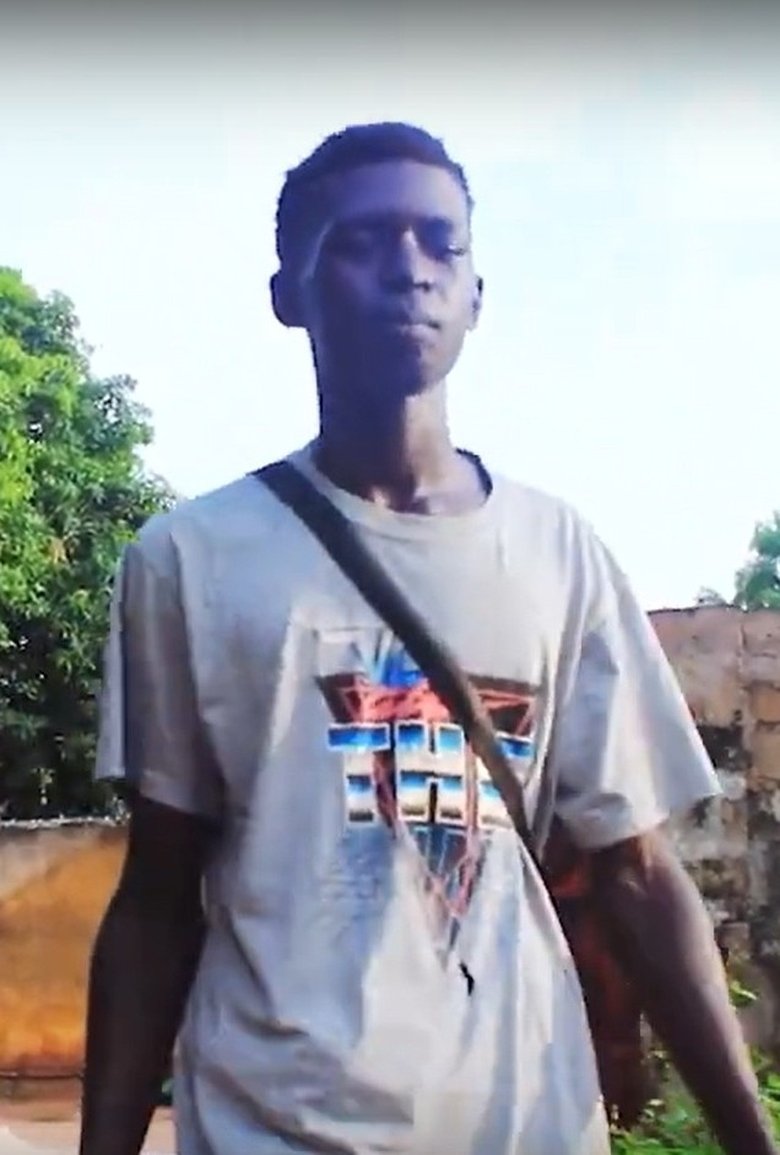
The Migrant Survivor is a short documentary from The Gambia, running to just twelve minutes, that centres on a young man named Bakary and his account of surviving a catastrophic boat crossing along the coast of Mauritania. He was attempting what is known locally as the "backway" journey, an unofficial, frequently lethal overland and sea route that thousands of West African migrants have taken in hopes of reaching Europe, Italy in particular. When the vessel he was travelling on met disaster, Bakary lost his closest friend and more than fifty fellow passengers. The film follows him as he returns home to The Gambia, the very economic and social conditions he had been trying to escape still waiting for him, and asks, without quite answering, what comes next for a person caught in that particular trap.
The film was written, directed and edited, at least in part, by Lamin L. Sanyang, who also shares the editing credit with Oumie Bojang. It is, by any conventional measure, a very modestly resourced production, made without the backing of a major studio or the infrastructure of an established documentary tradition behind it. What it does have is a subject of genuine gravity. The backway migration route has claimed a horrifying number of lives across the years, and The Gambia, a small, predominantly Muslim nation whose young population has been hit particularly hard by the pull of irregular migration, is one of the most significant countries of origin for those attempting the journey. For a Gambian filmmaker to turn the camera on that experience from the inside, with a real survivor and real grief, rather than at the remove of a foreign correspondent, is a meaningful act regardless of the resources available. For another documentary made in and about this corner of West Africa, Jaha's Promise (2017) approaches Gambian life from a different angle but similarly finds its power in one person's story.
The cinematography is credited to Fatou B. Sanyang. Given the short runtime and the interview-led approach, the visual language is spare, built around the kind of static, frontal framing common to documentary testimony. There is no named composer attached to the production, and the sonic texture reflects that: this is a film that leans on the spoken word, on Bakary's voice and what it carries, rather than on score or soundscape to guide the viewer's emotional response. That is a choice, whether deliberate or circumstantial, and the results on screen are what they are. The editing, shared between the director and Bojang, keeps things moving at a pace that the runtime almost demands but that also forecloses anything in the way of breath or pause. For a sense of how a very different kind of documentary handles its assembly, I also reviewed Titicut Follies (1967), a film that uses its formal decisions as instruments of argument in ways that reward close attention.
That's the raw material of something really powerful. And to be fair, the story itself carries weight on its own terms. You don't need flashy filmmaking to make a drowning tragedy feel serious. The problem is that the documentary seems content to do the absolute bare minimum with what it has. It's interview style, pretty much wall to wall, and while that format can work brilliantly in the right hands, here it just feels thin. There's no real visual ambition, no attempt to build context around the man's account, no wider framing of the migrant crisis in the region or the specific desperation that drives people onto boats like that. It's a glimpse, as I said to myself watching it, into Gambian life, but only just barely a glimpse.
The running time reflects the approach. It's short, and you feel that shortness not as a strength but as a missed opportunity. A story this specific, this human, deserved more room to breathe. More time with the subject, more context around the Gambia itself, more exploration of what life looks like for the people left behind after tragedies like this. I kept wanting the film to push harder, to ask more, to linger longer. It never really does.
That said, I don't want to be too dismissive, because there is something here. The man at the centre of it is compelling just by being honest. You believe him completely. The grief for his friend is real and present even through the basic interview format, and there's something quietly extraordinary about someone being willing to sit down and relive that kind of trauma on camera at all. The film works best when it simply gets out of his way and lets him talk.
Oh, and I can't not mention it: this man's thumbnail nails are something else entirely. Genuinely extraordinary. A brief but memorable detail in an otherwise fairly plain production.
This was my G entry for the A to Z World Movie Challenge, and finding a Gambian film at all felt like a small victory. I've been enjoying the challenge as a way of seeking out corners of world cinema I'd never normally find, much like I did with Here and Elsewhere (1976), which similarly draws you into a world most Western viewers would never encounter through conventional programming. That one had a lot more to say formally, but the spirit of curiosity is the same.
The Migrant Survivor earns its two stars because the story at its heart is genuinely tragic and worth knowing about. But as a documentary, it's too bare-bones to really reckon with what it's presenting. The subject survived something unimaginable. The film, unfortunately, just about survives its own limitations.
Two stars.
For me, that tension between the weight of the subject and the plainness of the execution is the thing I keep returning to. There are films that get away with doing very little formally because they have found exactly the right person to sit in front of a camera, and Bakary is honest and present in a way that does carry you some distance. But documentary filmmaking, even at its most stripped-back, tends to ask something of the viewer beyond simply believing the person on screen, and I found myself wishing this one had asked more of itself too. If you are working through corners of world cinema you would not ordinarily reach, and that is part of what drew me to this one in the first place, it is worth knowing that Under a Jarvis Moon (2010) is another documentary in my archive that finds a remarkable human story and wrestles, with rather more formal ambition, with how to tell it properly. Sometimes the story is enough. Sometimes you need the film to meet it halfway. The survivor deserved the latter.
Rating: ★★ | Year: 2023 | Watched: 2025-06-19
Related on Movies With Macca
More from the 2020s: Mononoke the Movie: The Phantom in the Rain (2024) · Mononoke the Movie: Chapter II - The Ashes of Rage (2025) · The Long Walk (2025) · Americana (2023)
More documentary: Letter from Siberia (1957) · Lessons of Darkness (1992) · Style Wars (1983) · Here and Elsewhere (1976)



