Picnic at Hanging Rock (1975)

Share
Picnic at Hanging Rock (1975)

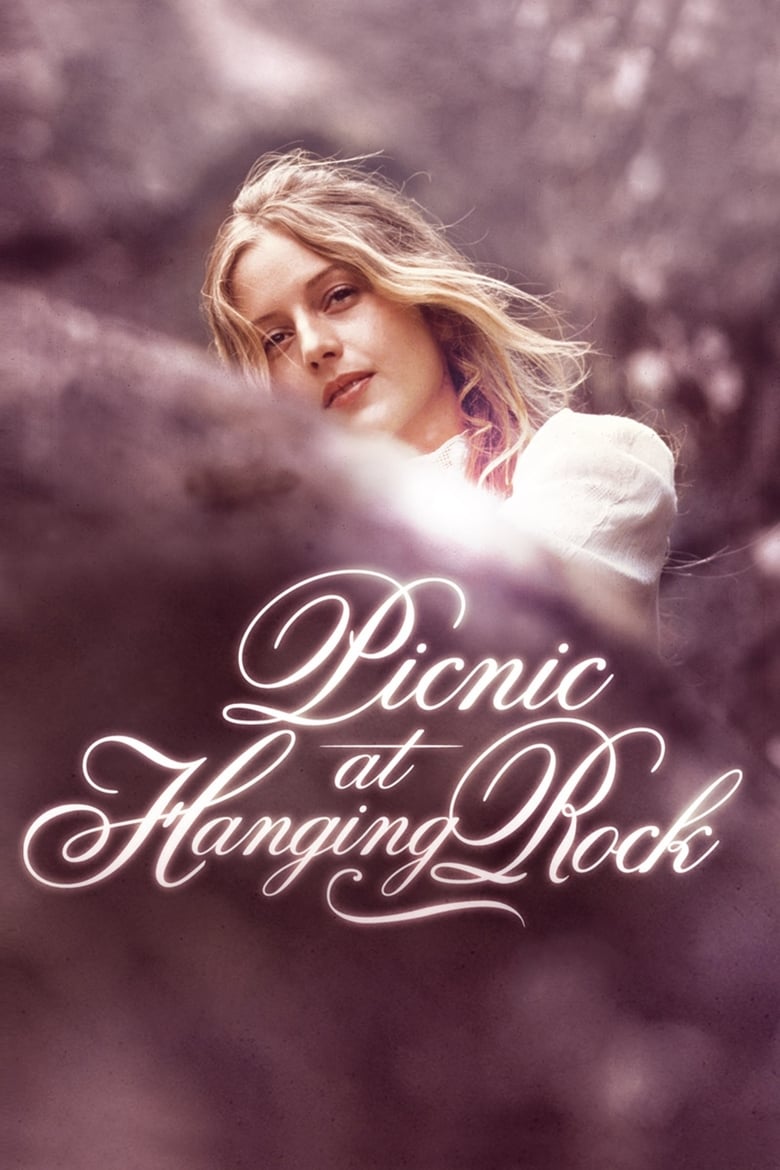
Australian cinema has a handful of films that feel less like productions and more like events, and Picnic at Hanging Rock is near the top of that list. Released in 1975 and based on Joan Lindsay's 1967 novel of the same name, the film arrived at a moment when Australian filmmakers were beginning to find a voice that was distinctly their own, bolstered in part by the newly established Australian Film Commission, which co-produced it alongside McElroy & McElroy and the South Australian Film Corporation. The story is deceptively simple: a group of girls from Appleyard College, a boarding school that could have been transplanted wholesale from the English Home Counties, travel to Hanging Rock for a Valentine's Day picnic in 1900, and some of them do not come back. Lindsay's novel famously blurred the line between fiction and fact, presenting itself almost as a historical account, and that deliberate ambiguity passed more or less intact into Cliff Green's screenplay. The film offered no resolution, no tidy explanation, and the cultural conversation that followed never quite stopped.

Peter Weir was still in the early part of his career when he took the project on, his previous feature being the low-key and relatively obscure The Cars That Ate Paris (1974). Picnic at Hanging Rock was the film that announced him internationally, and looking at where he went afterwards, including work as varied as Gallipoli, Witness, and Dead Poets Society, it reads as the first clear signal of a director interested in the gap between the ordered, civilised surface of things and whatever lies beneath. One concrete measure of the film's impact: it screened in competition at Cannes in 1979 in a re-edited version, giving it a second life in European art-house circles and cementing a reputation that had already been building at home.

The cast is anchored by Rachel Roberts as Mrs Appleyard, the headmistress whose rigid propriety begins to crack under the strain of the disappearances, and Vivean Gray as the governess Miss McCraw. Helen Morse plays the warmer and more sympathetic Mademoiselle de Poitiers, while Kirsty Child and Tony Llewellyn-Jones fill out the faculty of a school that feels less like an educational institution and more like a pressure cooker sealed with lace and corsets. None of these are showy performances by design; Weir and Green are interested in atmosphere and social texture rather than the kind of emotional confrontation that pushes a story forward.

Cinematographer Russell Boyd shoots the Australian landscape with a quality of light that feels simultaneously beautiful and wrong, all bleached whites and soft diffusions that make the rock itself look like something from a fever dream rather than a geography lesson. He and Weir use gauze filters and slow motion to give certain sequences a dreamy, slightly unstable quality, the visual grammar signalling that something has slipped outside the normal run of things. Composer Bruce Smeaton builds a score around Romanian pan flautist Gheorghe Zamfir's contributions (supplemented by Zamfir's earlier recordings), and the effect is genuinely unusual: reedy, sourceless-sounding music that seems to drift in from somewhere the eye cannot locate, suggesting the rock has its own acoustics. Editor Max Lemon keeps the cutting unhurried, allowing images to breathe in ways that either reward patience or test it, depending on the viewer. It is a film that asks you to receive rather than follow, and it makes no apology for that.

If you have seen Ari Aster's Midsommar, you have already met the ghost of Picnic at Hanging Rock, whether you realised it or not. Peter Weir's 1975 film, one of the most revered things Australian cinema has produced, is the clear ancestor of that sun-bleached, dread-in-daylight strain of folk horror, and I came to it expecting to be spellbound. I was not. The premise could hardly be more evocative: on a blazing Valentine's Day in 1900, a party of schoolgirls picnics beneath an ancient volcanic rock, and several of them wander up into it and are simply never seen again. And yet, to my real surprise, I found the whole thing something of a slog.

Its influence is beyond dispute. You can draw a straight line from Weir's ambiguous, unresolved unease to Midsommar, a film I rated highly, and to half the folk horror of the last decade. The difference is that its descendants learned to wed that mood to a real visual spectacle. Midsommar is hypnotic to look at; Picnic, for all that its ethereal photography is meant to be its calling card, never cast that spell over me. The images that are supposed to shimmer just sat there, and stripped of that visual pull, the ambiguity began to feel less like mystery and more like a film politely declining to commit to anything.

The rest did not haul it back. The pace is glacial in a way I could never quite sink into, the performances land somewhere between mannered and flat, and though it is nominally a period piece, the whole thing sits at an odd, airless remove that never once drew me in. Nor is it frightening, whatever the horror reputation it has since accrued; it is, for want of a better word, just odd, dreamy and evasive and, to me, curiously inert.

I do want to be fair, because I can see what it is reaching for, and I know I am swimming against a powerful tide of admiration. This is, after all, the same Peter Weir who would later make something as warm and alive as Dead Poets Society, so the talent was never in doubt, and plenty of viewers find Picnic hypnotic and haunting. I would not tell them they are wrong. But a film has to cast its spell on the person actually watching, and this one left me eyeing that rock less in wonder than in hope that something might finally happen. It is a landmark I am glad to have caught up with at last, even if I am in no rush to revisit it, and for all its towering reputation it earns just two and a half stars from me.

Picnic at Hanging Rock occupies a specific kind of place in cinema history: the film that other filmmakers absorbed so thoroughly that its DNA now shows up in works that have long since outgrown it. For audiences coming to it fresh after a decade of sun-drenched folk horror, from Australian genre cinema's recent resurgence to the broader international boom in atmospheric dread, the experience of watching the original can be a complicated one. The influence is not in doubt, and for viewers who find its particular frequency, it remains genuinely haunting. As with any film that has accumulated this much critical weight, it is worth approaching it with clear eyes rather than inherited reverence, and Macca's review is a useful corrective in that respect. Whether it casts its spell or simply stands there, ancient and impassive, may depend entirely on the person looking up at it.


Rating: ★★½ | Year: 1975 | Watched: 2026-08-17

View on Letterboxd →


Trailer

▶ Watch the official trailer for Picnic at Hanging Rock (1975) on YouTube


Where to watch

Watch in the UK
Stream:
Shudder · Shudder Amazon Channel
Rent: Apple TV Store · Amazon Video · Google Play Movies · Sky Store
Buy: Apple TV Store · Amazon Video · Google Play Movies · Sky Store
Physical: Amazon UK · Zavvi

Watch in the US
Stream:
HBO Max Amazon Channel · Criterion Channel · HBO Max
Rent: Amazon Video · Apple TV Store · Google Play Movies · YouTube
Buy: Amazon Video · Apple TV Store · Google Play Movies · YouTube
Physical: Amazon US

Affiliate disclosure: Movies With Macca may earn a small commission on purchases or subscriptions started via these links. It costs you nothing extra.
Film images and data courtesy of TMDB. This product uses the TMDB API but is not endorsed or certified by TMDB.