Bram Stoker's Dracula (1992)

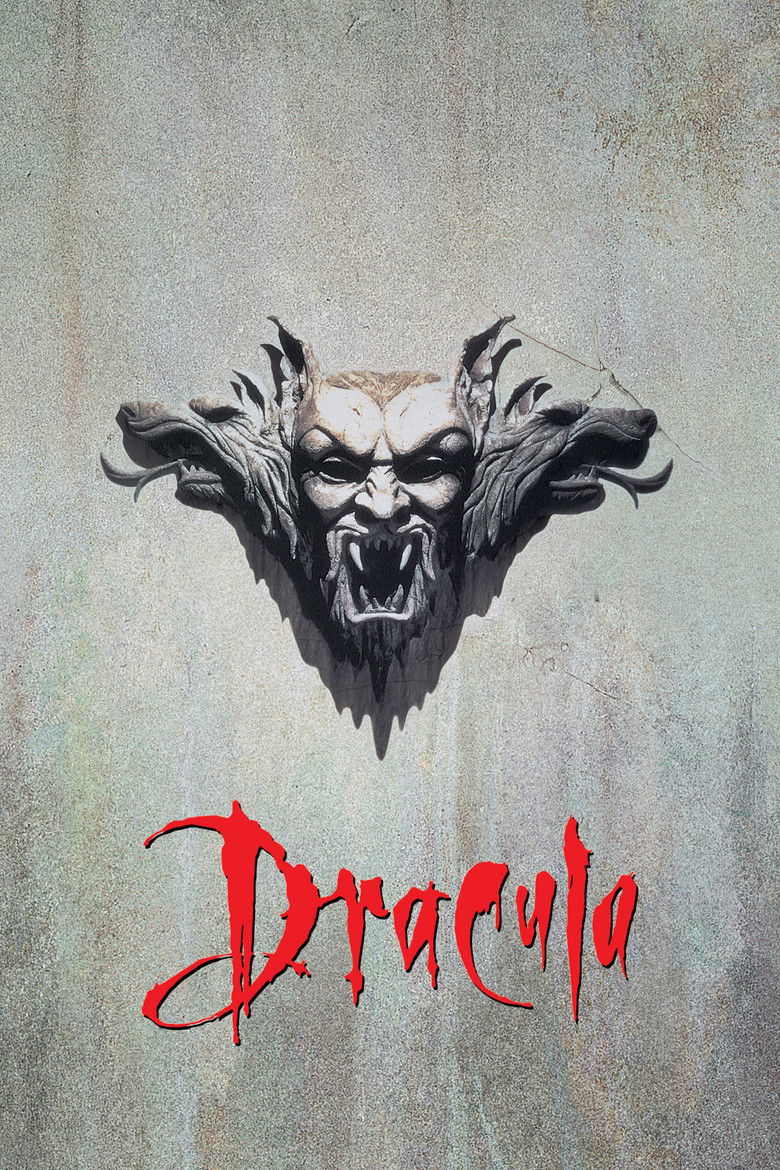
Bram Stoker's Dracula arrived in cinemas in November 1992 carrying the full weight of its source material and its director's reputation simultaneously. Bram Stoker's 1897 novel had already generated dozens of screen adaptations by that point, from F.W. Murnau's unofficial and legally fraught Nosferatu in 1922 through to the long run of Hammer productions that defined the character for a generation of British cinema-goers. What Francis Ford Coppola and screenwriter James V. Hart set out to do was something different: a version that took the novel seriously as a romance, restoring the epistolary structure and the tragic backstory of the Count himself, and treating the whole thing with a theatrical, operatic grandeur rather than the pared-back shock tactics that horror had increasingly favoured coming into the 1990s. The result is a film that sits somewhat apart from everything around it, polished but excessive, sumptuous but wilfully strange.
For Coppola, the project represented a deliberate return to studio film-making after a difficult decade. His work with American Zoetrope, the production company he co-founded and which co-produced the film alongside Osiris Films and Columbia Pictures, had seen considerable financial turbulence during the 1980s. I covered some of that broader context when I wrote about The Godfather Part III (1990), the film he made just two years before this one, and it's worth noting how different the two feel in ambition and execution. Dracula is looser, stranger, more willing to be gaudy. Hart's screenplay takes Stoker's prologue, set in 15th-century Wallachia, as its emotional anchor: Vlad the Impaler returns from battle to find his wife has thrown herself into a river after receiving false word of his death, and his furious rejection of God condemns him to eternal darkness. That framing, largely absent from previous film versions, gives the whole enterprise its romantic tragedy.
The cast assembled around that premise is, on paper, remarkable. Gary Oldman takes the title role, playing the Count across a remarkable range of physical forms and ages, from ancient, decaying nobleman to youthful predator prowling the streets of London. Winona Ryder plays Mina Harker, the woman whose resemblance to the Count's long-dead wife sets the plot in motion. Anthony Hopkins brings his particular brand of gleeful, slightly unnerving authority to Professor Van Helsing. Keanu Reeves, then riding considerable momentum from his action work, plays solicitor Jonathan Harker, the young Englishman dispatched to Transylvania to complete a property transaction and who ends up considerably out of his depth. Sadie Frost rounds out the principals as Lucy Westenra, Mina's friend whose fate arrives early and badly.
The film's craft is where it earns most of its reputation. Cinematographer Michael Ballhaus, whose long collaboration with Martin Scorsese had produced some of the most visually inventive American cinema of the 1980s, here works in a register that is almost operatic in its colour and movement. The camera moves with a fluid, destabilising confidence, and the palette shifts dramatically between the gothic reds and shadow-blacks of Transylvania and the greys and gaslit amber of Victorian London. Composer Wojciech Kilar's score is worth noting specifically: a Polish composer perhaps best known in the West for his work on The Pianist a decade later, his music here is genuinely unusual for a Hollywood horror production of the period. It draws on choral writing and Eastern European orchestral colour in a way that feels ceremonial and mournful rather than conventionally sinister. Editors Anne Goursaud and Nicholas C. Smith handle a film that moves between tonal registers with some regularity, from horror to melodrama to something closer to dark comedy, and the cutting reflects Coppola's stated preference for in-camera effects over post-production solutions, a choice that gives the film a texture quite unlike its contemporaries. For a companion piece on a film that occupies a similarly unusual space in its director's catalogue, see also The Godfather Part II (1974), which shows Coppola at his most formally controlled, a genuinely instructive contrast. And if Gothic excess and committed ensemble playing interest you more broadly, my thoughts on The Silence of the Lambs (1991) cover a film from just the previous year that handles similar horror-adjacent material in a very different register.
Bram Stoker's Dracula is a lavish, overripe feast of a film, and a lot of what makes it work is the cast. Gary Oldman is extraordinary in the title role, Winona Ryder and Anthony Hopkins are both excellent, and the whole thing is played with a full-blooded commitment that suits its gothic excess. The glaring exception, and everyone has said it, is Keanu Reeves. He took a lot of flak for this, and I am afraid I can hear exactly why: the accent he attempts as Jonathan Harker is dreadful, and it is the one consistently weak note in an otherwise rich ensemble.
What has aged most beautifully is the craft. The special effects, and especially the practical effects, are glorious, and they have barely dated at all; this still looks like nothing else. Coppola famously leaned on in-camera trickery over anything digital, and it gives the film a handmade, dreamlike quality that CGI has never quite managed to replicate. The practical effect in the carriage chase near the end is a particular marvel, the sort of thing you simply do not see anymore.
It is, I will admit, a touch too sexy for my own taste, forever draping its horror in heaving bosoms and fevered longing, though I suspect that is as much a product of its moment as anything else. And it is bloated, no question, overstuffed and occasionally exhausting in its sheer maximalism. But Coppola directs it all with such conviction and visual daring that I forgave the excess far more readily than I had expected to. This is a film with no interest whatsoever in restraint, and it mostly gets away with it.
More than anything, it feels like both the end of one kind of film-making and the start of another. You will not get films like this made now, and yet it more or less kicked off a whole new wave of lavish, classic-monster revivals in its wake. Four stars. Overlong, oversexed and occasionally daft, but gorgeous, bold and directed with enormous flair, and anchored by an Oldman performance for the ages.
Whether the film entirely holds together is a question each viewer will settle for themselves, but its place in the history of Hollywood horror is not really in dispute. It arrived at a moment when the genre was fragmenting, and it responded by going bigger rather than smaller, stranger rather than safer. The practical effects work alone made it a reference point for a generation of film-makers, and Oldman's performance remains one of the more extraordinary feats of physical and psychological transformation in 1990s American cinema. It is not a tidy film, and it was never intended to be. Some films announce their ambitions quietly; this one arrives in a coach pulled by shadow horses and doesn't apologise for a second of it.
Rating: ★★★★ | Year: 1992 | Watched: 2026-10-12
Trailer
▶ Watch the official trailer for Bram Stoker's Dracula (1992) on YouTube
Where to watch
Watch in the UK
Rent: Apple TV Store · Rakuten TV · Amazon Video · Google Play Movies
Buy: Apple TV Store · Rakuten TV · Amazon Video · Google Play Movies
Physical: Amazon UK · Zavvi
Watch in the US
Stream: Eros Now Select Apple TV channel
Rent: Amazon Video · Google Play Movies · YouTube · Fandango At Home
Buy: Amazon Video · Apple TV Store · Google Play Movies · YouTube
Physical: Amazon US
Affiliate disclosure: Movies With Macca may earn a small commission on purchases or subscriptions started via these links. It costs you nothing extra.