Dead Poets Society (1989)
★★★★½ — Dead Poets Society (1989)

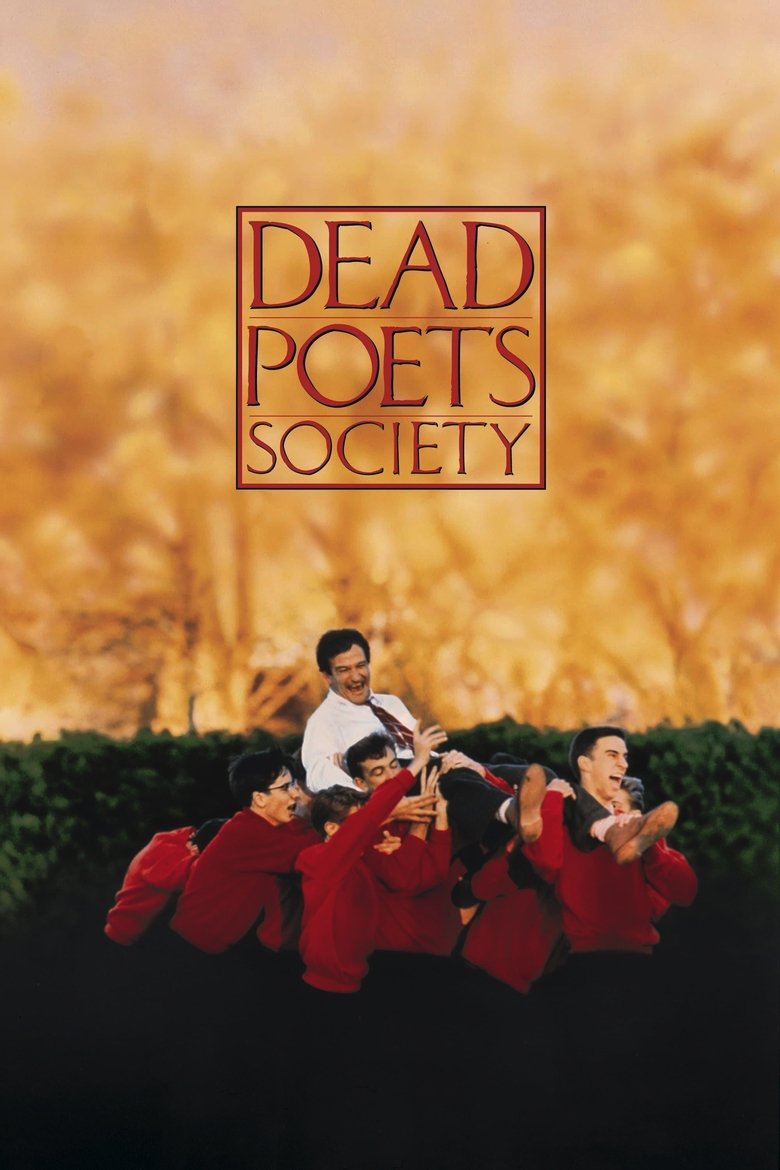
There's a moment in Dead Poets Society where Robin Williams stands before a group of teenage boys and tells them, simply, to seize the day. Carpe diem. It sounds like the sort of thing that could tip into cliché at any second. And yet, somehow, it doesn't. Somehow, it lands. That's the quiet miracle of this film: it takes ideas that could easily feel like a motivational poster and makes them feel urgent, personal, alive.
Peter Weir sets the whole thing in 1959, at Welton Academy, one of those American boarding schools that practically has "tradition, honour, discipline" carved above every doorframe. It's a world of blazers and chapel pews and fathers who've already decided what their sons will become. Into this arrives John Keating, played by Williams with a kind of contained electricity I don't think he ever quite matched elsewhere. This isn't a performance built on laughs. There are laughs, yes, but what Williams really gives you is the quiet fire behind the eyes. The sense that this man genuinely believes poetry can change a life, and is desperate to pass that belief on before the world squashes it out of these boys entirely.
And the boys themselves. Ethan Hawke, Robert Sean Leonard, Josh Charles, Gale Hansen. They're extraordinary, the lot of them. Vulnerable without being weak, funny without being silly, and heartbreaking when the film asks them to be. You watch them discover that they're allowed to want things, to feel things, to think for themselves, and it's genuinely moving. There's an authenticity to how their friendship is drawn that feels completely earned rather than scripted.
The film is gorgeous to look at, all autumnal golds and the kind of New England light that makes everything feel both beautiful and slightly melancholy. Maurice Jarre's score does exactly what a score should do: it swells when it needs to and gets out of the way when it doesn't. And the poetry, from Whitman to Thoreau, never feels like homework. It feels like something being handed to you. You leave this film wanting to read more, think more, do more. That's not nothing.
If I've got reservations, and I do have one or two, it's that the ending, which I won't spell out here for anyone coming to it fresh, is so weighted with tragedy that it leaves you winded in a way that made me want just a scrap more hope. I understand why it ends as it does. The film is making a point: that not all stories resolve cleanly, and that inspiration can come at a genuine cost. That's honest. That's true. But I found myself sitting with it afterwards, wishing the world of the film had been just a little more forgiving.
It made me think about Robin Williams more broadly as well. I've always felt he was at his best when he held something back, when there was a stillness underneath the energy. You see it here. You see it in Good Will Hunting too, a completely different kind of film but with a similar emotional generosity at its heart, that sense of a man trying to reach someone who's closed themselves off from the world.
What Dead Poets Society does so well is remind you that the things that feel the most intangible, poetry, passion, the courage to think independently, are actually the things that matter most. It says this without being preachy. Or rather, when it does get a little preachy, Williams sells it with such conviction that you forgive it immediately. There's a reason this film has stayed with people for decades. It speaks to something most of us have felt: the fear of living a life we didn't choose, and the desperate hope that someone might show us another way.
It's not a perfect film. But it's a deeply, deeply felt one. And sometimes that counts for more. Four and a half stars.
Rating: ★★★★½ | Year: 1989 | Watched: 2025-11-16
Where to watch
Watch in the UK
Stream: Disney Plus
Rent: Apple TV Store · Rakuten TV · Amazon Video · Sky Store
Buy: Apple TV Store · Rakuten TV · Amazon Video · Google Play Movies
Physical: Amazon UK · Zavvi
Watch in the US
Rent: Amazon Video · Apple TV Store · Google Play Movies · YouTube
Buy: Amazon Video · Apple TV Store · Google Play Movies · YouTube
Physical: Amazon US
Affiliate disclosure: Movies With Macca may earn a small commission on purchases or subscriptions started via these links. It costs you nothing extra.
Related on Movies With Macca
More from Peter Weir: The Truman Show (1998)
More with Robin Williams: Good Will Hunting (1997) · Insomnia (2002)
More from the 1980s: Nightmare City (1980) · A Better Tomorrow (1986) · Style Wars (1983) · Garlic Is as Good as Ten Mothers (1980)
More drama: Viy (1967) · Wonder (2017) · A Better Tomorrow (1986) · Beautiful Boy (2018)