Maria Ada (2012)
★ — Maria Ada (2012)

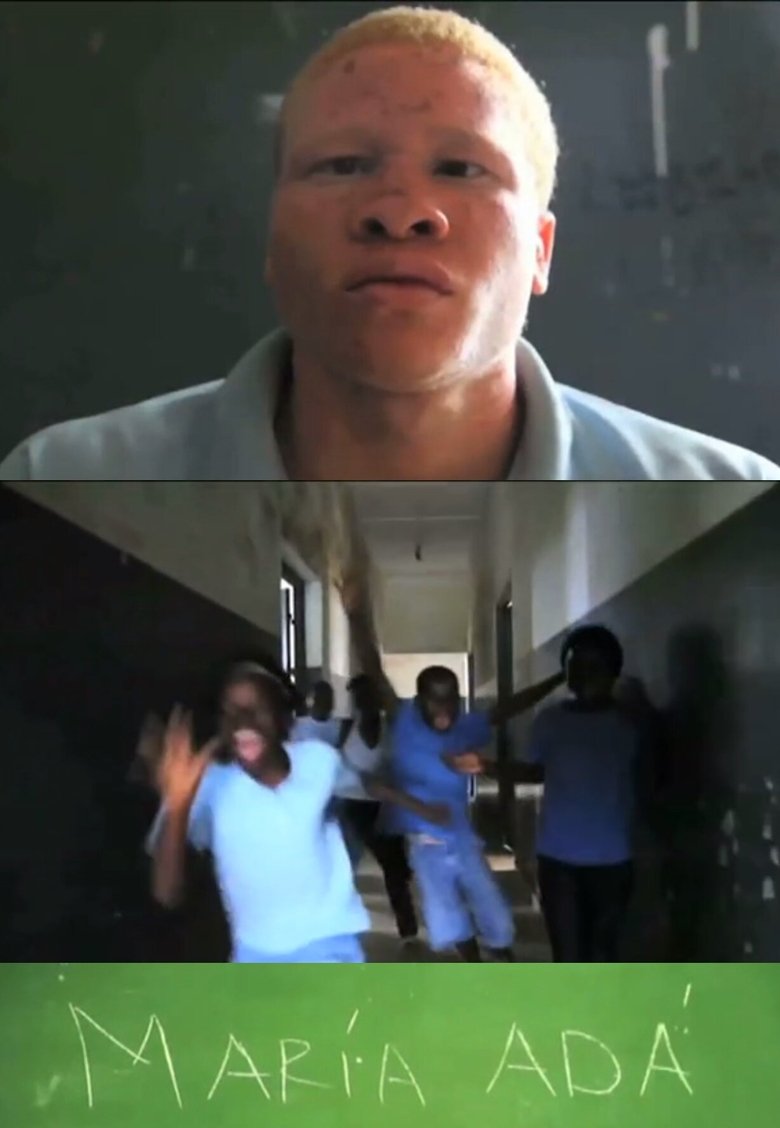
Seven minutes. That's all it asks of you. And somehow, I still came away scratching my head.
Maria Ada is a short film from Equatorial Guinea, which I tracked down as part of my A-Z World Movie Tour, a self-imposed challenge to watch something from every country on earth. Finding a film from Equatorial Guinea at all is no small feat, so full credit for that much. I dug it up on Vimeo, settled in, and spent seven minutes in a state of mild, polite bafflement.
The setup is simple enough. Three lads are sat around drinking beer and talking about a ghost. Apparently something strange has been happening at their school, and they're doing what any sensible group of mates would do: sitting indoors, discussing it at length. Then the film decides to show us what they're on about. Windows swing open. Lights flicker. Books launch themselves off a table. Standard haunting fare, the kind of thing you'd find in a low-budget horror short anywhere in the world.
None of it is particularly frightening, but I wasn't really expecting it to be. At seven minutes, you're not going to build genuine dread. What you might manage is atmosphere, a single good image, one moment that lodges in the memory. Maria Ada doesn't quite get there. The ghost effects feel functional rather than frightening, and the pacing is flat enough that the scares, such as they are, just sort of happen and then stop.
What genuinely puzzled me, though, was the subplot involving a kid with albinism. He's introduced, he's notably unbothered by all the supernatural goings-on around him, and then, if I understood it correctly, he ends up being taken away by the ghost. I'm not sure what the film is trying to say with that. Is his albinism meant to signal some kind of spiritual connection? Vulnerability? Something culturally specific that I'm simply not equipped to read without more context? I honestly don't know. And the film doesn't hang around long enough to explain itself.
I've seen short horror films that pack a real punch. The Witch (2015) isn't short, obviously, but it's a film that proves how much unsettling power you can wring out of atmosphere and restraint, with barely anything shown on screen. Maria Ada goes the other way, showing its hand immediately and offering very little else to chew on.
Look, I want to be fair here. This is a micro-budget short from a country with essentially no film industry to speak of. The fact that it exists at all is genuinely impressive, and I mean that sincerely, not as a backhanded compliment. Filmmaking takes effort, resources and nerve, and whoever made this clearly has some of all three. But as a viewing experience, it left me with more questions than it answered, and not the interesting kind of questions. More the "wait, what just happened and why?" kind.
One star. It's a curiosity, and a brief one at that. If you've got seven minutes and a completionist streak, the Vimeo link is out there. Otherwise, Equatorial Guinea remains one of cinema's great mysteries.
Rating: ★ | Year: 2012 | Watched: 2025-06-12
Related on Movies With Macca
More from the 2010s: Wonder (2017) · Beautiful Boy (2018) · The Witch (2015) · What We Do in the Shadows (2014)
More horror: Invasion of the Body Snatchers (1956) · Viy (1967) · Nightmare City (1980) · Angst (1983)
More fantasy: Viy (1967) · Alice in Wonderland (1951) · Mononoke the Movie: The Phantom in the Rain (2024) · Mononoke the Movie: Chapter II - The Ashes of Rage (2025)