No Dogs or Italians Allowed (2022)

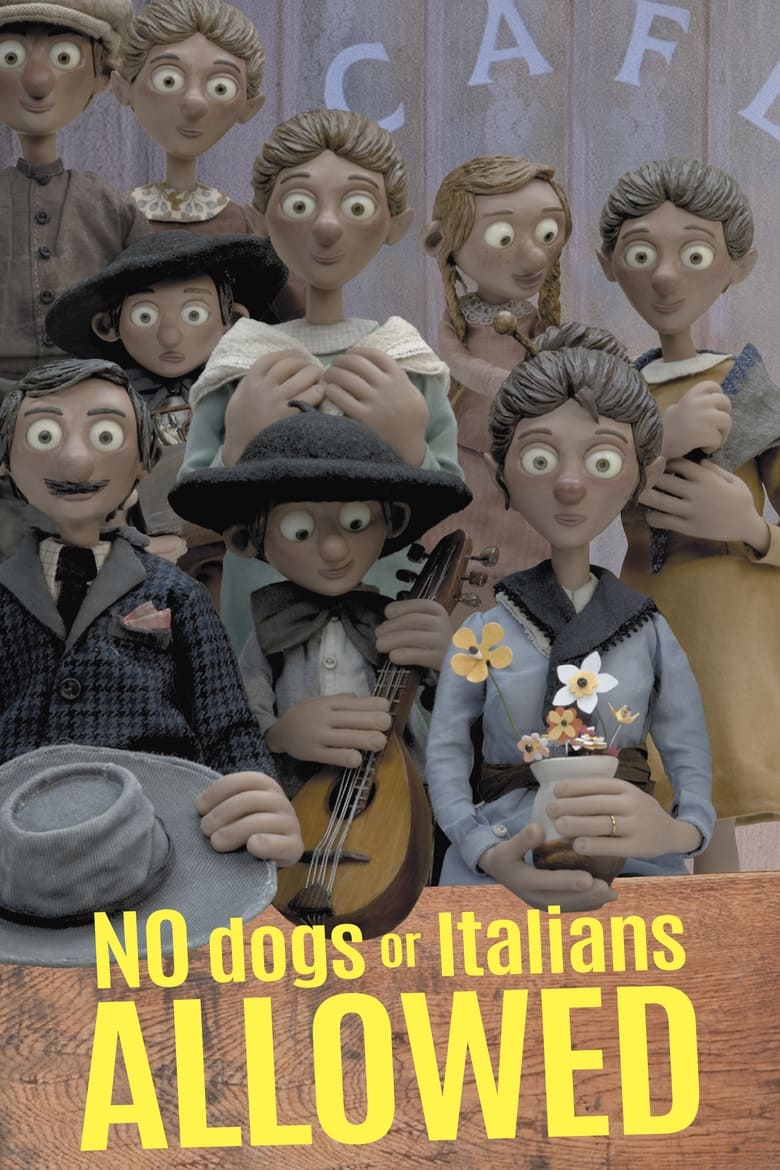
There's a moment watching No Dogs or Italians Allowed when you realise you've stopped thinking about the craft and started feeling the story. That's the trick Alain Ughetto pulls off here, and it's no small thing. The film announces itself immediately as a labour of love, and that phrase gets thrown around a lot, but I mean it genuinely here. Every frame is a carefully composed diorama, bringing early twentieth-century rural Italy and industrial France to life through meticulously detailed miniature sets, tactile textures, and a deliberately handcrafted aesthetic that feels both intimate and monumental. The warmth and authenticity of it is something CGI simply can't replicate. You can almost feel the fingerprints in the clay.
Ughetto's team have produced what is, for my money, some of the finest claymation work of the modern era. I've seen a fair bit of ambitious animation over the years, and I'd stack this up against most of it. If you enjoyed the sun-baked, hand-built world of Chicken for Linda!, you'll find something similar here in the way texture and colour carry as much emotional weight as the script. The visual poetry alone makes this a joy to watch, before you've even registered what the film is actually about.
What it's about, beneath all that gorgeous animation, is deeply personal. Ughetto draws on his own family history, tracing his grandparents' arduous journey from poverty-stricken Italy to France in search of work and dignity. The narrative unfolds with quiet grace, blending historical context, oral storytelling, and a subtle thread of humour to explore migration, labour, and resilience. It's more reflective than plot-driven, and I want to be honest about that because it will put some people off. There are no grand twists, no escalating stakes. The power comes from small, human moments that honour the quiet sacrifices of generations who built new lives from scratch. That's a harder thing to pull off than it sounds, and the film does it with genuine emotional sincerity.
My frustrations are real, though, and they're worth naming. A film this beautifully made deserves a huge following, and it's genuinely difficult to track down a copy to watch. Its niche format, deliberate pacing, and historical specificity keep it well outside the reach of casual viewers, which is a shame. The subtitles, documentary-style narration, and unhurried rhythm ask something of you. Not a lot, but something. If you're willing to meet it halfway, the reward is there. If you go in expecting conventional animation storytelling, you might find it a little too gentle for its own good.
I also think it's worth saying that this kind of film, the deeply personal animated documentary rooted in oral history and family memory, sits in a tradition that doesn't get nearly enough credit. It reminded me a little of the essayistic warmth I found in Letter from Siberia, that same sense of a filmmaker working through history in an intimate, idiosyncratic way rather than delivering a textbook.
So yes, I have mixed feelings, and I'm owning them. No Dogs or Italians Allowed is a relatively simple story told with extraordinary artistry. It lingers in the mind long after it ends, which is more than you can say for most things. It's a heartfelt tribute to overlooked migrants whose stories rarely make it to screen, and it absolutely deserves better distribution than it's got. Seek it out if you can.
Three and a half stars.
Rating: ★★★½ | Year: 2022 | Watched: 2026-05-21
Trailer
▶ Watch the official trailer for No Dogs or Italians Allowed (2022) on YouTube