Echogram (2003)
★★ — Echogram (2003)

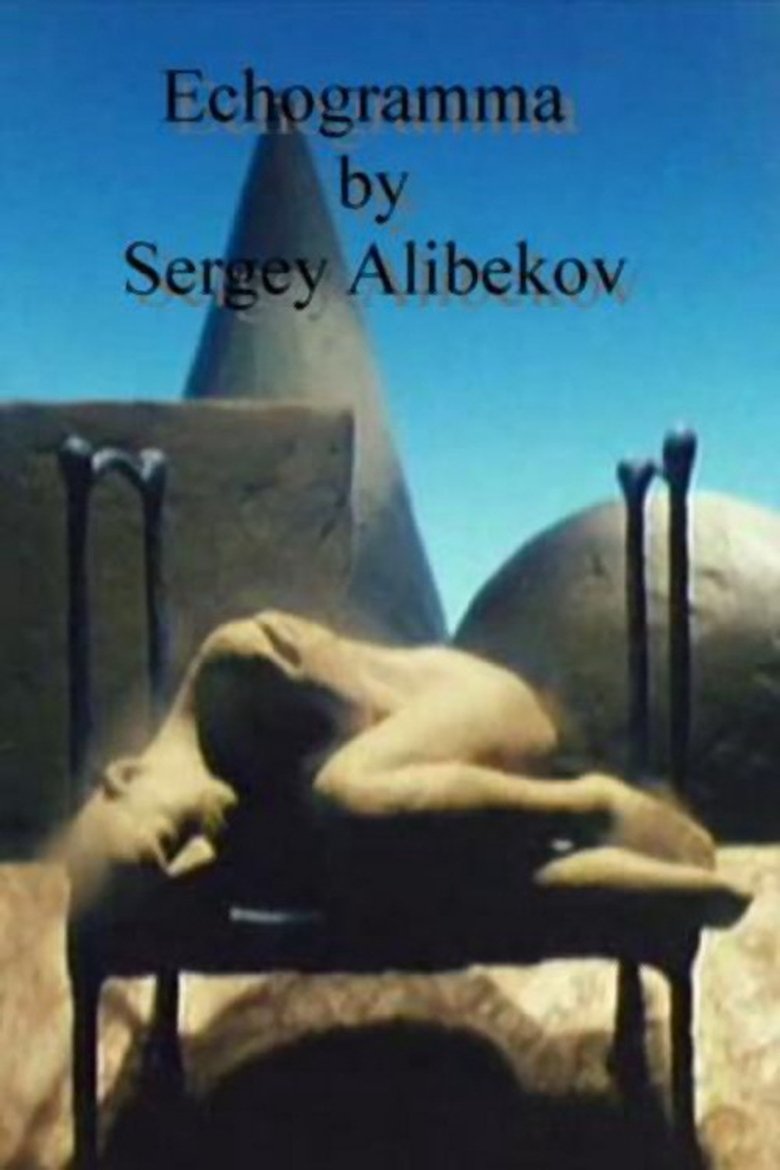
I genuinely have no idea what I just watched. And I mean that in the most literal, non-hyperbolic way possible. Echogram, a stop-motion claymation film from Uzbekistan, is one of the most impenetrable things I've sat through on my A-Z World Movie Tour, and I've sat through some proper head-scratchers. Not bad, not unwatchable, just utterly, completely opaque.
The visuals are the thing, and I'll give it that straight away. Hand-crafted clay figures move through crumbling, surreal landscapes in slow, jerky motions, and there's an eerie ambient soundtrack underneath it all that hums like a broken radio picking up transmissions from somewhere you don't want to visit. You can feel the dedication in every frame. Someone, somewhere, made this with real obsession, shaping each figure by hand, building each strange little world piece by piece. That kind of commitment deserves acknowledgement, even when the result leaves you completely at sea.
Because as for what it's actually about? God knows. There's something in there about memory, or loss, or identity collapsing in on itself, maybe. But it's all buried under layers of abstract imagery, repetitive sequences that loop back on themselves, and absolutely zero exposition. Characters, if they even are characters, mutter in low, muffled voices. Scenes dissolve into one another without any apparent logic. Time feels like it's folding. It's not confusing in the way a puzzle is confusing. It's impenetrable in the way a wall is impenetrable.
The film is clearly reaching for something in the spirit of Jan Švankmajer, or early Lynch, that kind of dreamlike, handmade surrealism where the strangeness itself carries meaning. And I'm genuinely open to that. I loved Fantastic Planet (1973), which is equally weird and abstract in places, but it has an emotional and thematic anchor keeping you tethered even when the imagery goes completely off the deep end. Echogram doesn't have that anchor. It just drifts. And after about three minutes of appreciating the craft, you start to feel it.
That's the real problem. The striking visuals, the handmade textures, the unsettling soundscape, all of it earns your attention for a short while. Then it starts to repeat. Then it starts to feel like a chore. There's no emotional thread to follow, no image or moment that suddenly makes the rest click into place. It's a fever dream translated through layers of VHS static and existential dread, and it never quite justifies the experience of sitting inside it.
I'm giving it two stars, and I want to be honest about why. Not because I think it's secretly brilliant and I missed something. It's because the sheer strangeness and the evident craft earn a sliver of respect that a lazy or cynical film wouldn't get. This is a genuine artefact of Central Asian experimental cinema, handmade and strange and like nothing else I've come across on this tour. That counts for something, even when the film itself refuses to meet you halfway.
Watch it once, out of curiosity. Wonder afterwards whether it was even real. Then move on.
Rating: ★★ | Year: 2003 | Watched: 2025-09-15
Related on Movies With Macca
More from the 2000s: Kirikou and the Wild Beasts (2005) · Anchorman: The Legend of Ron Burgundy (2004) · Daredevil (2003) · Apocalypto (2006)
More animation: Fantastic Planet (1973) · Alice in Wonderland (1951) · Mononoke the Movie: The Phantom in the Rain (2024) · Mononoke the Movie: Chapter II - The Ashes of Rage (2025)