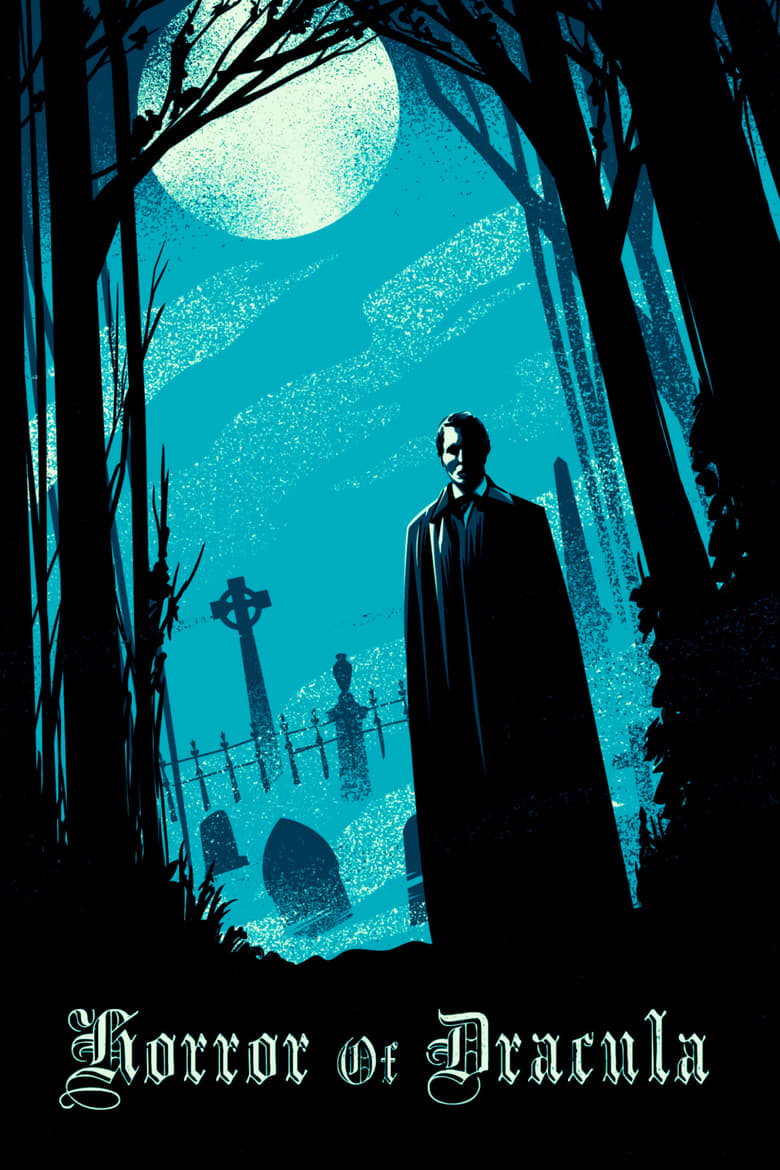
Dracula (1958)
★★★½ — Dracula (1958)

Peter Cushing moves like a man who has already won. There's a scene where Van Helsing is doing his research, cross-referencing texts, laying out his instruments, and you believe every second of it. He's not performing heroism, he's practicing it. That's the thing about Cushing: he brings a quiet, disciplined ferocity to everything he touches, and his Van Helsing in this 1958 Hammer production is one of the great genre performances. Part detective, part holy warrior, all conviction. Forget the later interpretations. This is the one.
Terence Fisher's Dracula (released in the States as Horror of Dracula, which frankly undersells it) didn't just bring the vampire back to cinema screens. It reinvented what a vampire film could look like. Universal's version gave us fog and shadows and Bela Lugosi in evening wear doing his famous hand-waggle. Hammer gave us something rawer, hotter, and considerably bloodier. The shift to Technicolor wasn't just a technical upgrade. It was a statement of intent. These are not polite monsters. This is lush red blood on crisp white linen. This is desire made visceral.
And that's really what Fisher understood that a lot of horror directors didn't and don't. The terror here isn't about a monster lurking in the dark. It's about what the monster represents. Dracula doesn't just kill people, he seduces them. He offers something the rigid propriety of Victorian England has repressed and denied. The women who fall under his spell aren't simply victims. They're tempted. And that tension, between the respectable surface of the world these characters inhabit and the primal thing scratching underneath it, gives the film a genuine, unsettling charge that holds up even now.
Christopher Lee, physically imposing and largely wordless, is exactly the right kind of threat. He gets very little dialogue and not as much screen time as you might expect or want, and there are moments where you wish the script gave him more room. But what he does with a glare, a slow turn, those extraordinary crimson eyes, is pure predatory menace. This isn't a tragic romantic Dracula, brooding over lost love. He's a hunter. Cold, efficient, terrifying. Lee plays it with the confidence of someone who knows he doesn't need to explain himself, and in that restraint, he's genuinely frightening.
The production design deserves its own round of applause. Rich velvets, candlelit interiors, castle corridors that feel genuinely oppressive. It's lavish without being wasteful, stylish without tipping into camp. And the colour, that gorgeous, saturated Hammer palette, gives the whole thing a sensual dread that feels simultaneously old-world and daringly modern. For 1958, this was shocking stuff. Even now it carries a charge.
That said, I'll own the mixed feelings. The second act loses its footing a bit. There are stretches where the pacing goes slack, where the film coasts on atmosphere when it ought to be pushing forward. It's not fatal, but it's noticeable, and it keeps this from being the outright masterwork it might have been with a tighter hand in the edit.
Still, I came away from it with enormous warmth and respect. I had a similar feeling watching The Curse of Frankenstein, Hammer's one-two punch of the late fifties that genuinely changed what British horror could be and do. Both films share the same DNA: Fisher directing with real confidence, Cushing anchoring proceedings with absolute authority, and a production that refuses to apologise for its appetites.
This is a landmark of Gothic horror, and I mean that without reservation. It's passionate, beautifully mounted, and driven by a pair of lead performances that complement each other perfectly even when they're barely sharing the screen. The pacing wobbles. The script underserves Lee. But the film knows what it's doing and why, and that sincerity counts for a great deal.
Three and a half stars.
Rating: ★★★½ | Year: 1958 | Watched: 2026-03-13
Where to watch
Watch in the UK
Stream: Amazon Prime Video · Amazon Prime Video with Ads
Rent: Rakuten TV · Amazon Video
Buy: Rakuten TV · Amazon Video · Google Play Movies · YouTube
Physical: Amazon UK · Zavvi
Watch in the US
Rent: Amazon Video · Apple TV Store · Google Play Movies · YouTube
Buy: Amazon Video · Apple TV Store · Google Play Movies · YouTube
Physical: Amazon US
Affiliate disclosure: Movies With Macca may earn a small commission on purchases or subscriptions started via these links. It costs you nothing extra.
Related on Movies With Macca
More from Terence Fisher: The Curse of Frankenstein (1957) · Stolen Face (1952)
More with Peter Cushing: The Curse of Frankenstein (1957)
More from United Kingdom: Lessons of Darkness (1992) · Shinjuku Boys (1995) · The Curse of Frankenstein (1957) · Blue (1993)
More from the 1950s: Invasion of the Body Snatchers (1956) · Alice in Wonderland (1951) · Letter from Siberia (1957) · Invaders from Mars (1953)
More horror: Invasion of the Body Snatchers (1956) · Viy (1967) · Nightmare City (1980) · Angst (1983)