
The Battle of the Giants (2023)
★★★ — The Battle of the Giants (2023)

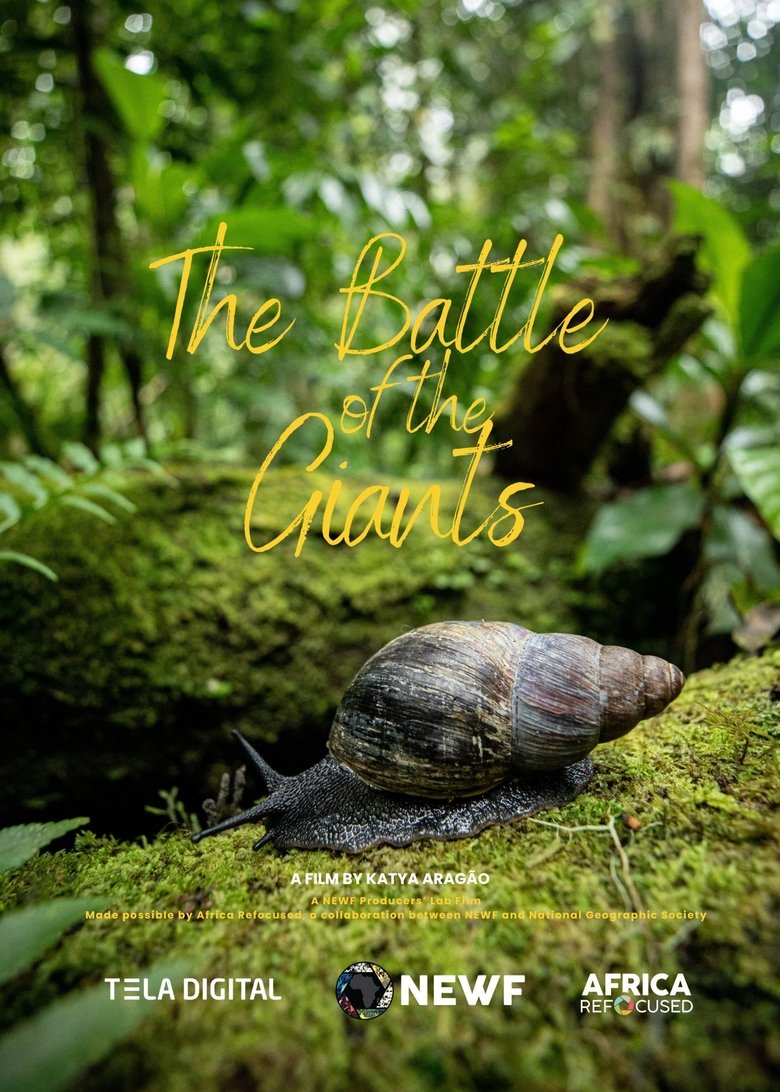
São Tomé and Príncipe is one of the least filmed places on earth. The small island nation in the Gulf of Guinea, a former Portuguese colony that gained independence in 1975, turns up rarely in global cinema, and rarer still as the subject of documentary work. The Battle of the Giants (2023) is an eight-minute short produced by Tela Digital and directed by Katya Aragão, who also wrote the film. It focuses on a conflict that is playing out quietly in the forests of the archipelago: the struggle between the Giant Obô Snail, an endemic species native to the islands, and the Giant Land Snail, an invasive species originating from West Africa. The Obô Snail, known locally by the name Manu in the film's framing, faces pressure not only from its competitor but from the ongoing degradation of the island habitat. It is, in other words, a conservation story told from ground level, or as near to the ground as you can reasonably get. For a companion piece from the same island nation, see also Sea and the Jungle, which covers very different territory but shares the same rare geographic focus.
Aragão keeps the storytelling instinctively personal, anthropomorphising the two snail species through names and a loose dramatic frame without tipping the whole thing into fantasy. The approach is a familiar one in nature documentary, used to draw audiences in quickly when the subject matter might otherwise feel remote, but it works particularly well here given the runtime: at eight minutes, there is no time to ease anyone gradually into caring. The film was produced through Tela Digital, a São Tomé-based production company, and the small scale of the operation is evident in the shape of the piece, tight, purposeful, and uncluttered. What it lacks in the resources of a broadcaster-backed production it compensates for in focus. I also reviewed Under a Jarvis Moon, a documentary that similarly demonstrates how much can be achieved with limited means when a filmmaker commits fully to their subject.
The cinematography is handled by Dário Pequeno Paraíso, and the images he produces are warm and richly saturated, the kind of close-up natural photography that rewards a good screen. The island vegetation has a density and lusciousness to it on camera that makes the conservation stakes feel tangible rather than abstract. There is real textural care in how the forest floor is filmed, the moisture, the light filtering through canopy, the slow movement of the snails against leaf and bark. The score, though its composer is uncredited in available materials, carries a gentle, unhurried quality that mirrors its subjects without becoming cloying, folk-inflected but not fussy. The combination of image and sound does a good deal of the film's emotional work without commentary having to over-explain. For another short documentary that uses its runtime with similar discipline, I wrote about Wolff Von Amerongen: Did He Commit Bankruptcy Offences?, a very different film in tone and subject, but one that also understands the value of staying focused.
This is a short documentary, freely available on Vimeo, and I stumbled across it as part of my A-Z World Movie Tour challenge. São Tomé and Príncipe is not exactly overflowing with cinematic representation, so I wasn't sure what to expect. What I got was something genuinely lovely and, at times, quietly heartbreaking.
The snails themselves are the real stars, and I say that without a hint of irony. There's something unexpectedly endearing about watching these creatures go about their slow, deliberate business on screen. The filmmakers have done a wonderful job of making you care about them quickly, which is no small feat when your subject moves at the pace of, well, a snail. The cinematography is beautiful throughout, rich and warm, doing full justice to the lush island landscapes that these animals call home. The accompanying soundtrack has a real tenderness to it that suits the material perfectly without ever tipping into sentimentality.
What I appreciated most is that the film doesn't wallow in doom. Yes, the statistics are alarming, and the film is honest about the damage that's been done. But it also shines a light on the conservation efforts underway to protect what remains. There's genuine hope woven through the whole thing, and I left it feeling motivated rather than defeated. That's a tricky balance to pull off in environmental documentary filmmaking, and this manages it well.
It reminded me a little of why I enjoy short documentary work so much. There's no padding here, no wheel-spinning. It makes its point, makes you feel something, and gets out. I think of something like Lessons of Darkness (1992), which uses its relatively short runtime to devastating effect by committing entirely to atmosphere and imagery over explanation. The Battle of the Giants works in a similar way, letting the visuals carry much of the emotional weight.
My only real gripe is that I wanted more. More time with the snails, more depth on the science of the conservation programmes, more context around the political and economic pressures driving the deforestation. But I suspect the brevity is partly a practical consideration for what is clearly a small-scale production, and it's hard to be too hard on a film for leaving you hungry when the alternative is overstaying the welcome.
Three stars.
If you have half an hour and a working internet connection, go and find this one on Vimeo. It costs you nothing, it'll show you a corner of the world you've probably never thought about, and it might just make you root for a giant snail. Highly recommended.
That feeling of wanting more, while still being glad the film exists exactly as it is, is a genuinely strange place to land, and it speaks well of what Aragão has pulled off here. For me, the measure of a short documentary is whether it earns its length or fights against it, and this one earns it comfortably. Eight minutes is enough to make you look at a patch of forest you'll never visit and feel something real about what might be lost there. Not bad for a film about snails you can watch for free on a Tuesday evening. Go and find it.
Rating: ★★★ | Year: 2023 | Watched: 2025-08-29
Related on Movies With Macca
More from the 2020s: Mononoke the Movie: The Phantom in the Rain (2024) · Mononoke the Movie: Chapter II - The Ashes of Rage (2025) · The Long Walk (2025) · Americana (2023)
More documentary: Letter from Siberia (1957) · Lessons of Darkness (1992) · Style Wars (1983) · Here and Elsewhere (1976)



