Silence Is a Falling Body (2017)

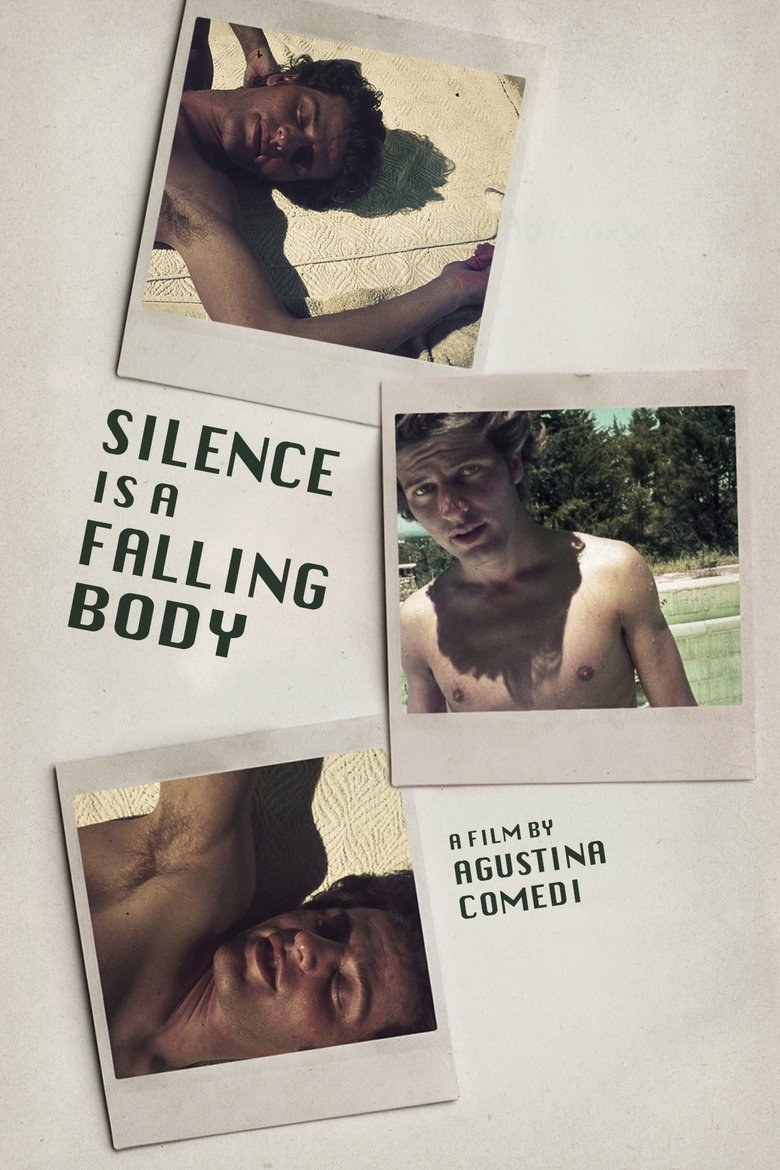
There's a particular kind of discomfort that comes from watching someone else's home movies. Birthday cakes, family gatherings, a child's first steps, all of it flickering on grainy VHS tape, intimate in a way that feels almost intrusive. Agustina Comedi's documentary Silence Is a Falling Body builds its entire architecture from that discomfort, using decades of her own family's archival footage to reconstruct the life of her father against the backdrop of Argentina's Dirty War, the transition to democracy, and the long hangover of censorship and silence that followed. It's a genuinely compelling idea. And it's well executed, up to a point.
What draws me in immediately is the lens Comedi chooses. No talking-head historians. No newsreel footage of junta generals. Just birthday parties and casual domestic moments, the kind of footage that was never supposed to mean anything beyond the afternoon it was shot. And yet, precisely because of the history pressing in from outside the frame, it means everything. You find yourself reading each image for clues, looking for the weight behind the smiles, the things no one is saying. Political trauma doesn't announce itself in private life. It seeps in quietly, and Comedi is sharp enough to understand that.
The narration is gentle and inquisitive rather than declarative, which suits the material. She's not telling you what to think about her father. She's thinking out loud, sorting through a life that was partly hidden from her, and from everyone around him. There's real emotional sincerity in that approach, and it keeps the film from feeling like a history lecture dressed in personal clothing. For anyone curious about Argentina's recent past, this is a rare ground-level view, the kind of perspective you won't get from more conventionally structured documentaries on the period. I've found myself drawn to films that approach Latin American history and politics from oblique, personal angles, and I thought Monos did something similarly oblique with Colombian conflict, though through fiction rather than archive. The two make for an interesting pairing.
But I want to be honest: "interesting" is roughly where my enthusiasm plateaus. The film has a structural problem that it never really solves. Clip after clip of domestic footage, narration layered over the top, and then more clips. The rhythm rarely changes. There's no dramatic evolution in what we're seeing or learning, and the film settles into a kind of repetitive loop that starts to feel monotonous well before the end credits. I kept waiting for a moment of revelation, for something to crack open, and it never quite comes.
Now, I suspect Comedi is aware of this. The flatness of the structure might be the point, mirroring the way silence itself flattens and erases. And I can respect that as a formal choice. But respecting a formal choice doesn't mean I have to find it compelling to sit through, and there's a version of essayistic documentary filmmaking where the refusal of narrative momentum starts to feel less like artistic rigour and more like inertia. This film occasionally crosses that line. I think of something like Letter from Siberia, which also uses personal, essayistic narration over documentary imagery, but crackles with wit and formal invention throughout. The comparison is a tough one for Comedi's film.
What you're left with is something genuinely valuable as a historical document, rich in archival material and sincere in its emotional intent, but more limited as a piece of storytelling. It's an archival exercise more than a fully realised film, and while those two things aren't mutually exclusive, the balance here tips too far toward the former. The one-note exploration never deepens in the way you hope it will.
If you're fascinated by Argentina's turbulent recent history, or if you have a particular appetite for essayistic, personal documentary work, there's enough here to hold your attention and reward the effort. But go in knowing this is a film that informs and provokes more than it grips. It's respectful and visually intriguing, and Comedi is clearly a thoughtful filmmaker. I just wanted more from it than it was ultimately willing to give me.
Rating: — | Year: 2017 | Watched: 2026-05-23
Where to watch
Watch in the UK
Stream: GuideDoc · DocAlliance Films
Physical: Amazon UK · Zavvi
Watch in the US
Stream: GuideDoc · DocAlliance Films
Rent: DocAlliance Films
Physical: Amazon US
Affiliate disclosure: Movies With Macca may earn a small commission on purchases or subscriptions started via these links. It costs you nothing extra.