
Neon Genesis Evangelion: The End of Evangelion (1997)

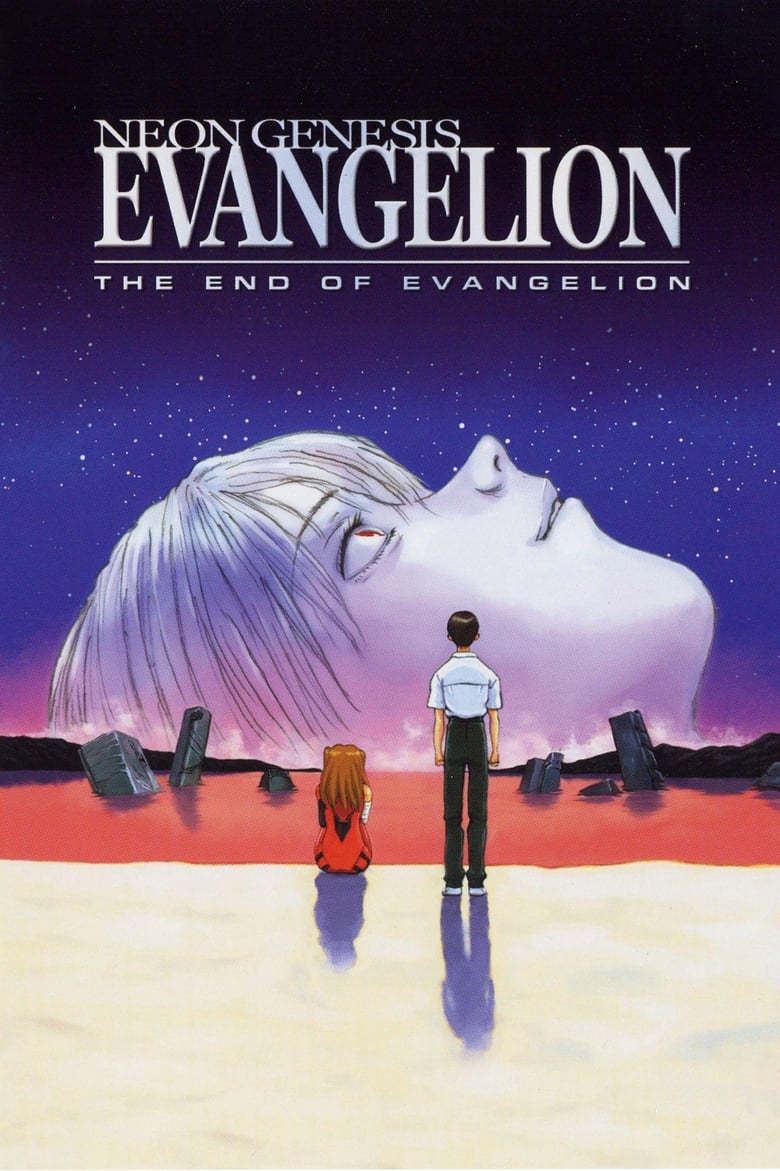
There are films that demand you arrive prepared, and Neon Genesis Evangelion: The End of Evangelion is one of the less apologetic examples of the type. Released in 1997 by the Tokyo animation studio GAINAX, in partnership with Production I.G and Star Child Recording, the film was produced as a direct response to the polarising final two episodes of the television series that preceded it. Those episodes, broadcast earlier the same year, had retreated almost entirely into abstract, psychological territory due to a combination of budget constraints and the creative exhaustion of the production. The theatrical film was GAINAX's second attempt at a conclusion, one made with more resources and considerably more fury. It retains the series' fixation on Jungian self-examination, messianic imagery and the psychological fragility of its young Eva pilots, but grafts onto that a final act of apocalyptic scale that the television budget could never have supported.
The film is written and co-directed by Hideaki Anno, who had shepherded the original Neon Genesis Evangelion series since 1995. Anno has spoken candidly about the depression he experienced during production, and that emotional rawness runs through the work in ways that feel less like artistic posturing and more like someone genuinely reckoning with collapse, both personal and civilisational. Co-directing duties were shared with Kazuya Tsurumaki, a GAINAX regular who would go on to direct FLCL. The principal voice cast, all returning from the series, includes Megumi Ogata as the withdrawn, agonised Shinji Ikari, Megumi Hayashibara and Kotono Mitsuishi as the pilots Rei and Misato respectively, Yuko Miyamura as Asuka, and Fumihiko Tachiki as the cold and calculating Gendo. The performances are calibrated for an audience already invested in these characters across months of weekly television, and the film trusts that investment completely.
On a purely craft level, the film is a remarkable object. Cinematographer Hisao Shirai and editor Sachiko Miki work in tandem to create a rhythm that shifts from the methodical to the overwhelming and back again, the cutting at times almost musical in how it builds and releases pressure. Miki's editing in the film's central battle sequence, in particular, has a kinetic, almost percussive quality that keeps the scale from becoming numbing. Shiro Sagisu's score is one of the more unusual in modern animation, mixing lush orchestral passages with choral arrangements, and it sits in pointed, sometimes unsettling contrast with the imagery it accompanies. One of the film's more discussed formal choices is its use of live-action footage spliced into the animation during its most psychologically fractured moments, a technique that recalls the kind of boundary-breaking experimentation you find in the more radical end of world cinema. For companion pieces in a similar spirit, see also Pulse, Kiyoshi Kurosawa's quietly horrifying meditation on disconnection, and I also reviewed The Happiness of the Katakuris, another Japanese film from around this period that mixes animation and live-action in ways that feel genuinely strange and alive. For a sense of what the animated feature film was doing elsewhere at the same moment in history, my thoughts on Final Fantasy: The Spirits Within offer a polished but unremarkable contrast to the kind of risk-taking on display here.
I should be upfront: I came to The End of Evangelion with no knowledge whatsoever of the vast, knotty story it exists to finish off, and for a good stretch of it I was completely at sea.
I've since found out that this is the feature-length ending to the Neon Genesis Evangelion series, a dense, apocalyptic swirl of giant machines, teenage pilots, religious symbolism and psychic meltdown, and it assumes, not unreasonably, that you have done your homework. I had not. Once I stopped straining to follow every thread and simply took it as it came, though, I found a great deal to hold onto.
Because whatever I was missing on the page, the film is a stunner to look at. The animation is extraordinary, by turns beautiful and deeply disturbing, and it put me squarely in mind of Akira and Ghost in the Shell, two landmarks of the form I greatly admire. Ghost in the Shell in particular left me every bit this lost and every bit this impressed, so I have long since made my peace with being carried along by a great anime rather than fully following it. The voice work is strong, the soundtrack excellent, and even adrift in the plot I was rarely less than gripped by the sheer craft of the thing.
I will own the limits of my take here: I cannot tell you whether it earns its ending, because I do not yet know the story it is paying off. What I can say is that, judged purely as a piece of film-making, it is bold, intense and unforgettable, and it has left me itching to go back and watch the whole series so I can meet it on its own terms next time. Three and a half stars for now, with a promise to myself to return once I have caught up, when I suspect it may well climb higher.
The End of Evangelion occupies a peculiar and well-earned position in the canon of animated film: fiercely protective of its own mythology, almost confrontational in its refusal to ease an uninitiated viewer in, and yet, by sheer force of image and sound, capable of landing with considerable weight even on those who come to it cold. It is the kind of film that rewards the effort of meeting it properly, and which makes that effort feel worthwhile even when you haven't quite managed it yet. Whether it fully satisfies as a conclusion to one of animation's most discussed franchises is a question best answered by those who have earned it. For everyone else, the invitation to go back and do the reading is, at minimum, a tempting one.
Rating: ★★★½ | Year: 1997 | Watched: 2026-09-22
Trailer
▶ Watch the official trailer for Neon Genesis Evangelion: The End of Evangelion (1997) on YouTube
Where to watch
Watch in the UK
Stream: Netflix · Netflix Standard with Ads
Physical: Amazon UK · Zavvi
Watch in the US
Stream: Netflix · Criterion Channel · Netflix Standard with Ads
Buy: Amazon Video · Apple TV Store · Google Play Movies · YouTube
Physical: Amazon US
Affiliate disclosure: Movies With Macca may earn a small commission on purchases or subscriptions started via these links. It costs you nothing extra.



