Primer (2004)

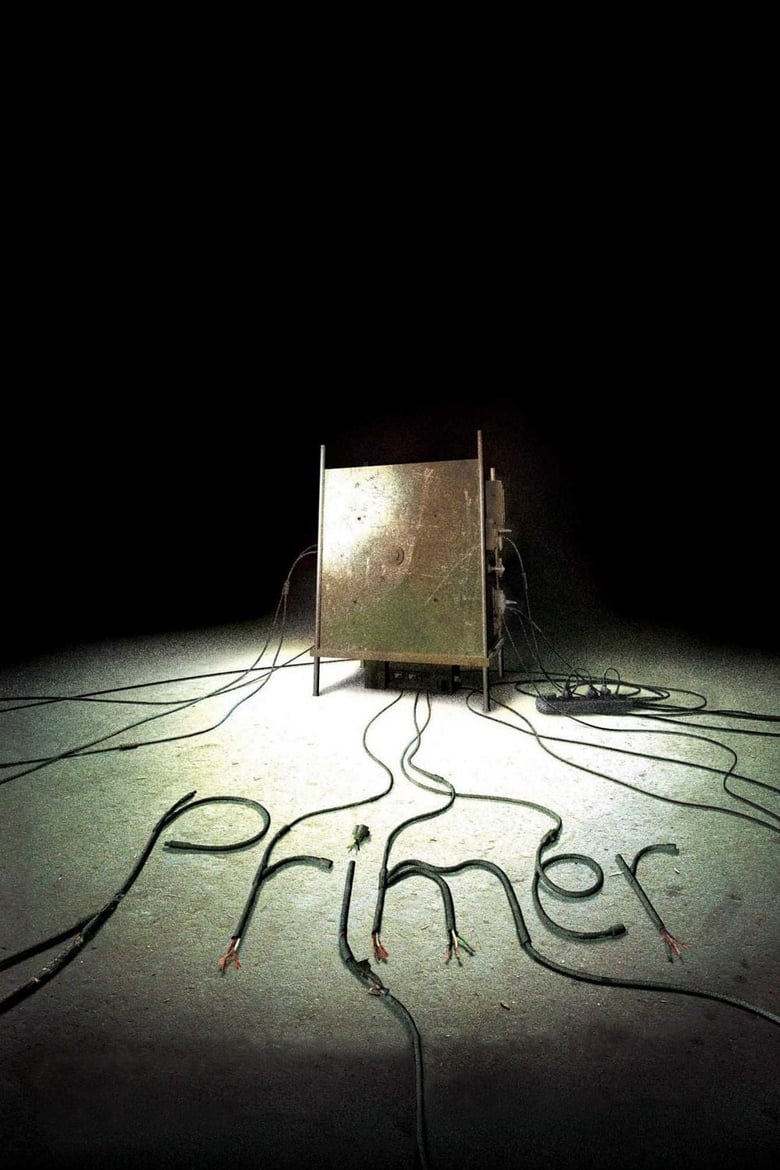
Most time-travel films are essentially flashy, convoluted messes that rely on a massive CGI budget to paper over their narrative plot holes. So when I sat down to watch Shane Carruth's 2004 indie mind-bender, I was bracing myself for something in the vein of The Butterfly Effect style pulp. And I'll be honest, I've got a genuine soft spot for that kind of thing. Primer, though, turned out to be something else entirely.
As someone with a real fondness for quantum physics, this was right up my street from the off. Carruth, who also stars alongside David Sullivan, approaches the concept of timeline alteration with a startling, almost clinical plausibility. It doesn't feel like science fiction so much as a leaked recording from someone's garage. Two engineers stumble onto something they almost certainly shouldn't have, and the film just lets that reality sit there, heavy and uncomfortable, without ever reaching for a Hans Zimmer swell or a slow-motion money shot.
Now, I won't pretend this is a visual feast. The production is undeniably, unapologetically low budget. You can see the seams, the grainy texture of the image, the makeshift suburban settings. But honestly, that raw, unpolished quality is exactly what makes it work. It's one of the best examples of shoestring filmmaking I've come across in a long while. By stripping away all the Hollywood gloss, Carruth forces you to focus entirely on the dense, jargon-heavy dialogue and the sheer intellectual weight of what these two men have accidentally stumbled into. There's a cracking achievement buried in that resourcefulness, and it's hard not to admire it. This is what you do when you have no money but an abundance of ideas and the discipline to follow them through.
It's a world away from something like Casshern, which I reviewed and which takes the opposite approach, throwing spectacle at every frame and hoping the scale carries you. Primer earns its complexity through restraint, not volume.
That said, it's not without its frustrations. For all its brilliant, grounded ideas, the narrative momentum does wane as the film progresses. The technobabble is refreshing at first, genuinely exciting even, but it eventually tips into something that feels more like a slog than a puzzle. There are stretches where the film gets so tangled in its own recursive logic that it forgets to breathe, and the human stakes quietly slip out of reach. You find yourself processing rather than feeling, which is fine up to a point, but there were moments where I had to actively remind myself to stay engaged rather than simply admire the machinery.
It's a tricky one to score, because I think the ambition here deserves real credit, and the execution, given the constraints, is genuinely impressive. But a film still needs to pull you through it, and Primer occasionally mistakes density for depth. The two aren't always the same thing.
Three stars.
Still, if you've got any interest in hard science fiction, or if you're just tired of blockbuster time-travel nonsense that explains itself five times over and still doesn't hold together, give it a watch. It's more good than bad by a meaningful margin, and there's nothing else quite like it. Just maybe keep a notepad handy.
Rating: ★★★ | Year: 2004 | Watched: 2026-07-17
Where to watch
Watch in the UK
Stream: Arrow Video Amazon Channel · ARROW
Rent: Apple TV Store · Amazon Video · Google Play Movies · YouTube
Buy: Apple TV Store · Google Play Movies · YouTube
Physical: Amazon UK · Zavvi
Watch in the US
Rent: Amazon Video · Apple TV Store · Google Play Movies · YouTube
Buy: Amazon Video · Apple TV Store · Google Play Movies · YouTube
Physical: Amazon US
Affiliate disclosure: Movies With Macca may earn a small commission on purchases or subscriptions started via these links. It costs you nothing extra.