Casshern (2004)

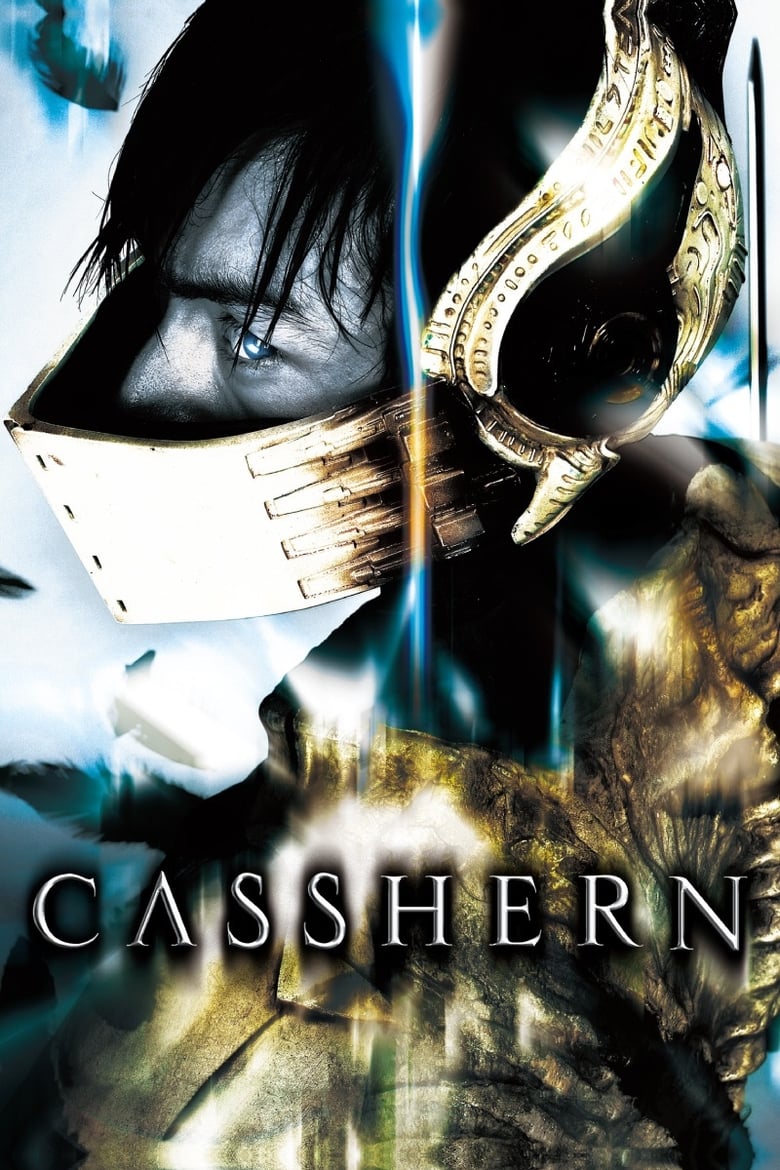
There's a particular kind of embarrassment that comes from rewatching a film you once championed and realising, quietly, that the years have not been kind to it. Casshern is that film for me. Back around its original 2004 release, I was absolutely floored by it. A comic book artist mate of mine had pushed it hard, going as far as calling it the visually best film ever made. And honestly? At the time, I believed him.
The premise is genuinely massive in scope. After fifty years of brutal war between the Great Eastern Federation and Europa, Earth is left a toxic, uninhabitable ruin, poisoned by biological, chemical and nuclear weapons. When a scientist's "neo-cell" project goes catastrophically wrong and spawns a race of mutants bent on revenge against humanity, his fallen son Tetsuya is reborn as the cyborg warrior Casshern, tasked with saving what little is left of civilisation. On paper, that's the bones of something extraordinary. A post-apocalyptic myth, part anime homage, part operatic tragedy. Director Kazuaki Kiriya, who built his reputation crafting visually arresting music videos and commercials, brings an eye for imagery that is genuinely hard to dismiss.
And look, I completely understand where my mate was coming from. The visual ambition here is staggering. Kiriya blends CGI with stylised, expressionistic production design to create a world that looks like nothing else from that era. Bleached skies, crumbling gothic architecture, soldiers marching through landscapes that feel ripped from a fever dream somewhere between a propaganda painting and a graphic novel. There are individual frames in Casshern that are genuinely stunning, and the sheer volume of craft poured into the aesthetic is impossible to ignore. It still turns heads. I'll give it that without hesitation.
But here's the problem, and it's a significant one: the film is a narrative shambles. The pacing alone nearly finished me off this time around. It takes the best part of 45 minutes before our titular hero actually appears on screen. Forty-five minutes. You sit through wave after wave of dense, exposition-heavy world-building, philosophical monologuing and convoluted political lore, and by the time Casshern himself shows up, your patience is genuinely fraying at the edges. When the action does eventually arrive, the story never settles into anything coherent enough to carry the weight Kiriya is clearly trying to place on it. Themes pile on top of themes. War, guilt, grief, prejudice, what it means to be human. All worthy territory, but handled with such relentless, breathless overload that the emotional thread gets completely lost somewhere in the chaos.
It reminded me, in a roundabout way, of the challenge facing any adaptation of beloved source material with a devoted fanbase. I think about something like Sukiyaki Western Django (2007), another visually audacious Japanese genre exercise that sacrifices clarity for style. Both films wear their ambitions loudly and proudly, and both occasionally buckle under the weight of them.
What saves Casshern from being a total write-off is precisely that ambition. Kiriya clearly had a colossal vision rattling around in his head, and there's something almost admirable about a filmmaker who swings this wildly and this openly. The film never feels cynical or lazy. It feels like someone genuinely trying to make something monumental and not quite getting there. That counts for something.
Two and a half stars.
My old mate wasn't entirely wrong. It might be one of the most visually striking messes ever committed to film. But a stunning coat of paint has never been enough on its own, and Casshern proves it beyond any reasonable doubt. You can build the most arresting world imaginable, fill it with gorgeous, hyper-stylised imagery from top to bottom, and still fumble the landing if the script underneath it all isn't doing its job. As a curiosity for fans of Japanese genre cinema and early 2000s digital aesthetics, it's still worth a look. As the flawless masterpiece I once believed it to be? That verdict hasn't survived the rewatch.
Rating: ★★½ | Year: 2004 | Watched: 2026-07-08
Trailer